Bedroom Guitar Tone: 9 Quick Fixes for Better Low-Volume Sound
Getting a good bedroom guitar tone is harder than it should be. Most tone advice assumes you can turn your amp up until the walls shake. Real life is different: you might be using a 1–5 watt tube amp, a small desktop amp, headphones, or an amp sim in a room where “just turn it up” is not an option.
This guide is built for low-volume guitar tone: bigger cleans, smoother crunch, less fizz, less harshness, and settings you can actually use at home. The goal is not studio-perfect tone. The goal is a sound that feels good enough that you keep playing.
If your tone problem is more general than bedroom volume, start with this deeper troubleshooting guide: why your electric guitar sounds bad at home. If the knobs themselves are confusing, read Gain vs Volume vs Master first, then come back here.
Quick answer: 9 fixes that improve most bedroom guitar tones
Fix the sound source first
- Get the amp off the floor: a chair, desk, stand or shelf usually clears up mud fast.
- Keep it out of corners: corners exaggerate low-end boom.
- Aim it near ear height: you need more direct sound and fewer random room reflections.
- Use less gain than you think: low-volume gain often turns into fizz before it turns into power.
- Control bass first: too much bass at home makes the tone feel big alone but blurry while playing.
Then shape the feel
- Keep mids present: scooped bedroom tone usually sounds thin and tiring.
- Soften treble/presence carefully: fix ice-pick highs without making the tone dull.
- Use reverb and delay at low mix: space helps, wash kills clarity.
- Write down good settings: the best bedroom tone is the one you can recreate tomorrow.
What this guide is built around
To keep the advice realistic, the settings below assume one of these common home rigs:
- A small tube combo, usually 1–5 watts, with gain, volume/master and basic EQ.
- A desktop or practice amp with amp models, master/output volume, EQ and built-in effects.
- An amp sim, modeler or headphone setup where speaker/cab simulation is part of the tone.
If you are still choosing the actual amp, this guide pairs naturally with our best guitar amps under $200 roundup. If you mostly practice silently, the headphones for practicing guitar guide is the better next stop.
Before you chase tone: fix the room basics
Bedroom guitar tone often fails before the EQ section. If the speaker is on the floor, pointed at your ankles, tucked into a corner or firing at a hard wall, you are not hearing the amp clearly.
Room and placement checklist
Do this first
- Raise the amp: use a chair, desk or stand so the speaker is closer to your ears.
- Pull it from corners: even 20–30 cm away from walls can tighten the low end.
- Aim it at your head: not straight at your knees, not straight into a wall.
Why it matters
- Mud can be placement, not bad pickups.
- Harshness can be speaker angle, not bad strings.
- Thin tone can be too much room reflection and not enough direct speaker.
After placement is fixed, you can trust your EQ changes. Before that, you may be compensating for the room instead of improving the tone.
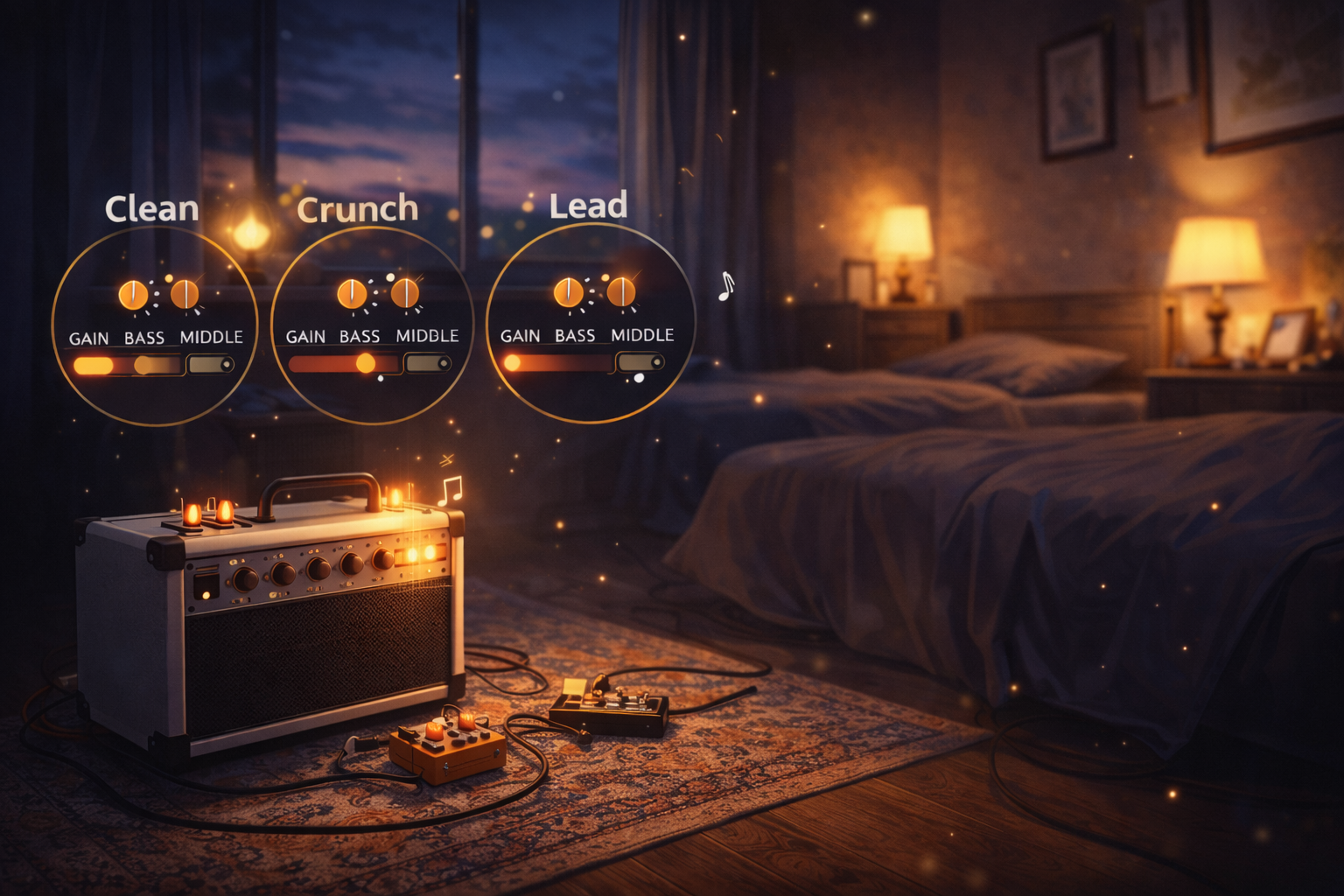
Bedroom guitar tone settings at a glance
Use these as starting points, not commandments. Copy one row, play for a minute, then adjust one thing at a time.
| Goal | Gain | Bass | Mids | Treble | Quick note |
|---|---|---|---|---|---|
| Clean single-coil tone | 9–10 o’clock | 10–11 o’clock | 12–1 o’clock | 10–11 o’clock | Raise the amp physically before boosting treble. |
| Edge of breakup | 12–1 o’clock | 10 o’clock | 1–2 o’clock | 11–noon | Use guitar volume to move clean ↔ crunch. |
| Tight humbucker crunch | 10–11 o’clock | 9–10 o’clock | 1–2 o’clock | 11–noon | If palm-mutes are flubby, lower bass before raising gain. |
| Apartment lead tone | Noon–1 o’clock | 10–11 o’clock | 1–2 o’clock | 10–11 o’clock | Low-mix delay + low-mix reverb beats more gain. |
Bedroom tone recipes you can copy first
Recipe 1: clean bedroom tone for small tube amps
Use this for chords, arpeggios and light rhythm on a Strat-style or single-coil guitar.
On the amp
- Gain: 9–10 o’clock
- Volume/Master: as loud as your room reasonably allows
- Bass: 10–11 o’clock
- Mids: noon–1 o’clock
- Treble: 10–11 o’clock
- Reverb: very low, around 8–9 o’clock
On the guitar
- Pickup: neck or neck+middle
- Volume: 7–8
- Tone: open, or slightly rolled back if the guitar is bright
If the tone feels dull, raise or aim the amp before adding treble. If the high strings stab your ears, roll the guitar tone back a tiny bit.
Recipe 2: edge-of-breakup crunch for home rock and blues
This is the in-between zone: soft picking stays almost clean, but digging in gives you crunch.
On the amp
- Gain: noon–1 o’clock
- Master: just under your “too loud for this room” point
- Bass: 10 o’clock
- Mids: 1–2 o’clock
- Treble: 11–noon
How to use it
- Guitar volume 5–6: cleaner parts
- Guitar volume 7–8: rhythm crunch
- Guitar volume 9–10: more push for leads
This works because you are not trying to make one low-volume setting do everything from the amp panel alone.
Recipe 3: tight bedroom crunch for humbuckers
Humbuckers can make small amps feel bigger, but they can also make low-volume riffs muddy. Start tighter than you think.
On the amp
- Gain: 10–11 o’clock
- Bass: 9–10 o’clock
- Mids: 1–2 o’clock
- Treble: 11–noon
Test it with
- Palm-muted low-string riffs
- Open power chords
- Double-stops on the G and B strings
If palm-mutes are flubby, lower bass again before adding treble or gain.
Recipe 4: desktop amp apartment lead tone
For THR/Katana-style desktop amps, smooth leads at home usually come from restrained gain, present mids, low bass and subtle ambience.
On the amp
- Amp model: crunch or lead, not the most extreme modern model
- Gain: around 1 o’clock
- Bass: 10–11 o’clock
- Mids: 1–2 o’clock
- Treble: 10–11 o’clock
Effects
- Reverb: room or plate, low mix
- Delay: 350–450 ms, mix around 10–15%, repeats 2–3
For more detailed ambience choices, use the best delay pedal guide and best reverb pedal guide.
Recipe 5: one-amp, three-sound setup for a full practice session
If you hate touching the front panel every five minutes, set one base tone and control the rest from the guitar.
| Sound | Guitar volume | Pickup | How to play it |
|---|---|---|---|
| Clean-ish | 5–6 | Neck or middle | Relaxed touch, lighter attack |
| Crunch | 7–8 | Bridge or bridge+middle | Normal to firm picking |
| Lead | 9–10 | Neck for round, bridge for attack | Add a low-gain boost or low-mix delay if available |
Common bedroom tone problems and the fastest fixes
This is the “stop scrolling and fix it” section. Use the first fix before trying the next one.
| Problem | Fastest fix | Next step |
|---|---|---|
| Harsh or ice-picky highs | Aim the speaker slightly away from your ears. | Lower treble/presence a little and keep mids present. |
| Muddy or boomy low end | Get the amp off the floor and away from corners. | Lower bass, then raise mids slightly. |
| Thin or boxed tone | Move closer and hear more direct speaker. | Nudge master/output up and drop gain slightly. |
| Fizzy distortion at low volume | Lower gain first. | Use the guitar EQ cheat sheet to tighten lows and soften highs. |
| Clean and crunch feel too similar | Use one base amp tone and ride guitar volume. | Use pickup switching: neck for cleaner, bridge for bite. |
| Noise or hiss gets annoying | Reduce gain before anything else. | For high-gain practice, humbuckers are usually quieter than single-coils. |
If your low-volume tone still feels wrong after these fixes, this companion article goes deeper into the same problem from a different angle: why your guitar sounds bad at low volume.
Speaker, IR and headphone tips for low-volume guitar tone
If you use an amp sim, modeler, desktop amp or headphones, the cab/speaker side can be half the tone. A bright cab or IR can make distortion feel fizzy even when the amp settings are reasonable.
- If it’s fizzy: choose a darker cab/IR, then reduce gain before lowering all treble.
- If it’s boomy: choose a tighter cab/IR, then reduce bass and raise mids slightly.
- If it’s thin: try a fuller cab/IR and a small mid bump before adding lots of bass.
- If headphones feel harsh: lower bright high-end controls and avoid extreme gain.
For silent rigs, compare the broader setup options here: guitar amp simulator vs practice amp vs modeler. If the weak point is your headphones, use the headphones for practicing guitar guide before blaming the amp model.
How to get good tone on guitar without chasing knobs for 20 minutes
If your goal is simply how to get good tone on guitar, the fastest path is consistency. Keep one base sound that works in your room, then use your hands, guitar volume and pickup choice to move between clean, crunch and lead.
Simple decision rules
- Harsh: treble/presence down slightly, mids stay present.
- Muddy: bass down first, then maybe a tiny treble bump.
- Lifeless: master/output up slightly, gain down a hair.
- Too stiff under the fingers: check technique and setup before blaming pickups; sometimes the issue is string feel rather than amp tone. This guide helps: guitar string gauges explained.
- Too bright or too dark by pickup: pickup configuration matters. Compare the basics here: HSS vs SSS vs HH pickups.
Don’t obsess over exact clock positions. Use them to get close, then trust your ears in your room at your actual volume. The target is not “mic’d amp on a record.” The target is “this feels good where I actually practice.”
Do this once, then save your work
Once you have one or two sounds dialed in, write the settings down or take photos. Next session you skip the 20-minute knob chase and start playing.
If you are building your first full setup, the beginner electric guitar guide and guitar pedals for beginners guide can help you avoid buying gear that makes home tone harder instead of easier.
Bedroom guitar tone FAQ
How do you get good bedroom guitar tone at low volume?
Start with placement: get the amp off the floor, keep it out of corners and aim it closer to ear height. Then use less gain than you think, keep bass controlled and keep mids present. At home volume, too much gain and bass usually create fizz and mud instead of power.
How do I get a good clean guitar tone at bedroom volume?
Use low gain, controlled bass and clear mids. For a single-coil guitar, start around gain 9–10 o’clock, bass 10–11, mids 12–1 and treble 10–11. If the tone is dull, raise or aim the amp before boosting treble.
Why does my distorted tone sound fizzy at home?
Fizz usually comes from too much preamp gain at low output volume. Lower gain first, tighten bass, keep mids up and raise master/output slightly if the room allows it. With amp sims or headphones, a too-bright cab/IR can also make fizz worse.
Should I scoop mids for bedroom guitar tone?
Usually no. Scooped mids can sound impressive loud, but at bedroom volume they often create thin lows and harsh highs. Slightly forward mids help notes stay clear without needing more volume.
How can I make my guitar tone feel bigger without turning up?
Hear more direct speaker, tighten bass, use mids for body and add a small amount of room/plate reverb. For leads, a low-mix delay can add size without washing out the note.
Are headphones good for bedroom guitar practice?
Yes, if the amp or amp sim has a good headphone/cab simulation and the headphones are not overly harsh. If every distorted tone feels fizzy in headphones, reduce gain, try a darker cab/IR and use a smoother EQ curve.
About this guide
- Scope: low-volume home practice with small tube amps, desktop amps, amp sims and headphone rigs.
- Method: placement first, then gain staging, then EQ to control harshness, mud and fizz at bedroom volume.
- Last updated: 2026-06-10
One Comment
Comments are closed.