Vox Pathfinder 10 Review – Classic British Practice Amp on a Budget
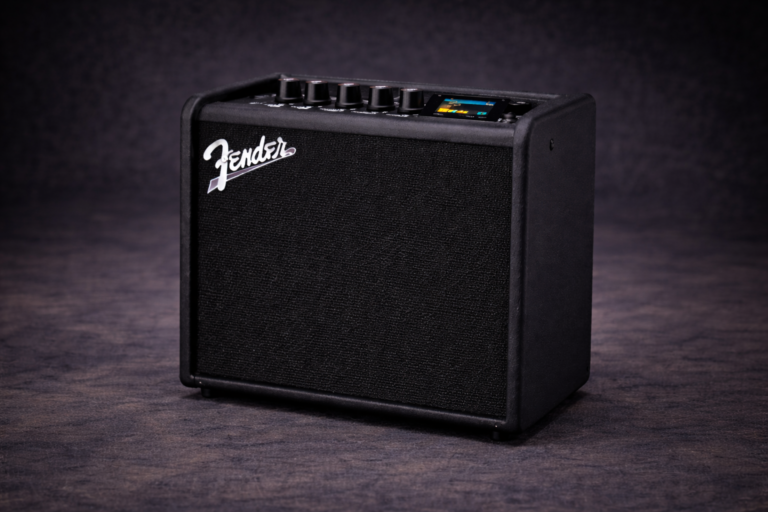
This Vox Pathfinder 10 review is for players who want classic British chime in a small, affordable practice amp that still feels like a real Vox. On paper it is simple: 10 watts of solid-state power into a single 6.5″ Vox Bulldog speaker, basic Gain, Volume, Bass and Treble controls, plus a Clean/Overdrive switch and headphone/line out. In practice, it is a very straightforward combo that can cover clean jangle, crunchy rock and old-school overdrive at realistic bedroom volumes. In this size and price range it competes with digital practice amps like the Fender Mustang LT25, stereo modeling combos such as the Blackstar ID:Core 10 V4, and compact smart amps like the Hotone Pulze. The Pathfinder 10 takes a very different route: no menus, no USB, no effects beyond basic overdrive – just a small solid-state combo that tries to bottle the feel of a simple Vox circuit.
You can browse the raw specifications on the official Vox Pathfinder 10 page, but this Vox Pathfinder 10 review focuses on what it is like to live with as a daily home practice amp.
Quick Specs
- Power: 10 watts RMS @ 8 Ω (solid state)
- Speaker: 1 x 6.5″ Vox Bulldog
- Channels: Clean and Overdrive (switchable)
- Controls: Gain, Volume, Bass, Treble, Clean/Overdrive switch, Power
- Inputs: 1 x 1/4″ guitar input
- Outputs: 1 x 1/4″ headphone/line out (mutes speaker)
- Circuit: all-analog solid state
- Dimensions (W x H x D): approx. 380 x 260 x 170 mm
- Weight: approx. 4.8 kg
On spec alone it is clearly built as a no-nonsense practice and recording amp with the typical Vox voicing rather than a feature-packed digital modeler.
Build & Design
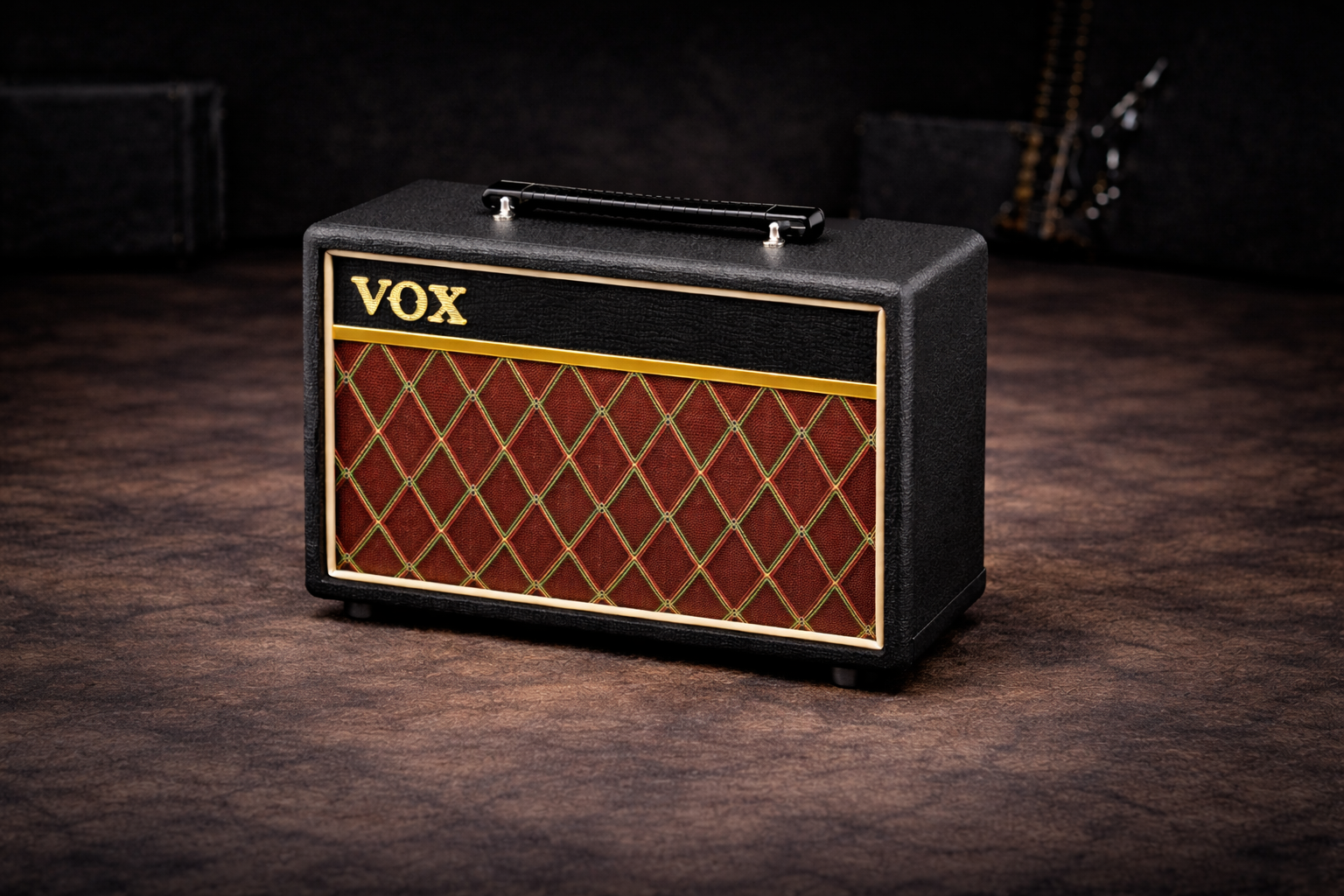
The Pathfinder 10 looks exactly how you would expect a small Vox combo to look: black leather-look vinyl, diamond grille cloth, white piping and chickenhead knobs. If you like the classic AC series aesthetic, this feels like a scaled-down version you can put on a desk or shelf.
The enclosure feels solid for the price. It is not heavy, but the cabinet does not feel hollow or flimsy. The handle, corners and grille all seem ready for day-to-day use at home, in a rehearsal space, or in a small project studio. It is the kind of amp you do not mind moving around the room or throwing into a car trunk.
The control panel is very simple: Gain and Volume on the left, Bass and Treble on the right, with a Clean/Overdrive button in between. There is no screen and no hidden menus. The headphone/line out and input jack sit on the front, so you do not have to reach behind the amp when you plug in headphones or run a cable to an interface.
Clean Tones: Chime at Bedroom Volume
On the clean channel, with Gain around 9–12 o’clock and Volume set for room level, the Pathfinder 10 delivers a bright, chiming sound that feels recognisably “Vox-ish”. Single-coil pickups have plenty of jangle, and humbuckers stay articulate as long as you do not push the Bass too far.
The 6.5″ speaker obviously cannot produce the same depth and spread as a 1×12 combo, but at close range the cleans are more three-dimensional than many tiny practice amps. If you keep the Bass around noon and add a little extra Treble, you get a snappy rhythm tone that works well for indie, pop and classic rock strumming.
Compared to something like the Fender Mustang LT25, the Pathfinder’s clean tone is less “polished” but more immediate. There is no compressor or global processing smoothing everything out; your picking dynamics come through clearly, which can be a good thing for developing touch.
Overdrive & Gain: From Grit to Classic Crunch
Hitting the Clean/Overdrive switch transforms the amp into a simple, old-school overdrive channel. With Gain around 10–11 o’clock you get light breakup that works nicely for blues and classic rock rhythm. Pushing the Gain further thickens the mids and adds sustain, giving you a more saturated crunch suited for classic rock leads and power chords.
It is not a modern metal voice – the low end is too polite and the midrange too vocal for tight, palm-muted chug – but it nails the kind of crunchy, open drive you expect from a small British combo. Using your guitar’s volume knob to roll back from crunch to cleaner rhythm feels natural, which is part of the charm.
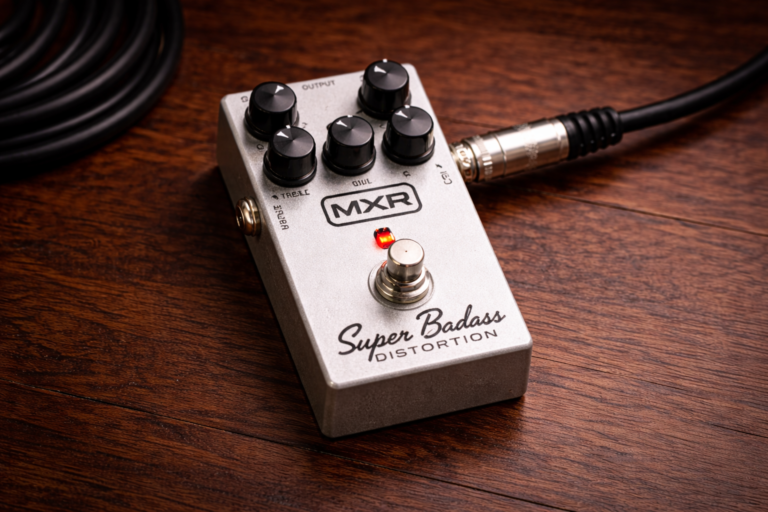
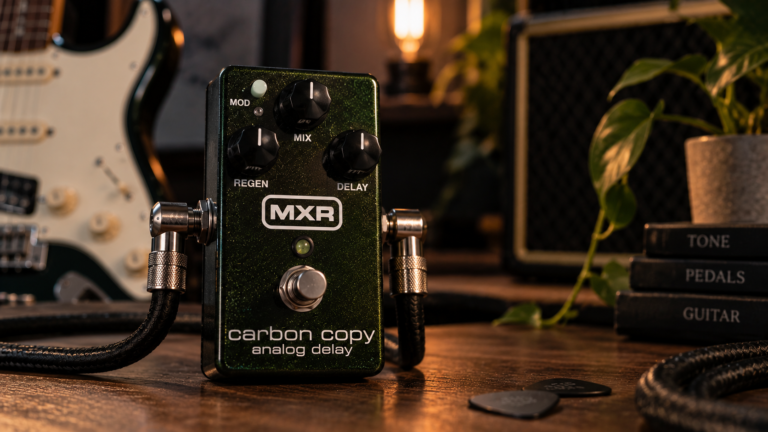
If you need more gain variety, the Pathfinder 10 responds well to pedals in front. Simple boosts, low-gain overdrives and even some fuzz pedals can all work, as long as you keep an ear on the low end and do not push the Bass knob too high.
EQ, Headphone Out & Recording Use
The two-band EQ is more effective than it looks. Small changes on the Bass and Treble knobs can dramatically change how the amp sits in a room. For late-night practice, rolling Bass back to around 9–10 o’clock and keeping Treble near noon keeps the tone present without rattling walls or making the small speaker flub out.
The headphone/line out mutes the speaker when in use. For silent practice this is ideal: you can plug straight into a pair of headphones and still get a surprisingly usable tone, especially if you pair it with some subtle EQ or room reverb in a DAW or multi-FX. It is not the same as a modern IR-based cabinet sim, but for practicing and quick demos it does the job.
Running the line out into an audio interface gives you a direct signal with Vox flavour. If you are primarily recording, a more modern modeling amp like the Blackstar ID:Core 10 V4 or a smart amp such as the Hotone Pulze will offer more routing options and built-in cabinet simulation, but the Pathfinder’s output is perfectly usable with a little post-EQ.
Home Practice Experience
As a home practice amp, the Pathfinder 10 hits a sweet spot between simplicity and character. There are just enough controls to shape your sound, but not enough to distract you. You turn it on, set Gain and Volume, tweak EQ and play. For many players this is more inspiring than scrolling through dozens of presets.
Volume is manageable. Ten solid-state watts into a 6.5″ speaker will get loud enough to annoy neighbours if you push it, but it is easy to keep at a level where you can talk over the amp. The headphone out takes care of true late-night practice without changing your basic setup.
If you mostly sit at a desk or in a small bedroom, the footprint is reasonable. It fits on a sturdy shelf or beside a desk, and it is light enough to move around without thinking about it. That “grab it and play” factor is often what decides whether you actually practice every day.
Who Is the Vox Pathfinder 10 For?
The Pathfinder 10 makes the most sense if you:
- Want classic Vox-style chime and crunchy overdrive in a small, affordable combo.
- Prefer simple analog controls over deep digital menus and presets.
- Mostly practice at home and occasionally record via a line out.
- Like the idea of a practice amp that looks like a miniature “real” Vox.
It is less ideal if you want built-in effects, modeling, USB audio or app control. In those cases a digital practice amp like the Mustang LT25 or a stereo modeling combo such as the ID:Core 10 V4 will be more flexible.
Pros & Cons
Pros
- Classic Vox styling and chime in a compact, affordable combo.
- Simple control layout that encourages playing, not menu-diving.
- Usable clean and overdrive tones at real bedroom volumes.
- Headphone/line out for silent practice and basic recording.
- Solid build quality for a small solid-state amp.
Cons
- No onboard reverb or effects other than basic overdrive.
- No USB audio or deep connectivity features.
- Single 6.5″ speaker limits low-end depth and “amp in the room” feel.
- EQ and gain can get harsh if you push Treble and Gain too high at low volumes.
Alternatives to Consider
If you like the idea of a small analog combo but want even more portability, a tiny box like the Boss Katana Mini offers three amp voices and battery power in a smaller form factor, though with a smaller speaker and less low-end weight.
For players who want modeling, presets and USB recording, the Fender Mustang LT25 is a logical step up. It has a larger speaker, more power, a screen and multiple amp models and effects for a modest increase in price and footprint.
If stereo ambience and built-in effects are more important than classic looks, the Blackstar ID:Core 10 V4 brings dual speakers, six voices, multiple effects and USB-C audio. It feels more like a desktop modeling rig than a traditional combo.
For ultra-portable smart-amp functionality with app integration, something like the Hotone Pulze or other compact smart amps might be more attractive, especially if you record a lot or rely on backing tracks and app-based practice tools.
Verdict: Is the Vox Pathfinder 10 Worth It?
The Vox Pathfinder 10 is not trying to compete with modern modeling amps on features. It is trying to give you a small, affordable box that looks and feels like a classic Vox, with enough clean headroom and overdrive to make home practice enjoyable. On that front it succeeds.
From a Vox Pathfinder 10 review perspective, the key question is whether you value simplicity and character over deep feature lists. If you want built-in effects, USB and presets, you will be happier with a different style of practice amp. But if you want a straightforward combo that rewards good picking and volume-knob dynamics, the Pathfinder 10 earns its place.
For beginners it is a friendly, great-looking first amp that does not throw too many options at you. For more experienced players it is a handy little Vox-flavoured practice box that can live under a desk, in a spare room or in a small studio, always ready to plug in and play.
Vox Pathfinder 10 FAQ
Is the Vox Pathfinder 10 loud enough for band practice?
No. Ten watts into a 6.5″ speaker is perfect for home and small-room practice, but it will struggle to keep up with a live drummer. It is best treated as a practice and small recording amp.
Can I record with the Vox Pathfinder 10?
Yes. The headphone/line out can be run into an audio interface or mixer. It is a simple analog line signal, so adding a bit of EQ and reverb in your DAW usually helps it sit better in a mix.
Does the Vox Pathfinder 10 take pedals well?
Basic drives, boosts and modulation pedals generally work well in front of the Pathfinder 10. Time-based effects like delay and reverb are also fine, as long as you keep volumes reasonable so the small speaker does not get overwhelmed.
Is there any built-in reverb on the Pathfinder 10?
No. There is no onboard reverb or modulation. If you want ambience you will need a pedal, multi-effect or external reverb from your recording setup.
Is the Vox Pathfinder 10 a good first amp for beginners?
Yes, provided you are fine without built-in effects. The simple controls, classic tones and headphone out make it a very solid beginner practice amp, especially if you like the look and sound of Vox.