What Electric Guitar Is Best for Beginners? (Top Picks + Comparison)
Choosing your first electric guitar is not about finding “the best guitar overall.” It’s about finding the guitar that causes the least friction while you’re learning.
Most beginners quit not because they chose the “wrong brand”, but because their guitar feels uncomfortable, won’t stay in tune, or constantly needs fixing. This guide focuses on guitars that beginners usually regret less, not models that look impressive on paper.
If you’re asking what electric guitar is best for beginners, the real answer depends on how much simplicity, versatility, and tolerance for hassle you want during your first year of playing.
If you want one simple answer:
- Best “one guitar that does everything”: Yamaha Pacifica 112V (HSS direction)
- Best low-hassle rock/metal start: Yamaha Pacifica 120H or Ibanez GRG121SP (HH hardtail direction)
- Best simple rhythm-learning feel: Squier Affinity Telecaster (direct, predictable)
The 60-second decision
If you want the quickest correct direction, use this. It’s not “the best guitar on Earth,” it’s the best beginner path based on what you play and how much hassle you want.
| Your situation | Pick this direction | Why it works for beginners | Good starting models |
|---|---|---|---|
| You play mixed styles and want one guitar to explore | HSS all-rounder | Flexible tones (clean → crunch → heavier), easy “grow into it” path | Pacifica 112V, Affinity Strat HSS, AZES40 |
| You mostly want rock/metal and want the least hassle | HH hardtail | Stable tuning + lower noise, fewer variables than trem bridges | Pacifica 120H, GRG121SP |
| You want simple controls, stable feel, and rhythm focus | Tele-style | Direct, predictable response; usually very stable ownership feel | Affinity Telecaster |
| Your hands are small or full-size feels physically hard | Short-scale | Less reach and easier fretting; removes a real physical barrier | Squier Mini Strat |
What makes a beginner electric guitar “the best”?
If you’re deciding what is the best electric guitar for beginners, don’t chase hype. Chase low friction: the guitar should feel easy to fret, stay stable between sessions, and match the style you’ll practice most.
Comfort and playability
Neck feel and fretwork decide how hard you work for clean notes. A comfortable neck and clean fret ends matter more than brand names at beginner level. If the guitar feels “stiff,” beginners often blame themselves and practice less.
Tuning stability
Fixed bridges are usually the calmest starting point. Tremolo bridges can be great, but stability depends more on setup and habits (string stretching, tuning approach, nut friction, bridge balance). If you know you won’t use a trem, a hardtail direction is the cleanest beginner move.
Pickups: choose a direction
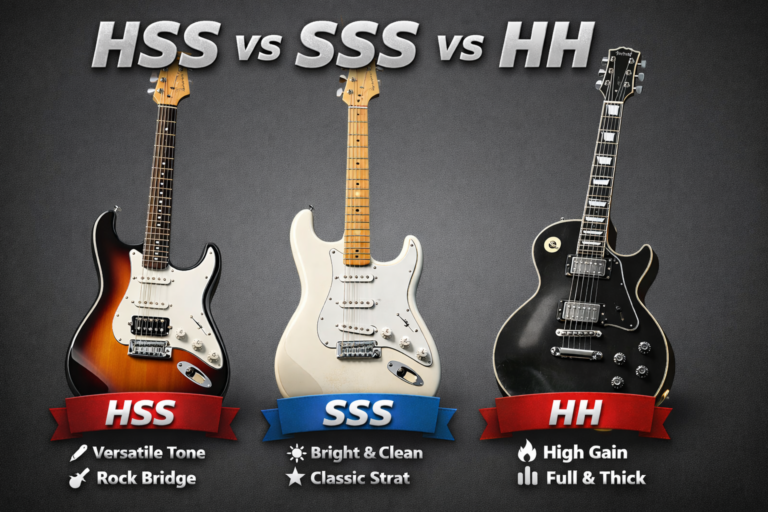
Beginners don’t need “perfect pickups.” They need the right layout for their music: HSS for flexibility, HH for rock/metal and lower noise, and classic single-coils for clean/edge-of-breakup. If you want the simple breakdown: HSS vs SSS vs HH pickups.
Setup is part of the purchase
Many “bad guitar” experiences are just setup problems. If you hear buzz or feel uncomfortable stiffness, start here: guitar buzz causes & quick fixes. If fretting/bending feels unnecessarily hard, string choice can immediately help: guitar string gauges.
If you’re shopping in the same budget tier, this also pairs well with electric guitars under $300.
If your question is what electric guitar is good for beginners, it usually comes down to: comfort + stable tuning + a pickup layout that matches what you actually practice.
How we picked and compared these guitars
This guide is built around beginner reality: comfort, stability, and how often a guitar makes you troubleshoot instead of play. It’s not a collector ranking, and it’s not based on marketing specs alone.
How to verify the exact configuration in 10 seconds
- Bridge: if you see a whammy bar or a “floating” bridge plate, it’s a trem version. If the strings go through a fixed bridge with no bar, it’s hardtail.
- Pickups: HSS means one humbucker + two single coils. HH means two humbuckers. SSS means three single coils.
- Why this matters: bridge type changes tuning stability and maintenance; pickup layout changes how satisfying the guitar is for your style.
What we prioritize
- Beginner playability: how easy it feels to fret cleanly and stay relaxed.
- Stability: how consistent it is with normal beginner habits (especially tuning and bridge behavior).
- Versatility: how well it covers common beginner needs without forcing an early second guitar.
- Friction: how often it pushes you into fixing things instead of practicing.
If you’re wondering which electric guitar for beginners is “right,” treat bridge type + pickup layout as the two big levers that decide your first-year experience.
Shortlist: real beginner models compared
These are widely available beginner picks you’ll actually find in stores, and they map cleanly to beginner needs:
- Yamaha Pacifica 112V
- Yamaha Pacifica 120H
- Squier Affinity Stratocaster HSS
- Squier Affinity Telecaster
- Ibanez AZES40
- Ibanez GRG121SP
- Jackson JS11 Dinky
- Epiphone Les Paul Special-II E1
- Squier Mini Strat
These are all common beginner electric guitar options that make sense as long as you pick the right direction (HSS / HH hardtail / Tele-style / short-scale) for your needs.
Quick comparison table
Here’s the clean overview. Details and the “skip if” logic follow right after.
| Model | Pickups / Bridge | Best for | Why it works for beginners | Main watch-out |
|---|---|---|---|---|
| Yamaha Pacifica 112V | HSS / trem (common) | Mixed styles | Most versatile beginner direction: clean + crunch + heavier | Trem versions reward a good setup and basic habits |
| Yamaha Pacifica 120H | HH / hardtail | Rock/metal + simplicity | Stable ownership and quieter under gain | Less classic single-coil sparkle |
| Squier Affinity Strat HSS | HSS / trem (common) | General beginner use | Classic comfort + practical bridge option | Unit-to-unit setup variation is common |
| Squier Affinity Telecaster | SS / fixed (typical) | Clean/crunch rhythm | Direct response; simple controls; stable feel | Ergonomics are personal |
| Ibanez AZES40 | HSS / varies by listing | Comfort-first beginners | Often feels easy in-hand; confidence-building | Confirm bridge type before buying |
| Ibanez GRG121SP | HH / hardtail | Metal beginners | Stable, gain-friendly, low-hassle riff practice | Less “vintage clean” personality |
| Jackson JS11 Dinky | HH / varies by listing | Metal-focused beginners | Fast-feel direction that can be very motivating | Trem variants add tuning variables |
| Epiphone LP Special-II E1 | HH / fixed (typical) | Classic rock rhythm | Thicker chord tones; simple layout | Comfort/weight varies; try standing |
| Squier Mini Strat | SSS / varies | Small hands / younger players | Short-scale direction removes reach barriers | Short-scale feel is different long-term |
Model notes
Below is what beginners actually notice in the first weeks: feel, stability, and whether the guitar pushes you into fixes instead of practice.
Yamaha Pacifica 112V
At a glance: HSS versatility • solid first-year “grow into it” path • trem versions benefit from basic setup habits.
Why beginners like it: it’s one of the cleanest “do-everything” paths because HSS covers more styles without an early second purchase. If you want the best beginner electric guitar in the sense of “one guitar to learn a lot,” this direction is hard to beat.
How it behaves at home: clean practice tones are usable, and the bridge humbucker keeps rock practice from sounding thin on small rigs.
Insider note: This is the guitar many beginners end up keeping even after upgrading. If you’re unsure about your style yet, this one rarely feels like a wrong first step, but only if you’re okay learning basic tremolo habits.
- Best for: mixed styles, exploration, one-guitar beginners.
- Main watch-out: trem versions need decent setup and basic habits to stay stable.
- Skip if: you want the simplest ownership experience and you know you won’t use trem.
- Better direction: HH hardtail (Pacifica 120H / GRG121SP).
Yamaha Pacifica 120H
At a glance: HH + hardtail stability • quieter under gain • low-maintenance beginner path.
Why beginners like it: HH + hardtail is a low-hassle recipe. It’s stable, quieter under gain, and reduces “why am I always tuning?” frustration.
How it behaves at home: riffs feel solid even at low volume, which makes early rock/metal practice more satisfying.
Insider note: If you want the least amount of troubleshooting early on, this model quietly does its job. Many beginners don’t realize how much mental energy a tremolo bridge consumes until they don’t have one.
- Best for: rock/metal beginners, simplicity-first buyers.
- Main watch-out: less single-coil sparkle for bright vintage cleans.
- Skip if: your top priority is glassy clean, classic single-coil character.
- Better direction: HSS all-rounder (Pacifica 112V / Affinity Strat HSS / AZES40).
Squier Affinity Stratocaster HSS
At a glance: familiar Strat comfort • practical HSS layout • quality varies by unit (setup matters).
Why beginners like it: comfortable Strat ergonomics with a more usable bridge pickup for rock. The HSS layout often prevents early disappointment with thin bridge sounds.
How it behaves at home: bridge humbucker helps a lot on bright practice rigs; clean positions are there for chord learning and dynamics.
Insider note: Comfortable and familiar, but setup quality varies more than people expect. A good unit feels great; a rushed one can feel discouraging. Try before you buy if possible.
- Best for: classic feel + versatility in one guitar.
- Main watch-out: setup varies by unit; a basic setup can transform it.
- Skip if: you can’t try the exact unit and can’t budget a basic setup if needed.
- Better direction: stable hardtail HH if you want minimum variables.
Squier Affinity Telecaster
At a glance: simple controls • direct response • great for rhythm fundamentals and consistency.
Why beginners like it: direct response and simple controls. It tends to reward rhythm fundamentals quickly because timing and muting improvements become obvious.
How it behaves at home: clean/crunch practice translates well without needing lots of knob work.
Insider note: If you want a guitar that feels honest and predictable, this is it. It doesn’t hide your mistakes, but that’s why beginners often get better rhythm control faster on simple guitars like this.
- Best for: rhythm learning, clean/crunch, simplicity-first players.
- Main watch-out: body comfort is personal; some prefer Strat contours.
- Skip if: you already know you strongly prefer Strat-style contours.
- Better direction: Strat-style comfort paths (Pacifica 112V / Affinity Strat HSS / AZES40).
Ibanez AZES40
At a glance: comfort-forward feel • beginner-friendly handling • confirm the exact bridge type before buying.
Why beginners like it: comfort-forward handling that can reduce hand tension. For some beginners, “this feels easier” is the difference between playing daily and playing weekly.
How it behaves at home: confidence-building feel and flexible tones for learning across styles.
Insider note: If your biggest problem is “my hand gets tired and everything feels hard,” comfort-first guitars like this can quietly change your practice consistency more than any pickup upgrade ever will.
- Best for: comfort-first beginners who get tense or struggle with clean fretting.
- Main watch-out: treat trem vs hardtail as different categories; confirm the exact bridge in the listing.
- Skip if: you want the calmest tuning path with minimal variables.
- Better direction: HH hardtail (Pacifica 120H / GRG121SP).
Ibanez GRG121SP
At a glance: HH + hardtail simplicity • gain-friendly • stable tuning for riff practice.
Why beginners like it: HH + hardtail is gain-friendly and stable. It’s one of the simplest ways to make rock/metal practice feel satisfying without extra noise and tuning drama.
How it behaves at home: thicker tones help small rigs feel less thin at low volume.
Insider note: This is often the easiest transition into rock and metal without fighting tuning issues. It’s not flashy, but beginners focused on riffs tend to progress faster on guitars like this.
- Best for: rock/metal beginners who want low hassle.
- Main watch-out: less vintage clean sparkle.
- Skip if: your main priority is bright, glassy cleans.
- Better direction: HSS all-rounder (Pacifica 112V / Affinity Strat HSS / AZES40).
Jackson JS11 Dinky
At a glance: motivating “fast-feel” vibe • great for metal direction • avoid trem variants if you want low maintenance.
Why beginners like it: the “fast-feel” direction can be motivating, especially if you’re drawn to metal and lead practice.
How it behaves at home: great for riff/lead practice, but bridge choice decides how calm the ownership experience is.
Insider note: If this guitar makes you want to pick it up just because it looks and feels “fast,” that motivation is real value. Just keep the bridge choice simple if you hate tuning work.
- Best for: metal-focused beginners who want a motivating feel.
- Main watch-out: trem variants add tuning variables.
- Skip if: you want the lowest-maintenance ownership experience.
- Better direction: HH hardtail (Pacifica 120H / GRG121SP).
Epiphone Les Paul Special-II E1
At a glance: thick chord tone • simple layout • try on a strap (comfort/weight varies).
Why beginners like it: thick chord tones and a simple layout. It can sound full quickly, which is motivating for early rock rhythm.
How it behaves at home: power chords and riffs feel big even at modest volume.
Insider note: These feel solid and forgiving, but the shorter scale and body weight are either instantly comfortable, or not. Great if it fits you, frustrating if it doesn’t.
- Best for: classic rock rhythm, thicker tones.
- Main watch-out: comfort/weight varies; try it on a strap if possible.
- Skip if: you’re sensitive to weight and can’t try it standing.
- Better direction: lighter comfort-first options if ergonomics are #1.
Squier Mini Strat
At a glance: solves reach/hand-size barrier • easier fretting for some • different long-term feel than full-size guitars.
Why beginners like it: it solves a real problem: reach and hand size. If full-size feels physically hard, short-scale can keep you practicing instead of fighting the instrument.
How it behaves at home: easier reach can immediately increase practice time. The trade-off is that the feel is different long-term.
Insider note: If size is the barrier, don’t let pride choose your first guitar. A comfortable instrument that gets played beats a “proper” one that sits in a corner.
- Best for: smaller hands, younger players, reach/comfort constraints.
- Main watch-out: short-scale feel is different from most full-size guitars.
- Skip if: full-size guitars already feel comfortable.
- Better direction: full-size HSS/HH options based on your style (use the 60-second table).
In-store / delivery checklist
Use this quick checklist before buying. It prevents the most common “my first guitar feels terrible” situations.
- Fret ends: run your hand along the neck edges. Sharp ends = avoid or budget a fix.
- First-position effort: play a basic open chord. If it feels unusually stiff, nut/action may be off.
- Tuning drift test: tune up, play for 2 minutes, re-check. Big drift often points to nut friction or unstable strings.
- Bend check: do a full-step bend on the B string. If notes choke easily, action/relief may need work.
- Comfort standing up: wear a strap for 60 seconds. Shoulder comfort matters.
First-week checklist
Most beginner frustration comes from fixable basics, not the “wrong model.” Do these first-week steps before you judge the guitar.
- Stretch new strings gently after tuning so they settle faster.
- If fretting feels too hard, don’t power through it—fix action/nut/setup first.
- If you hear buzz or notes die out, diagnose the cause before adjusting everything.
- If finger pain is the issue, reassess string gauge and overall setup.
Your practice rig matters
If you’re judging a guitar based on home tone, be careful: home volume can mislead you. For plug-and-play practice, use best practice amps under $200. If you’re choosing between hardware and software, use practice amp vs amp sim.
Final decision
If you want the safest answer to what electric guitar is best for beginners, choose the guitar that lets you think about music instead of mechanics.
For most people, that means either a versatile HSS-style guitar if you want to explore many styles, or a simple HH hardtail if you want the smoothest, least distracting start.
The “best” beginner guitar is the one that makes you pick it up again tomorrow. If a model feels comfortable in your hands and stays in tune with normal playing, you’ve already made the right choice—no matter what logo is on the headstock.
About this guide
- How it’s built: direction-first (bridge + pickups) so beginners reduce tuning/setup friction and stay consistent.
- What it’s not: a “specs-only” ranking or a collector list.
- Last updated: 2026-01-01
Note: Availability and exact configurations can vary by region and listing. Always confirm bridge type (trem vs hardtail) and pickup layout before buying.
FAQ
What electric guitar is best for beginners?
The best beginner electric guitar is the one that feels comfortable and stays consistent between sessions. For mixed styles, an HSS direction (Pacifica 112V / Affinity Strat HSS / AZES40) is usually the safest. For rock/metal with the least hassle, an HH hardtail direction (Pacifica 120H / GRG121SP) is often the simplest path.
What is the best electric guitar for beginners if I only want one guitar?
An HSS direction is usually the most flexible “one guitar” beginner choice because it covers more styles before you feel limited.
What electric guitar is good for beginners who want metal?
Fixed-bridge HH direction is typically the most beginner-proof metal start because it reduces tuning drama and suits higher gain naturally.
Which electric guitar for beginners is easiest to own?
Most often: a comfortable neck + decent setup + fixed bridge. That combination minimizes daily friction and keeps practice focused on playing.