How Does a Fuzz Pedal Work? Fuzz Pedal Circuit Explained
If you’ve ever wondered “how does a fuzz pedal work?”, the short answer is that it pushes your guitar signal into extreme clipping on purpose. Whether it turns into a musical sustain machine or a swarm of bees depends on your pickups, pedal order, and how hard you hit the circuit.
A classic fuzz pedal isn’t just “more distortion.” It reacts much more to input level and guitar volume than a typical drive box. If you’re used to more controlled gain like overdrive or distortion, fuzz will feel more interactive and less polite — especially with your guitar volume knob.
If you are choosing what to buy rather than learning the circuit behavior, jump to the best fuzz pedal guide. If you are building a first board from scratch, the broader guitar pedals for beginners guide is the better starting point. This page stays focused on why fuzz behaves the way it does.
If you want one simple answer:
- Best “classic fuzz” move: fuzz first in the chain, guitar volume rolled back a bit, amp set clean or edge-of-breakup.
- Best “big wall of sound” move: more fuzz, slightly louder Level, and tighter amp EQ (trim low bass so it doesn’t turn to mud).
- Best “fix everything faster” move: don’t chase extreme settings — start from a neutral EQ baseline and make small, deliberate moves.
60-second fuzz setup (table)
Use this when you want a fast, repeatable starting point. It works with most fuzz pedals because it puts the “big levers” in the right order: guitar volume and amp baseline first, then Fuzz, then Level and EQ.
| Step | Set this | Listen for | Fast fix |
|---|---|---|---|
| 1 | Amp baseline (clean or barely breaking up) | No harsh spikes, no boomy lows | Moderate amp EQ first; don’t “fix” the amp with the fuzz. |
| 2 | Guitar volume (roll back slightly) | Chords stay clear, fuzz still responds | Start around 7–8 on the knob, not full up. |
| 3 | Fuzz / Sustain (start low → mid) | Notes bloom without turning to a square-wave mess | If splatty or harsh, reduce Fuzz before anything else. |
| 4 | Level / Volume (unity or small lift) | No big jump when you engage the pedal | Match bypassed volume first, then add a tiny lift if needed. |
10-second reality check: Strum a chord with your guitar volume at 7, then at 10. If it goes from thick to unusable, your fuzz pedal wants less input or less Fuzz.
What a fuzz pedal really does (and how a fuzz pedal works)
At a basic level, what a fuzz pedal does is push your signal into heavy, messy clipping on purpose. Instead of the smoother clipping of many distortion pedals, fuzz uses a more extreme, often asymmetrical kind of clipping that turns your guitar into an almost synth-like texture.
How does a fuzz pedal work? In simple terms, the guitar signal hits a very sensitive input stage, then a small number of transistors are driven far past their clean range. The exact biasing and transistor type change how gated, smooth, or spitty it feels — that’s why different fuzz pedals can feel nothing alike even with similar knobs.
If you want the short version of a fuzz pedal circuit explained: the pedal amplifies your signal, clips it very hard, and lets your guitar volume and picking dynamics control how far into that clipping you go.
Fuzz pedal basics: the stuff that actually matters
A lot of “what is a fuzz pedal?” explanations stop at “it’s a really dirty distortion.” In practice, three things matter most: how hot your pickups are, where the pedal sits in the chain, and how you use your guitar’s volume and tone controls.
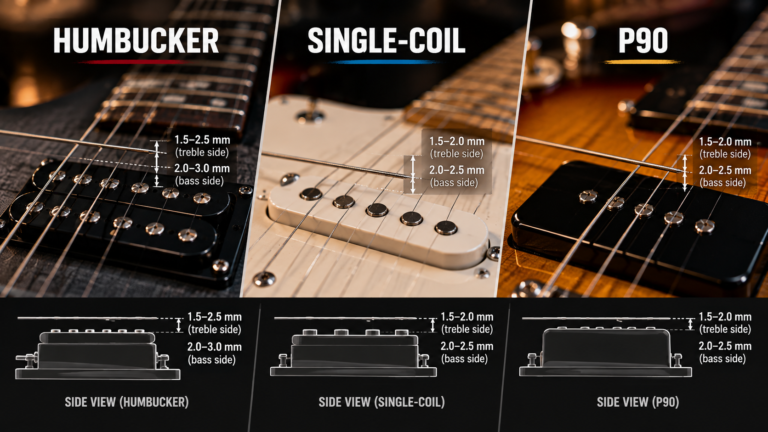
Many classic fuzz circuits were designed around single-coils and fairly low output. With modern high-output humbuckers and bright amps, the same settings can turn into flubby mud or ice-pick noise unless you dial them differently.
If you’re already fighting harshness or ear fatigue at quiet levels, pairing this page with home-focused tweaks from low volume guitar tone and the starting points in the guitar EQ cheat sheet helps you keep your fuzz usable at bedroom volume.
If you need a more controlled gain sound first and want to build from there, start with overdrive pedal explained or the higher-gain guide electric guitar distortion pedal, then come back to fuzz as the “wild card” flavor.
At a glance: Fuzz is about interaction • guitar volume is part of the pedal • placement in the chain changes everything • less Fuzz often sounds bigger in a mix.
Common fuzz pedal flavors (why they feel so different)
Different fuzz pedals can all say “Fuzz” on the label but feel completely unrelated. That’s because the underlying fuzz circuit and EQ are very different.
Vintage-style, guitar-volume friendly fuzz
These react strongly to your guitar’s volume knob. Full up gives thick, saturated fuzz; rolled back gives gritty, almost overdrive-like tones. Great if you like to live on the edge-of-breakup and ride the volume. The Fuzz Face pedal guide is the clearest example of this family and explains germanium vs silicon, cleanup and buffer sensitivity.
Thicker, sustaining “wall of sound” fuzz
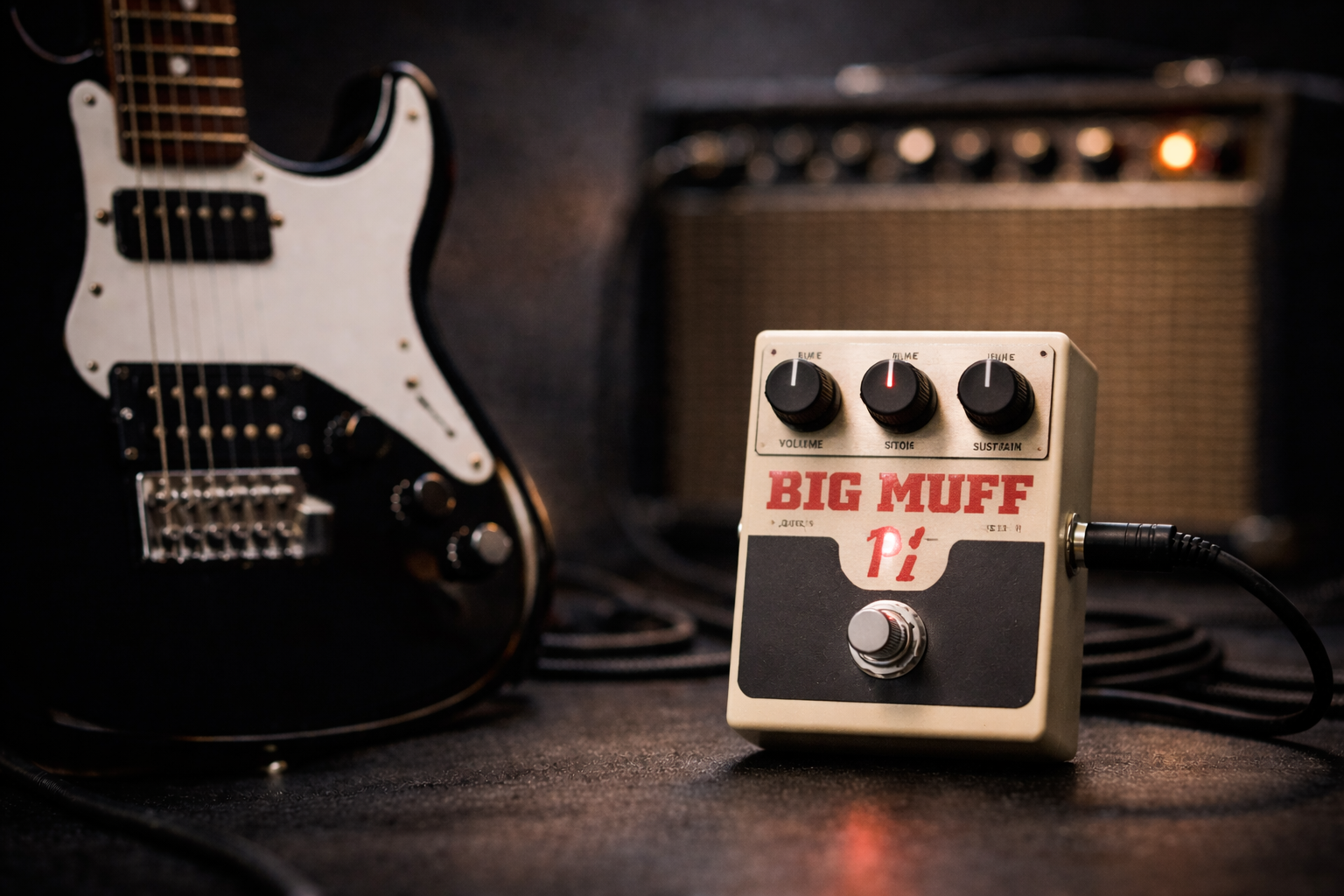
These lean toward more sustain and a bigger low end. They can sound huge on their own or with a band, but can turn to mud if the amp is already bass-heavy or the Fuzz control is maxed. The Big Muff Pi review shows the classic compressed version of this sound, while the EarthQuaker Devices Hoof review shows how adjustable mids can make the same broad idea easier to place in a mix.
Octave and gated fuzz
Octave fuzz adds a high octave above your note, especially on the upper frets. Gated fuzz cuts off the signal when it drops below a threshold, giving a sputtery, “broken” texture. These are cool when used deliberately, but easy to overdo for everyday rhythm work. The JHS 3 Series Fuzz review is a useful modern example because its Bias control lets you move deliberately toward that gated, sputtery behavior.
Quick takeaway: Before you decide a fuzz distortion pedal is “bad,” ask which flavor it is. A gated fuzz will never feel like a smooth sustaining one, no matter how long you tweak. If you’re still comparing the main gain categories, the full overview in overdrive vs distortion vs fuzz gives you the bigger map.
How to choose a fuzz pedal for your rig
When you’re choosing a fuzz pedal, the biggest questions are: how it reacts to your pickups, how much bass it has, and how picky it is about buffers and pedal order. If those don’t match your rig, you’ll always feel like the pedal is fighting you.
1) Pickups and guitar volume
Lower output single-coils usually give you the widest range of clean-up and grit. High-output humbuckers can push some fuzz pedals straight into mush unless you back off the Fuzz or the guitar volume.
2) Amp: clean, edge-of-breakup, or already dirty
A very clean amp gives the fuzz more room to define the sound. An edge-of-breakup amp can feel great but will compress earlier. A very dirty amp stacked with lots of fuzz can lose definition fast — in those cases, many players prefer to get the main gain from a distortion pedal for electric guitar and use fuzz as an occasional texture instead.
3) Pedal order and buffers
Many classic fuzz pedals prefer to see the guitar directly, with no buffer or strong EQ pedal in front. If you put a loud buffer or bright boost in front, it can change the feel or make the pedal sound harsh and unforgiving. A modern design such as the Boss FZ-1W is a useful contrast because it is built to behave more predictably in a normal buffered pedalboard.
Practical rule: If a fuzz sounds wrong, try moving it to the very front of the chain and rolling your guitar volume back before you give up on it.
If you’re still deciding which type of gain lives where, the full overdrive vs distortion vs fuzz comparison gives you the bigger map. If you already know fuzz is the category and just need to choose a pedal, move to the best fuzz pedal guide.
Dial-in method (works on most rigs)
These steps work for most fuzz pedals and keep you from guessing. They explain in practice how a fuzz pedal works with your guitar and amp.
- Start with the guitar: set your guitar volume around 7–8 and tone around the middle. This gives you room to go both cleaner and dirtier.
- Set the amp baseline: clean or barely breaking up, no extreme EQ. If the amp is boomy or harsh, fuzz will exaggerate it.
- Bring up Fuzz slowly: start low and raise it until notes sustain and bloom, but chords still have shape. Stop before it turns into pure square-wave noise.
- Match Level: set the fuzz Volume so the engaged sound is at or slightly above the bypassed level.
- Refine with guitar controls: roll your volume down for gritty rhythm, up for thicker leads. If it never gets clear, Fuzz is probably too high.
One sentence that saves time: If your fuzz is unusable, turn the Fuzz knob down and the guitar volume down before you touch anything else.
When you’re unsure which EQ move is “neutral,” start from a simple baseline and change in small steps: a reference like the guitar EQ cheat sheet helps here too.
Realistic starter settings (table)
Instead of vague “clock positions,” these are practical starting points based on how people actually run fuzz pedals at home. Land quickly, then adjust by ear.
| Your rig | Preset | Why it works | Starter settings |
|---|---|---|---|
| Clean amp, single-coil pickups | A – classic fuzz baseline | Lots of control from the guitar volume and a clear point where “too much” fuzz becomes obvious. | Fuzz: low–mid • Guitar volume: 7–8 rhythm / 10 lead • Level: unity or small lift |
| Edge-of-breakup amp | B – edge-of-breakup stack | Amp does some of the work, fuzz adds thickness and bite without needing extreme settings. | Fuzz: low • Guitar volume: 6–7 rhythm / 9–10 roar • Level: slightly above unity |
| Higher-gain amp or stacked with overdrive | C – texture on top of gain | Fuzz becomes a character/texture layer instead of more raw gain, keeping riffs tighter. | Fuzz: very low • Guitar volume: 7–9 for tightness • Level: tiny moves for feel only |
Preset watch-outs:
- A: if it turns to a buzzy square wave as soon as you hit 10 on the volume knob, back Fuzz down and try again.
- B: if chords smear, the fix is usually less Fuzz and a touch less amp gain, not more bass.
- C: stacking lots of fuzz on top of heavy amp gain kills articulation very fast.
Pickup tip: Hot humbuckers usually want less Fuzz and more careful EQ than single-coils. If it gets muddy, the first move is lowering Fuzz, not cranking treble.
If you like how fuzz sits once the gain is under control but want more sense of “space” around it, a simple ambience pedal can help: what does a reverb pedal do? and what does a delay pedal do? walk through how to add room and repeats without turning everything into a wash. For a side-by-side comparison, you can also check delay and reverb pedal.
Fix common fuzz problems
Problem: Splatty / harsh top end
First move: reduce Fuzz and guitar volume before chasing EQ.
- Back the Fuzz control down until chords regain some shape and single notes stop sounding like a square wave.
- Roll your guitar volume back slightly and use the pedal Level to match overall volume.
- If it’s still painfully bright, trim a bit of amp treble or presence instead of adding more bass.
Problem: Muddy / lost in the mix
First move: reduce Fuzz and overall low end, not add more treble.
- Lower the Fuzz control and, if the pedal has one, roll back any extra bass or low EQ.
- On the amp, trim low bass and let the mids speak; this helps a fuzz distortion pedal cut without getting harsh.
- With humbuckers, keep Fuzz conservative and avoid maxing the guitar volume all the time.
Problem: Fuzz doesn’t clean up with the volume knob
First move: put the fuzz first in the chain and remove buffers in front.
- Move the fuzz to the very front of the board and turn off any always-on buffer or boost before it.
- Set your guitar volume around 7–8 and Fuzz in the low–mid range; check that rolling up to 10 actually adds saturation.
- If nothing changes when you move the guitar volume, the fuzz may simply be a more modern, less “cleanup-friendly” design.
Problem: Fuzz sounds wrong after other pedals or buffers
First move: experiment with order — fuzz first usually wins.
- Classic fuzz pedals often prefer to see the raw guitar signal. Put them before tuners with buffers, EQs, or drives that strongly boost highs.
- If you must run a buffer first, keep its level and treble boost modest so it doesn’t slam the fuzz input.
- When in doubt, think “guitar → fuzz → everything else” as your default order.
If you’re troubleshooting fuzz pedals and wondering what does a fuzz pedal do that feels so different, remember: they’re designed to be interactive. Less Fuzz, lower guitar volume, and smarter pedal order usually fix “what the fuzz pedal?!” moments.
FAQ
What is a fuzz pedal?
A fuzz pedal is a type of guitar fuzz pedal that drives your signal into very hard clipping on purpose, creating a thick, sometimes synth-like distortion. Compared to many distortion pedals, it feels less polite and more reactive to your guitar controls.
How does a fuzz pedal work in simple terms?
In simple language, the pedal boosts your guitar signal into a small transistor circuit that can’t stay clean. As you raise Fuzz or your guitar volume, the signal hits a point where it turns into a compressed, harmonically rich square-ish wave. Roll your volume back and the same circuit gives milder grit instead.
When should I use fuzz instead of overdrive or distortion?
Use fuzz when you want big, characterful sustain and a texture that feels almost like its own instrument. Use overdrive when you want to extend your amp’s natural breakup, and distortion when you want a more controlled, tighter high-gain sound. For a full comparison of how they differ in feel and control, see overdrive vs distortion vs fuzz, and if you mainly need a tighter high-gain base sound, the dedicated guide electric guitar distortion pedal walks through distortion-specific dialing.
Can I use a fuzz pedal at low volume?
Yes, but you’ll usually want less Fuzz, a rolled-back guitar volume, and a tighter low end than you would at stage volume. Combining this guide with the ideas in low volume guitar tone and the reference moves from the guitar EQ cheat sheet makes it much easier to keep your fuzz usable in a bedroom setup.
About this guide
- How it’s built: an engineering-led explanation of input level, transistor behavior, bias, clipping, buffer sensitivity and the practical controls that change the result.
- What we evaluate: guitar-volume cleanup • chord clarity at realistic volume • what extreme Fuzz settings do to low end and attack • whether the design is sensitive to pedal order and buffers.
- Rig context: the guidance assumes common home and rehearsal setups — small practice amps, modelers into monitors or headphones, and basic tube combos — rather than a single “reference rig” presented as universal.
- Who this is for: players who want to actually understand their fuzz pedal instead of endlessly swapping boxes and presets.
- What it’s not: a “best fuzz pedal” ranking, brand shootout, or buyer’s guide — this is about understanding and using the fuzz you already have or will buy later.
- Last updated: 2026-09-21
If your rig is already bright or very high gain, start with conservative Fuzz settings and a slightly rolled-back guitar volume. If you’re stuck, treat fuzz like any other gain stage: get a neutral EQ baseline and move in small steps using a simple reference like the guitar EQ cheat sheet, then zoom out with the full gain comparison in overdrive vs distortion vs fuzz or the broader rig view in guitar pedals for beginners.