Guitar Amp Modeler Explained: Do You Actually Need One?
You keep hearing about guitar amp modeler units, but you’re not sure if you really need one. Your small practice amp “kind of” works, plugins look cheaper, and every YouTuber seems to be using a different box.
I’m in the same position as most readers here: I play mostly at home, and for this site I’ve actually lived with small practice amps, plugins and amp modelers in real rooms, not just in spec sheets. This guide is the short, honest version of what I wish someone had told me earlier: what a digital amp modeler does, who it actually helps, and when you’re better off with a simple amp or plugin instead.
- What a guitar amp modeler really does in home practice and recording setups.
- When a digital amp modeler helps more than a small amp or plugin.
- How to pick between a desktop box, guitar amp modeler pedal, or staying with a simple rig.
| Your situation | Best fit | Deep dive |
|---|---|---|
| Mostly play at home, want good tone at low volume and easy recording. | Compact guitar amp modeler or desktop unit with USB and headphones. |
Bedroom tone guide Amp sim vs practice amp vs modeler |
| Need one rig for home, rehearsal and gigs (including heavier tones). | Floor-style digital amp modeler with XLR outs and solid presets. |
Modeler vs real amp explained Gain vs volume vs master |
| On a strict budget, just want better tone than your first tiny amp. | Good practice amp first; consider an amp modeler later if you also want USB and silent practice. |
Best guitar amps under $200 Why guitar sounds bad at low volume |
What is a guitar amp modeler?
At its core, a guitar amp modeler is a box that tries to behave like multiple real amps, cabinets, and sometimes pedals, all inside a digital processor. Plug your guitar in, pick an amp model, pick a cab or impulse response, add some effects, and you have a complete virtual rig coming out of one device.
Compared to a simple practice amp, an amp modeler is more like having a small studio control room in front of you. You’re not locked into one speaker, one circuit, or one sound; you can jump from a clean American combo to a tight British high-gain head in seconds.
If you’re not sure how this compares to a regular amp or plugin, I’ve broken down the big-picture differences in more detail in guitar amp simulator vs practice amp vs modeler.
How does a digital amp modeler work?
A digital amp modeler takes your analog guitar signal, converts it to digital, and runs it through algorithms designed to copy how real amps and speakers behave. The details differ by brand, but the idea is always:
- Preamp and power amp models – simulate how tubes clip, compress, and respond to your picking.
- Cab / IR section – simulates the speaker, microphone, and mic placement.
- Effects – built-in overdrives, delays, reverbs, modulation, noise gate, EQ, and more.
- Routing & I/O – headphone output, USB audio, stereo outs, effects loop, XLR to PA, etc.
If you’ve ever used plugins, a digital amp modeler is basically a hardware version of that idea. The difference is that you don’t need your computer turned on, and latency is usually lower and more predictable.
If your tone collapses at low volume, also check why your guitar can sound bad at low volume and why your guitar sounds bad at home – those issues follow you whether you use a modeler or not.
Who is a guitar amp modeler actually for?
Not everyone needs a guitar amp modeler. For some players, a simple 10–20W practice amp is enough; for others, a modeler is the first piece of gear that finally makes home practice inspiring.
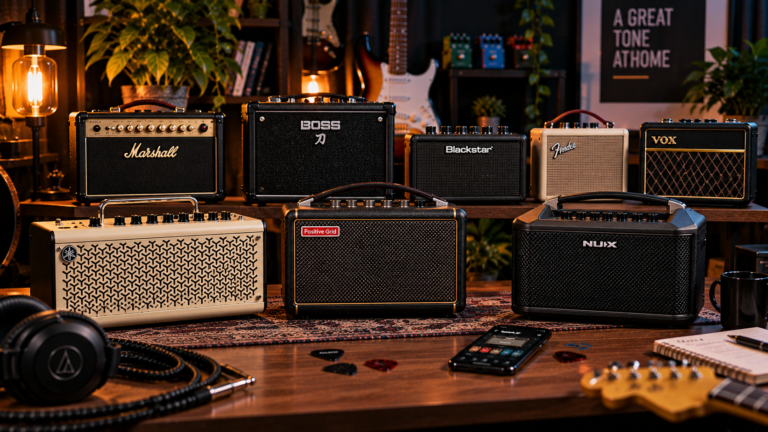
Through testing affordable amps like the Blackstar ID:Core 10 V4, Fender Mustang LT25 and Boss Katana Mini, plus compact modelers such as the Harley Benton DNAfx Amp 20 and Hotone Pulze, the pattern I keep seeing is this: modelers help most when you want one rig to cover practice, recording, and possibly live use without changing your core sound every time.
When a guitar amp modeler makes sense
- You play mostly at home, and good tone at low volume matters more than “moving air”.
- You want to record ideas or demos without setting up microphones.
- You like experimenting with different amps and cabs instead of committing to just one sound.
- You need one rig that works for home, rehearsal, and live, with consistent presets.
When a guitar amp modeler is probably overkill
- You’re still figuring out basic technique, chords and timing, and gear isn’t your bottleneck yet.
- You’re happy with one simple sound from a small amp and don’t care about recording or presets.
- You enjoy the “amp and a couple of pedals” approach and don’t want menus or deep editing.
If your main struggle is “my guitar sounds bad at home, but fine in the rehearsal room”, that’s often more about volume, EQ, and room acoustics than about owning a fancy box. The bedroom tone guide and guitar EQ cheat sheet are good companions to this article if that sounds like your situation.
How this guitar amp modeler guide was put together
This guide isn’t just a list of spec sheets; it’s built around the way home players actually use a guitar amp modeler day to day.
- Focused on realistic home, recording and rehearsal use instead of only studio or tour rigs.
- Grounded in hands-on time with small practice amps like the Boss Katana Mini, then comparing that experience with what modern amp modelers can do.
- Prioritized clear use cases (home practice, recording, metal, band use) over chasing every possible digital amp modeler feature.
- Linked out to detailed guides and reviews on this site so you can see exact settings, example rigs and further amp modeler tests if you want to go deeper.
Main types of guitar amp modeler units
When people say “amp modeler” they might mean a desktop box, a floorboard, or something that looks just like a multi-effects pedal. They all do similar things, but the form factor affects how you’ll actually use them.
Desktop and small desktop modelers
These are designed to sit on your desk next to your audio interface or computer. They usually focus on:
- Quick USB connection for recording
- Headphone practice without turning on studio monitors
- Simple control layout for tweaking while you sit at the desk
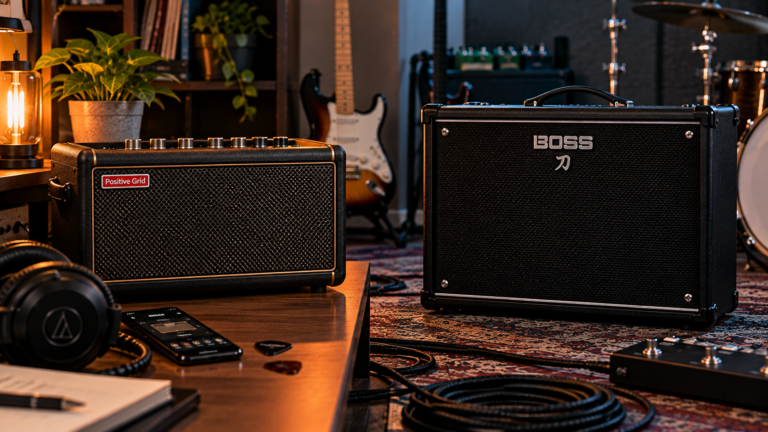
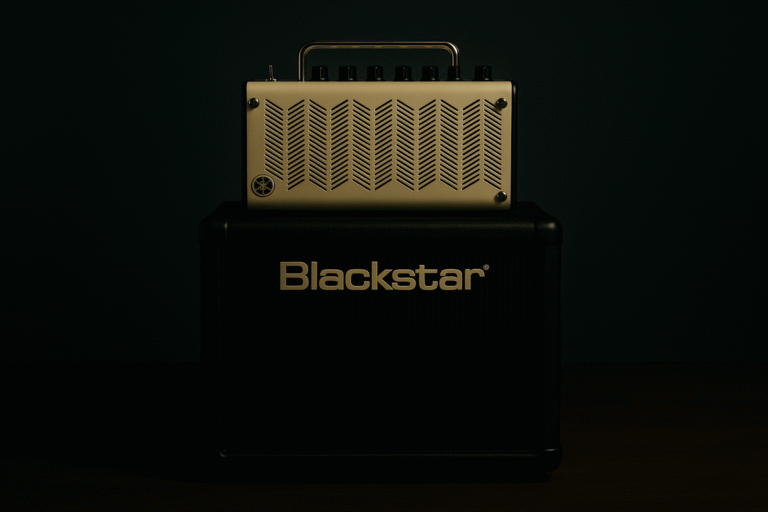
If your entire playing life happens at a desk, a compact desktop amp modeler can replace both a practice amp and most plugins. Some practice amps blur this line – for example, small modeling combos like the Boss Katana Mini or Blackstar ID:Core 10 V4 can live on your desk and behave almost like a desktop unit when you sit close and play at low volume.
Guitar amp modeler pedal / floorboard
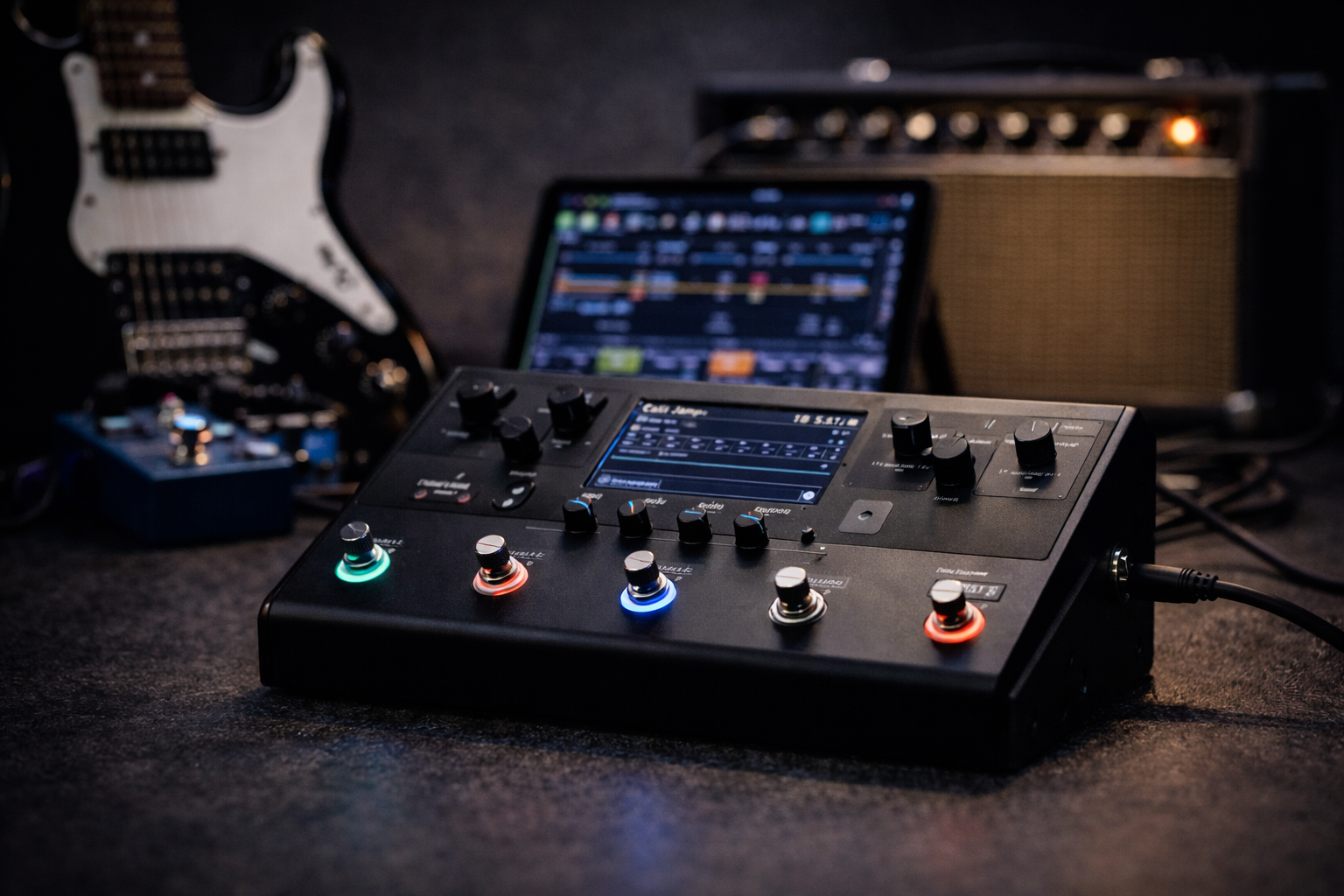
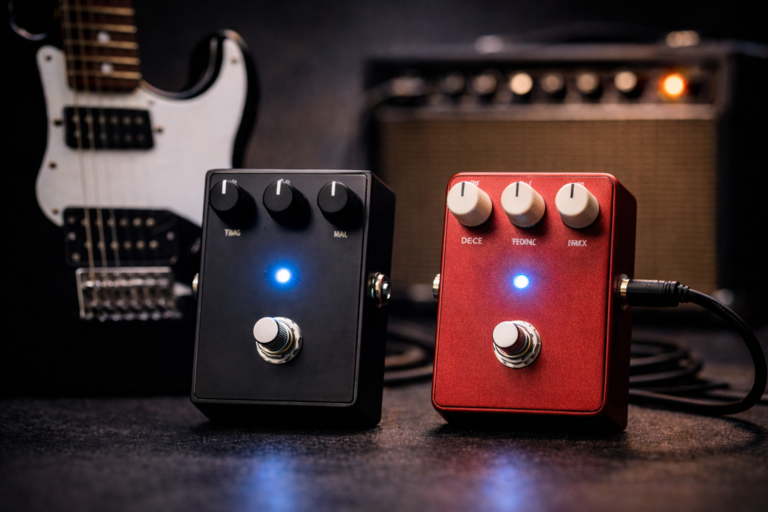
A guitar amp modeler pedal is a floor unit you put on your pedalboard or use on its own. It’s still a full digital amp modeler, just in a pedal format, with switches for presets, scenes, and effects.
This is usually the best option if you:
- Want to go direct to PA at rehearsals and gigs.
- Need to switch between clean, crunch, lead, and ambient tones mid-song.
- Already use pedals and want the modeler to sit in the middle of that ecosystem.
Many players run a guitar amp modeler pedal straight into a full-range FRFR speaker, or into the return of a clean amp. That way, the modeler behaves like the preamp and cab, and the real amp acts as a power amp and monitor on stage. If you’re building your first pedalboard around this idea, the guitar pedals for beginners guide is a good place to start.
Rack and larger rigs
Rack-style amp modelers are less common for home players, but they exist for guitarists who:
- Tour with a consistent rack and want a robust “set and forget” rig.
- Need multiple inputs, routing options, and complex MIDI setups.
- Prefer leaving the brains of the rig off the floor and using a simple controller.
For most home guitarists, a floor or desktop amp modeler is more than enough; rack systems are a niche choice unless you already know you need that level of complexity.
Tones and genres: from clean to metal
One of the reasons I like working with modelers is that they let you get close to very different reference tones from the same guitar.
If you’ve ever chased David Gilmour, John Mayer or Eddie Van Halen-style sounds with limited gear, the flexibility of a modeler makes that whole process a lot less frustrating.
Clean and edge of breakup
For clean and edge-of-breakup sounds, the advantage of a modeler is that you can keep your level low but still hit the “sweet spot” of a virtual amp. Combine that with subtle compression and reverb, and you get very usable tones for practice or recording that don’t bother neighbours.
If you struggle with making your cleans feel full at bedroom volume, pair your amp modeler with the tips from the bedroom tone guide and the EQ cheat sheet; they translate directly to the virtual amps inside any unit.
Classic rock and high gain
For crunch and classic rock, most amp modelers offer multiple variants of British and American high-gain amps. The trick is usually:
- Use a medium-gain amp model, not the most extreme one.
- Put a virtual overdrive in front for tightening or adding bite.
- Use less gain than you think; let EQ and volume do the rest.
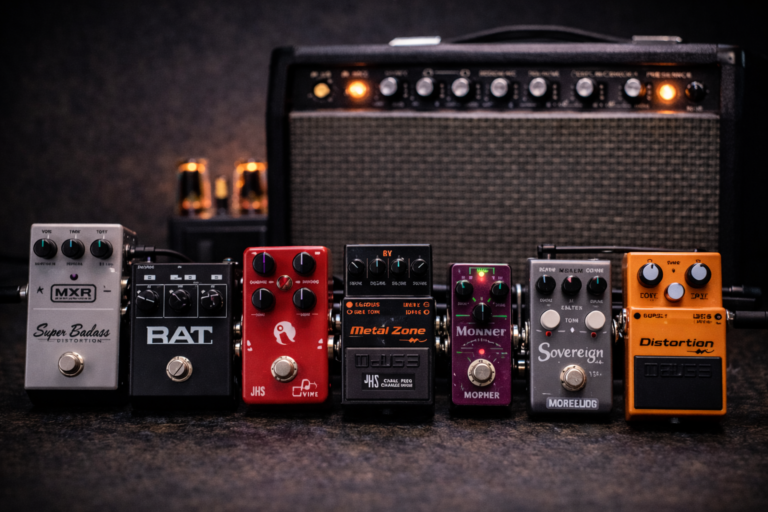
If you’re used to stacking real pedals, the concepts from overdrive vs distortion vs fuzz, overdrive pedal explained and distortion pedal basics carry over directly. Inside a digital amp modeler, you’re just doing the same thing in a different format.
“Best amp modeler for metal”: what actually matters
When people search for the best amp modeler for metal, they often think they need one specific flagship unit, and that’s especially true when you’re scrolling through endless “best amp modeler for metal” lists. In reality, modern modelers share a lot of common ground, and what matters more is how you set them up:
- Tight low end – use a tube-style overdrive in front with low gain and higher level to tighten the input.
- Noise gate – you want adjustable thresholds pre and/or post amp for staccato riffs.
- Good IRs or cab section – modern metal tone is often more about the right cab/mic combo than the exact amp model.
- Comfortable feel – low latency and a responsive pick attack matter more than spec sheets.
Affordable units can do convincing metal if you’re patient with EQ and IRs. For example, there are budget-friendly modelers covered in reviews like the Harley Benton DNAfx Amp 20 and amp-style devices such as the Hotone Pulze, which show how far cheaper digital gear has come.
For most players, the best amp modeler for metal is simply the one that gives you tight low end, a good noise gate and IRs you actually like, rather than the most expensive flagship box.
How a guitar amp modeler fits into your rig
Before buying, it’s useful to think about where in your signal chain the modeler will live. That determines which inputs and outputs you actually need.
Home and headphone practice
For home use, the most important features are usually:
- Comfortable headphone out with enough level
- USB audio for recording directly into your DAW
- Simple preset system so you can recall a few “go-to” tones quickly
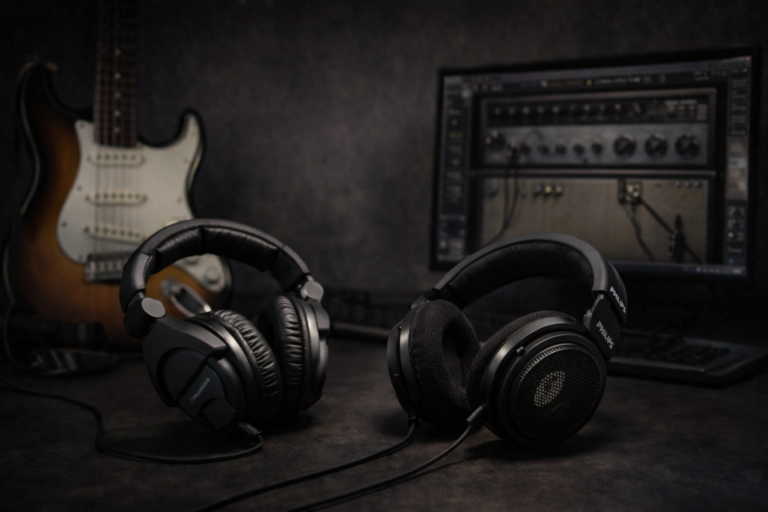
If you plan to play mostly on headphones, pairing your amp modeler with a good set of cans makes a bigger difference than people think. The guide on budget headphones for guitar practice is a good starting point if your current headphones are holding you back.
Live and rehearsal use
For live use, a floor-style amp modeler pedal with XLR outs is normally the easiest route:
- Direct to PA – send a cab-sim signal to the mixing desk.
- On-stage monitoring – use FRFR speakers or in-ear monitors.
- Backup plan – if your amp dies, you can still finish the gig direct from the modeler.
Many modern “smart” practice amps like the Positive Grid Spark GO, Line 6 Spider V 20 MkII and Vox Pathfinder 10 blur the lines here; they act partly like mini amp modelers tuned purely for home practice.
When a smart practice amp is enough
If you never plan to go direct to PA, never record via USB, and just want better sound than your first tiny amp, a smart practice amp might be the simpler solution. Reviews like the Blackstar ID:Core 10 V4 or the Fender Mustang LT25 show how far these amps have come; they behave like a “closed” amp modeler tuned purely for home practice.
When a guitar amp modeler is overkill
It’s also perfectly valid to not buy a modeler. You might be happier with:
- A single good practice amp that you really learn to dial in.
- A basic audio interface and a couple of amp sim plugins.
- A small pedalboard into a clean combo, if you love physical knobs and simplicity.
If you’re still figuring out basic technique, chord vocabulary, and rhythm, it’s often better to focus on those and use simple gear. The beginner guitar checklist, best electric guitars for beginners and electric guitars under $300 will help you put together a starter rig that actually makes sense before you dive into modeler territory.
Summary: should you buy a guitar amp modeler?
If you want consistent tones at any volume and easy recording from one rig, a guitar amp modeler is usually worth it.
If you’re still figuring out basic technique and are happy with one simple sound from a small amp, you can safely skip a guitar amp modeler for now and come back to it later.
A guitar amp modeler is worth it if you want:
- Good tone at any volume, especially with headphones.
- Multiple “virtual” amps and cabs in one box.
- Easy recording over USB without microphones.
- One rig you can take from your bedroom to the stage.
If your main problem is that your guitar sounds bad at home, start by learning how amps, gain, and EQ work in the room you have.
Articles like the “why does my guitar sound bad at home?” guide and the guitar buzz quick fixes can fix a lot before you spend money. Once you know what you’re missing, you’ll have a much clearer idea whether an amp modeler, a better practice amp, or just a smarter setup is the right next step.
Guitar amp modeler FAQ
Is a guitar amp modeler worth it for beginners?
It can be, but it’s not mandatory. If you’re on a tight budget, a simple practice amp is enough while you learn basic technique. A modeler becomes more valuable once you know what kinds of tones you like and want easy recording, headphones, and multiple amp flavors in one device.
What’s the difference between an amp modeler and plugins?
Plugins run on your computer and require an audio interface; a hardware amp modeler is a self-contained box. Plugins are often cheaper and easier to update, while hardware modelers are better for low-latency playing, simple setups, and taking the same sounds on stage without a laptop.
Can I use a guitar amp modeler with a real amp?
Yes. You can run the modeler into the front of a clean amp or into the effects loop return so the real amp acts as a power amp and speaker. Many players use a guitar amp modeler pedal this way to add extra amp voices and effects to a simple combo they already like.
Do I need an expensive amp modeler for good metal tones?
Not necessarily. Even budget-friendly units can get tight, modern metal sounds if you use a good IR, add a virtual overdrive in front, and set your noise gate and EQ carefully. The higher-end units mainly add more routing options, better interfaces, and sometimes more refined feel and effects.
2 Comments
Comments are closed.