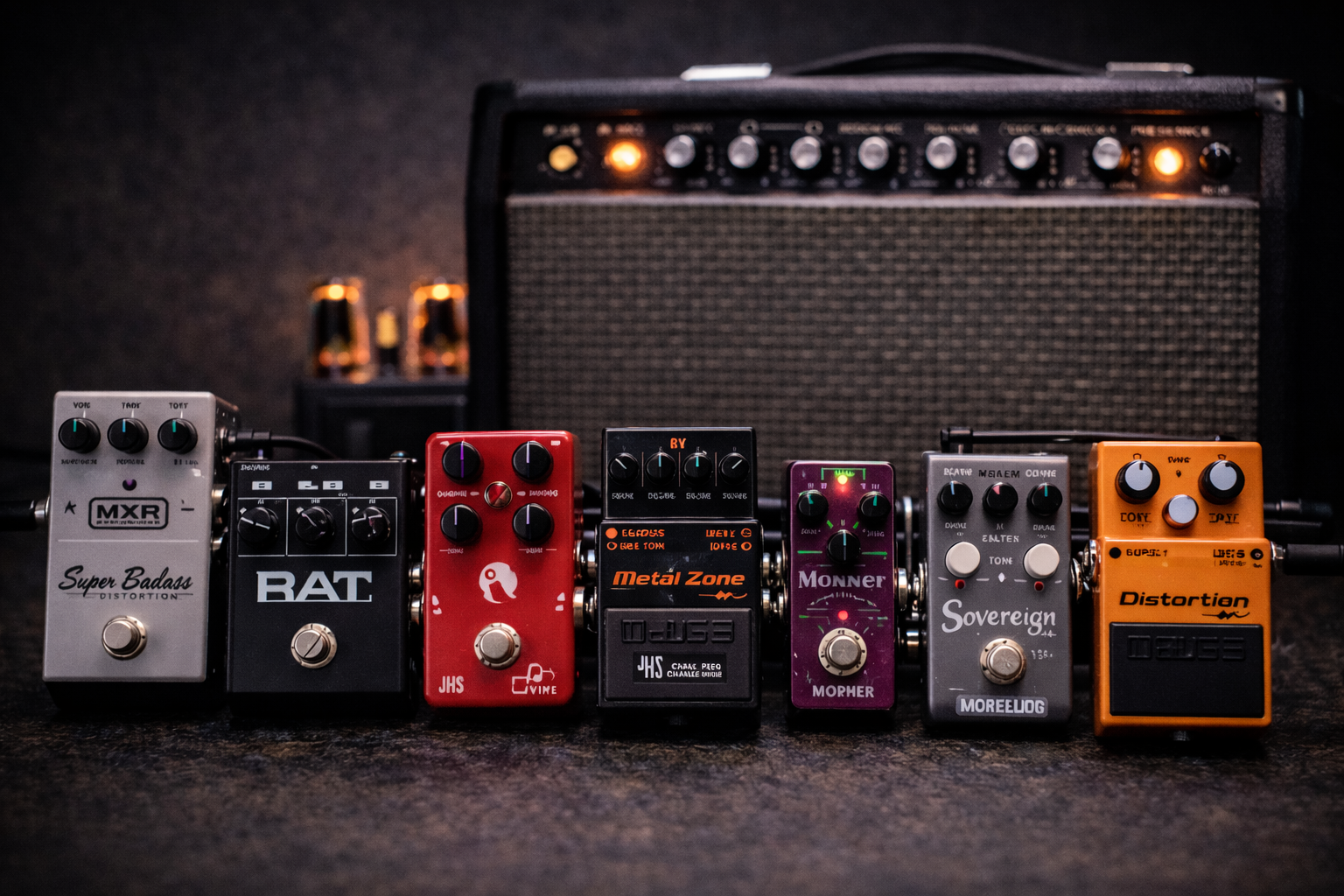
Best Distortion Pedal for Guitar: 7 Picks That Actually Make Sense
Distortion is the sound that made most of us want an electric guitar in the first place – but once you open a shop page, every box claims to be the best distortion pedal for “everything from blues to metal”. If your amp already has a gain channel, do you really need another pedal, or will any good distortion pedal do for home practice and band rehearsals?
I’m in the same boat as most readers here: mostly home player, some rehearsal volume, and I’ve tried amp gain, modelers and standalone pedals side by side. This guide is the version I wish I’d read earlier – not just a list of “great distortion pedals”, but a way to match the best distortion pedal for guitar to how you actually play.
- What a dedicated distortion pedal adds to a normal home or band rig.
- How different distortion types feel (crunch vs high-gain) in real use.
- Seven realistic options from cheap classics to versatile all-rounders.
| Your situation | Pick | Why it fits |
|---|---|---|
| You want one distortion that covers most styles (classic rock to modern) and just works. | MXR Super Badass Distortion | Wide gain range, 3-band EQ and a familiar format – an easy “main distortion” choice. |
| You want a character pedal that can go from gritty rhythm to fuzzy-ish leads. | Pro Co Rat 2 | A staple on countless boards – one of those great distortion pedals that defines a sound. |
| You mostly play rock and need an amp-like crunch/lead pedal. | JHS Angry Charlie V3 | Marshall-style “amp in a box” that turns a clean platform into a hot British stack. |
| You need aggressive, tight high-gain that works for metal and metalcore. | Boss MT-2W Metal Zone | Refined version of a classic; covers many best guitar distortion pedals metal tones with one box. |
| Tight budget, first board, mostly home practice, you just want solid high-gain. | Donner Morpher | Compact and affordable; a realistic entry into the “cheap distortion pedals” world. |
| You want flexible, boutique-style high-gain without a giant pedalboard. | Wampler Sovereign | Multiple gain structures and voicings – a premium do-it-all high-gain box. |
| You want a cheap, simple classic you can leave on most of the time. | Boss DS-1 | Iconic orange box: a small, reliable option in any “best distortion pedal” short-list. |
Who is a dedicated distortion pedal actually for?
Not everyone needs a separate distortion pedal on day one. Plenty of players stay happy with their amp’s built-in gain for years. Others find that a dedicated box is what finally makes their riffs feel tight and controlled – especially when they start chasing specific rock or metal tones at sensible volumes.
When a distortion pedal makes sense
- Your amp only has a clean channel or a basic drive sound you can’t shape much.
- You want specific crunch / high-gain flavours instead of one generic drive.
- You’re building a pedalboard and want repeatable, song-specific gain levels.
- You play heavier styles (punk, hard rock, metal) and need tighter low end.
When a distortion pedal is probably overkill
- You’re still fighting basic issues (tuning, noisy rig, harsh amp EQ).
- You don’t yet have a clean / edge-of-breakup tone you genuinely like.
- You mostly practice at very low volume and everything sounds fizzy anyway.
- Your monitoring (amp, headphones, room) is clearly the weak link.
If the rig itself feels rough, fixing volume, EQ and noise will move the needle more than buying the best distortion pedal for guitar on paper. These reads help with the basics: bedroom tone guide and guitar EQ cheat sheet.
Main types of distortion pedals
When guitarists say “distortion”, they might mean crunchy classic rock, tight modern metal or almost-fuzzy leads. Most pedals in this list fall into three practical categories.
Classic rock distortion
These pedals sit between overdrive and full high-gain: enough saturation for riffs and leads, but still responsive to picking. A lot of players searching for best guitar distortion pedals actually want this middle ground.
- Great for classic rock, pop-punk and hard rock.
- Works well into a clean amp set as a platform.
- Often has a wide gain range and basic tone controls.
High-gain and metal distortion
High-gain distortion pedals focus on tight low end, clear palm-mutes and saturated sustain. They’re the tools behind most “best metal guitar pedals” and best distortion pedal for metalcore style rigs.
- Good choice if you tune down, use humbuckers and need tight chugs.
- Often include mid controls or 3-band EQ for mix-friendly tones.
- Can sound fizzy into small practice amps if you overdo gain and treble.
Character and “amp in a box” distortion
These pedals mimic the response and EQ curve of specific amps (Marshall, hot-rodded British stacks, etc.) rather than just adding generic dirt. They’re ideal when you want a specific flavour but can’t turn up a real tube head.
- Perfect if you love one amp family but often play through clean backline.
- Useful for recording: treat them like a preamp into modelers or IRs.
- Often end up as the “always-on” core of your dirty sound.
Buying checklist: what actually matters
Most players don’t need “more gain”; they need one or two distortion sounds that reliably make their core tone feel tighter and more controlled. Before picking from any list of the best distortion pedal for guitar options, it helps to zoom out and decide what you really need.
- Gain range: can it cover your whole set, from crunch to saturated leads?
- EQ control: basic tone vs full 3-band EQ for a band mix.
- Noise and tightness: does it stay controlled with palm-mutes and lower tunings?
- Voicing: classic rock, modern metal, or amp-like character pedal?
- Board space: mini vs standard enclosure.
- Stacking: will you run it into an overdrive/boost, or use it alone?
- Monitoring: small combo vs FRFR/headphones – harsh speakers are less forgiving.
Best distortion pedal for guitar: quick picks by use case
Best distortion pedal for guitar if you just want one do-it-all box
If you’re mainly after a single distortion that works for home, rehearsal and small gigs, it makes sense to pick something that behaves like the best distortion pedal in real-world use rather than just in a spec sheet.
- All-rounder (home + rehearsal): MXR Super Badass Distortion – one of the best distortion pedal for guitar options if you want a single box from crunch to metal.
- Character classic: Pro Co Rat 2 – a permanent resident of “great distortion pedals” lists.
- Rock amp in a box: JHS Angry Charlie V3 – hot-rodded Marshall flavour without lugging a stack.
- Budget-friendly high-gain: Donner Morpher – a sensible starting point in the cheap distortion pedals space, often acting as a best budget distortion pedal or best affordable distortion pedal choice for first boards.
- Dedicated metal / metalcore tones: Boss MT-2W – a compact way to reach tight modern tones.
- Simple classic on a budget: Boss DS-1 – one of the best cheap distortion pedal options if you just want a reliable orange box.
The 7 picks
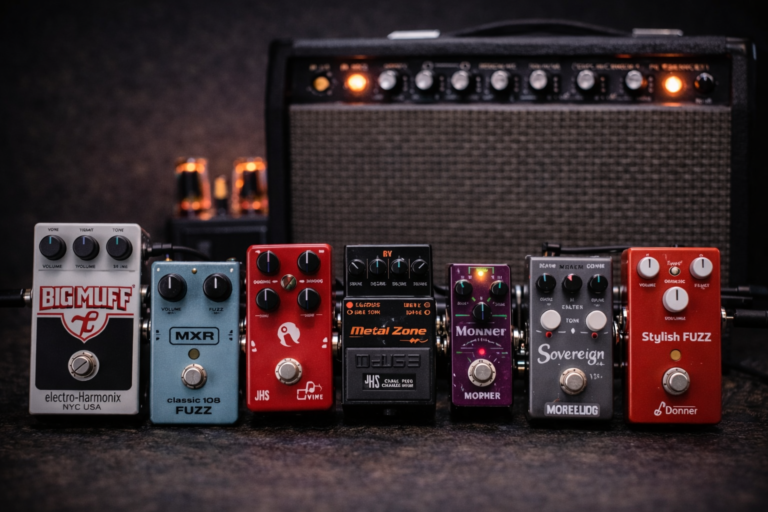
These seven options cover everything from cheap classics to versatile high-gain boxes, so you don’t have to wade through endless lists of great distortion pedals to find something that actually fits a normal rig.
MXR Super Badass Distortion (all-rounder)
The Super Badass Distortion aims to be a full range “from vintage to modern” dirt box. With a wide gain sweep and 3-band EQ, it can cover crunchy rhythm, tight hard-rock and many modern tones without needing extra pedals.
- Model: MXR Super Badass Distortion
- Type: Classic-to-modern distortion with 3-band EQ
- Best for: One-pedal boards, home + rehearsal
- Key features: Wide gain range, active EQ, compact form factor
- Price tier: Mid
- Skip if: You only play extreme metal or want a very specific amp emulation
Pro Co Rat 2 (character favourite)
The Rat 2 can live as a gritty rhythm sound, a smoother lead voice or almost-fuzzy sustain depending on how you set the Filter and Distortion controls. That flexibility is why it shows up in so many lists of the best guitar distortion pedals.
- Model: Pro Co Rat 2
- Type: Character distortion / fuzz-adjacent pedal
- Best for: Alt-rock, punk, leads that cut through
- Key features: Simple three-knob layout, distinct Filter control
- Price tier: Mid
- Skip if: You want super-tight, ultra-modern metal tones only
JHS Angry Charlie V3 (Marshall-style amp in a box)
The Angry Charlie V3 is designed to feel like the high-gain channel of a hot-rodded Marshall. Into a clean amp or modeler, it gives you thick British rhythm crunch and saturated leads without stadium volume.
- Model: JHS Angry Charlie V3
- Type: Marshall-style distortion / amp-in-a-box
- Best for: Classic and modern rock
- Key features: 3-band EQ, plenty of gain on tap
- Price tier: Upper-mid
- Skip if: You’re on a tight budget or only need a subtle crunch
Boss MT-2W Metal Zone (refined high-gain)
The MT-2W takes the original Metal Zone idea and cleans it up: less noise, more usable EQ and a second mode aimed at more classic high-gain. It’s a compact way to reach those “best metal pedal” tones without a huge rig.
- Model: Boss MT-2W Metal Zone
- Type: High-gain distortion (standard + custom modes)
- Best for: Metal, metalcore, down-tuned riffs
- Key features: Dual modes, powerful mid controls
- Price tier: Upper-mid
- Skip if: You mostly play clean, blues or light rock
Donner Morpher (budget high-gain pick)
Morpher is a compact, budget-friendly distortion inspired by modern high-gain amps. It’s not a boutique studio tool, but it’s a realistic entry into saturated tones when you’re assembling your first board and don’t want to over-spend.
- Model: Donner Morpher
- Type: Mini high-gain distortion
- Best for: First boards, budget home rigs
- Key features: Small footprint, multiple modes
- Price tier: Budget
- Skip if: You need pristine low-noise performance for pro studios
If your biggest upgrade is still monitoring rather than pedals, you may get more from improving your headphone chain first: budget headphones for guitar practice.
Wampler Sovereign (flexible boutique high-gain)
The Sovereign focuses on flexibility: multiple gain structures, mid-behaviour options and enough range to act as your main rock/metal sound. It suits players who want something more refined than a basic stompbox.
- Model: Wampler Sovereign
- Type: Boutique-style high-gain distortion
- Best for: Players who gig frequently and want a polished main gain sound
- Key features: Multiple gain and mid controls
- Price tier: Premium
- Skip if: You’re shopping specifically for the best cheap distortion pedal
Boss DS-1 (simple classic)
The DS-1 is one of the most common distortion pedals on the planet: cheap, sturdy and able to get you into rock and lead territory with minimal fuss. Used wisely – sensible tone settings and moderate gain – it remains a solid good distortion pedal for players who just want to stomp and go.
- Model: Boss DS-1
- Type: Classic three-knob distortion
- Best for: Budget rigs, backup boards, simple setups
- Key features: Iconic design, easy to find new or used
- Price tier: Budget
- Skip if: You want ultra-tight modern metal tones or deep EQ
How a distortion pedal fits into your rig
Distortion works best once your core clean and edge-of-breakup tones already feel good. Where you place it in the chain – and how you monitor (amp vs headphones vs FRFR) – changes the result more than most people expect.
Home and headphone practice
For home players, the most useful settings tend to be moderate: less gain than you think, sensible EQ and a level that doesn’t crush your dynamics.
That’s often what ends up defining the best distortion pedal for guitar in real life, especially at apartment-friendly volumes.
- Keep gain lower than you’re tempted to; clarity helps you hear mistakes.
- Use EQ to tame harsh highs from small speakers or bright headphones.
- Pair the pedal with a solid practice amp or a good headphone chain.
If everything feels fizzy at low volume, these guides often help more than swapping pedals: bedroom tone guide and why your guitar sounds bad at home.
Live and rehearsal
In a band mix, definition beats raw gain. A tighter, mid-forward distortion at sane levels will usually sound bigger out front than a scooped, maxed-out setting.
- Use less low end than you would alone; let bass and kick fill the bottom.
- Don’t be afraid of mids – that’s where guitars live in a mix.
- Have one “works on most songs” setting you can return to quickly.
If your tone falls apart when you turn up, check out gain vs volume vs master as a companion read.
Alternatives and simpler options
You don’t have to buy a dedicated distortion pedal to get usable dirty tones. Common alternatives include:
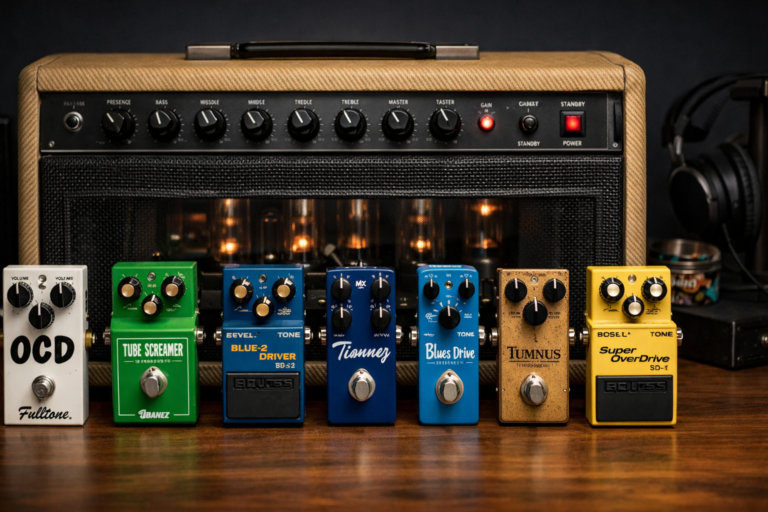
- Using your amp’s gain channel and shaping it with an overdrive or EQ pedal.
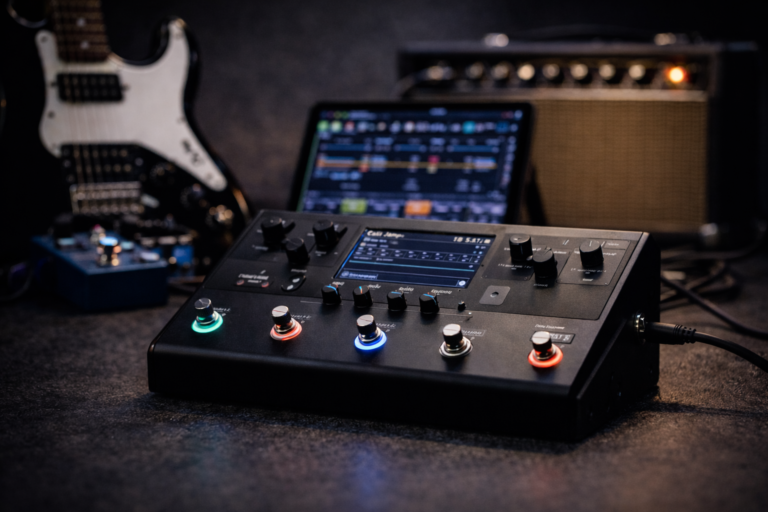
- Relying on distortions inside a multi-effects unit or amp modeler.
- Recording with amp sims and choosing different virtual amps per song.
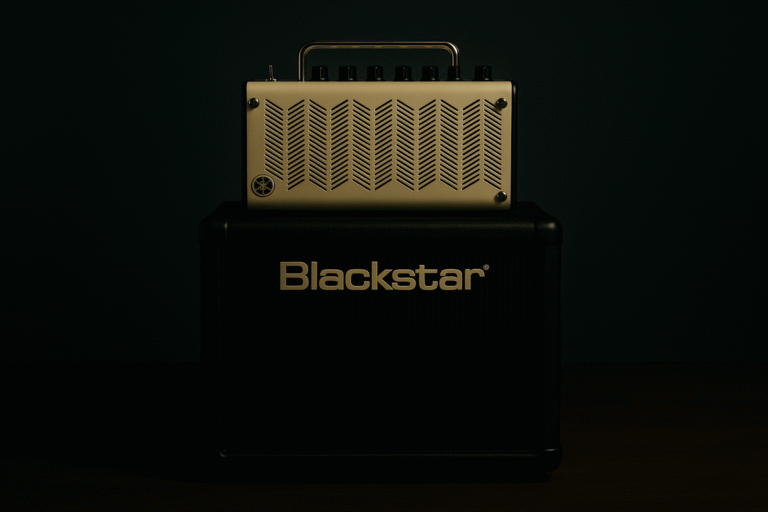
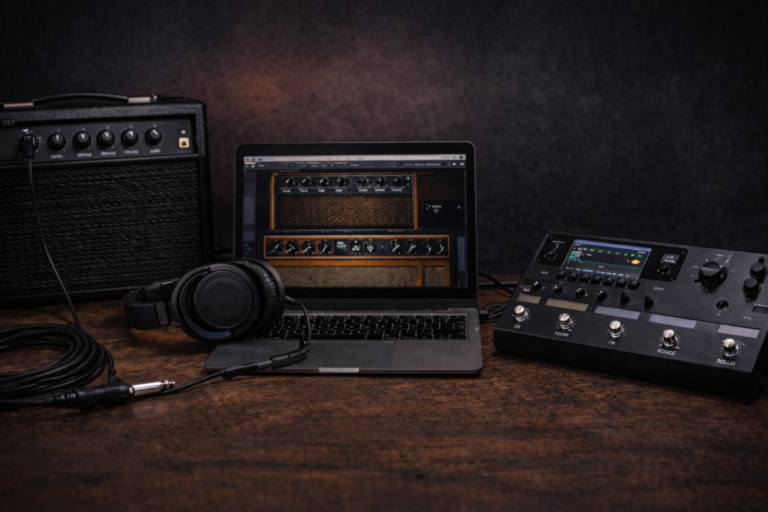
Smart practice amps and modelers already blend amps, effects and speakers in one box. If you’re still deciding how they fit into your rig, the amp simulator vs practice amp vs modeler guide walks through the bigger picture.
When a distortion pedal is overkill
Sometimes the best move is simply not buying a distortion pedal yet. You might be happier with:
- One good practice amp whose clean and gain channels you really learn to dial in.
- A simple rig: guitar, amp, maybe one boost/overdrive before adding more gain stages.
- Fixing noisy cables, bad intonation and harsh EQ before chasing more saturation.
If you’re still working through the basics – chord changes, rhythm, timing – gear probably isn’t your bottleneck. These pieces help you put together a sensible starter rig first: beginner guitar checklist and electric guitars under $300.
Summary: should you buy a distortion pedal now?
If you’re choosing the best distortion pedal for guitar today, match the pedal to your actual use case: one reliable all-rounder, a character box that defines your sound, a tight budget option that still feels musical, or a dedicated high-gain machine if that’s where you live.
- Start here: MXR Super Badass Distortion if you want one pedal that covers the most ground.
- Character and classics: Pro Co Rat 2 or Boss DS-1 for recognisable, proven tones.
- Budget-friendly high-gain: Donner Morpher if you just need saturated tones for home practice.
- Rock and metal focus: JHS Angry Charlie V3 or Wampler Sovereign for gig-ready main gain sounds.
- Modern metal / metalcore: Boss MT-2W if you need tight, controlled high-gain in one box.
Once distortion is on the board, tightening your gain staging and EQ makes it translate better in real rooms: gain vs volume vs master and guitar EQ cheat sheet are good next reads.
Distortion pedal FAQ
Is a distortion pedal worth it if my amp already has a gain channel?
It depends how picky you are. Many amps offer one basic gain flavour with limited EQ. If that already gives you all the crunch and sustain you want, you don’t need a pedal. A dedicated unit becomes more valuable when you want specific flavours, tighter low end at lower volumes, or multiple gain levels you can switch between without touching the amp.
What’s the difference between overdrive and distortion pedals?
Overdrive is usually softer and more dynamic – it pushes an already working amp a bit harder. Distortion adds more clipping and compression on its own, giving you more gain at lower volumes. Many players use overdrive as a boost and distortion as the main dirt sound, rather than picking only one.
Where should I put a distortion pedal in my signal chain?
Most players put distortion early in the chain: after tuner and wah, before modulation, delay and reverb. If you use multiple gain pedals, experiment with which one comes first – often the lower-gain or “amp-like” pedal goes in front, with higher-gain distortion or boosts after it.
Do I need a specific metal distortion pedal for heavy music?
Not always. Plenty of classic high-gain tones come from stacking an overdrive into a fairly normal distortion or amp channel. Dedicated metal pedals help by tightening the low end and adding more gain, but you can get very close with a versatile distortion, a boost and good EQ if you dial them carefully.
One Comment
Comments are closed.