Best Fuzz Pedal: 7 Picks That Actually Make Sense
Fuzz is the wildest side of guitar gain – from vintage, splatty breakup to huge walls of sustain. It can be a subtle, woolly push on top of an amp or a full-on smashed speaker sound. But with every box claiming to be the best fuzz pedal “from classic rock to doom”, it’s hard to know what actually fits your rig if you mostly play at home with the occasional rehearsal or recording.
The Guitar Side takes a home-first, engineering-led approach here: circuit family, guitar-volume cleanup, buffer sensitivity, sustain, midrange placement and how each design behaves once the rest of the rig gets involved. This is not a random list of “best guitar fuzz pedal” options; the point is to match the right type of fuzz to how you actually play.
- What a dedicated fuzz pedal adds to a normal home or band rig.
- The difference between classic, dynamic and octave fuzz types.
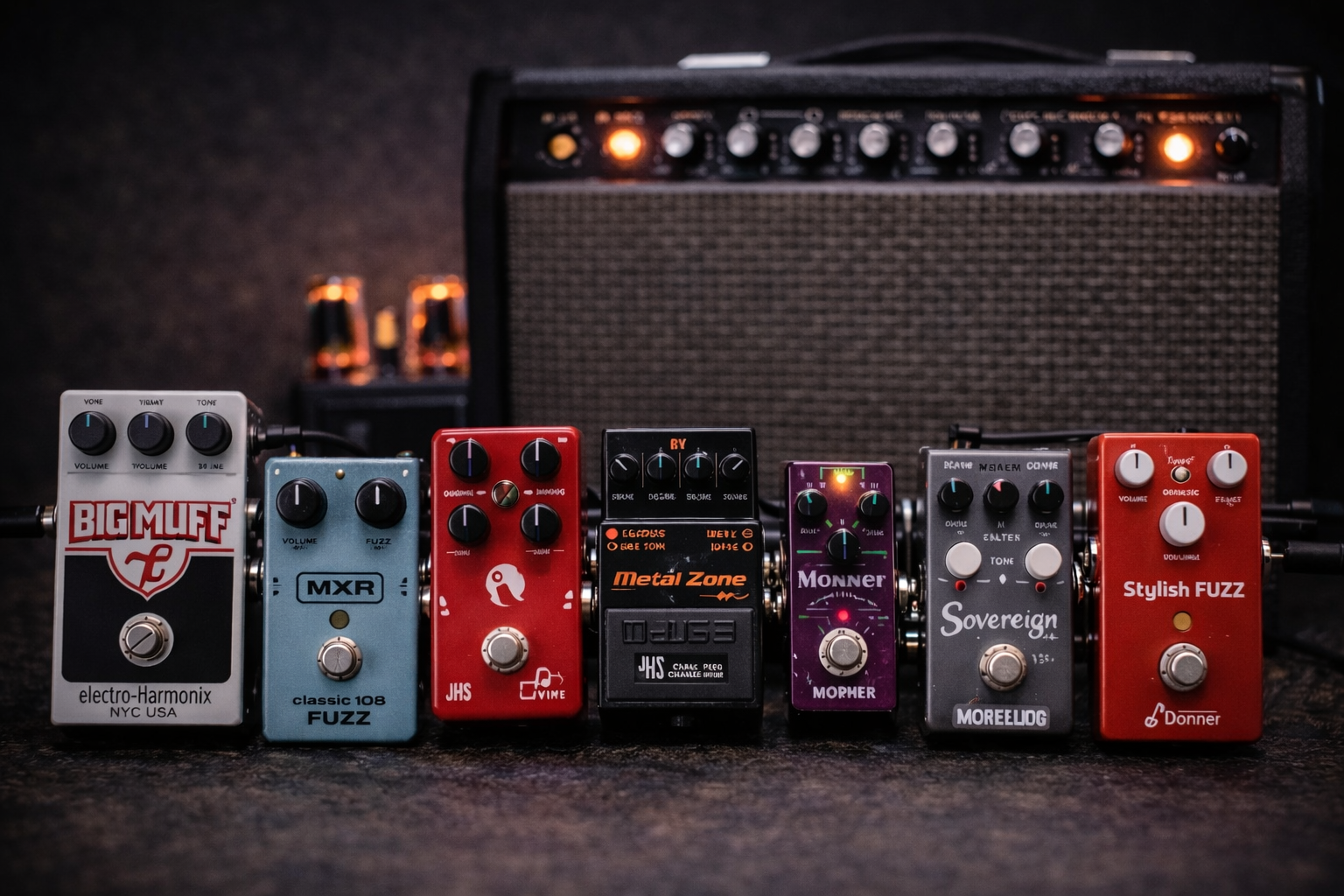
- Seven realistic picks from cheap fuzz pedal options to flexible modern all-rounders.
| Your situation | Pick | Why it fits |
|---|---|---|
| You want one main fuzz sound for big, sustaining riffs and leads that just works into most amps or modelers. | Electro-Harmonix Big Muff Pi | Classic muff-style sustain and thickness – a realistic best fuzz pedal candidate for rock and alt tones. |
| You want an expressive guitar fuzz that cleans up from the volume knob and feels more like an amp. | MXR Classic 108 Fuzz Mini | Fuzz Face-style circuit with a handy buffer switch; dynamic and responsive for players who ride their controls. |
| You mostly play at home and want a simple, flexible box that goes from mild wool to saturated fuzz. | JHS 3 Series Fuzz | Straightforward controls with a useful Bias knob and Fat switch – a practical all-rounder for everyday rigs. |
| You need a fuzz that cuts in a mix with more mids and works for modern rock and heavier styles. | EarthQuaker Devices Hoof | Muff-inspired germanium/silicon hybrid with a Shift control for midrange placement – easier to fit into a band mix. |
| You want vintage-to-modern fuzz in one box, with two modes and good build quality. | Boss FZ-1W Fuzz | Waza Craft fuzz with dedicated Vintage and Modern modes – a flexible option if you only want one main fuzz pedal. |
| You’re chasing octave-up solos and Hendrix-style leads, not just standard fuzz sounds. | Joyo Voodoo Octave | Thick main fuzz with switchable upper octave – a strong best fuzz octave pedal / best octave fuzz choice on a budget. |
| Tight budget, crowded board – you just need a small, cheap fuzz pedal to explore the sound. | Donner Stylish Fuzz | Mini enclosure, simple three-knob layout and low price make it a realistic best budget fuzz pedal for first boards and smaller rigs. |
We compare fuzz pedals by the behaviors that actually change a rig: circuit family, cleanup from the guitar volume knob, buffer sensitivity, sustain, low-end control, midrange placement and whether the pedal stays useful outside a solo bedroom tone. Product details are checked against current manufacturer documentation, and the deeper product pages below carry the full trade-offs instead of reducing each pedal to a spec list.
Who is a dedicated fuzz pedal actually for?
You don’t need a separate fuzz pedal on day one. Plenty of players get by with amp gain or a milder overdrive for years. Fuzz really starts to make sense when you want more texture, sustain and character than a typical overdrive or distortion can give you. If you are still deciding which gain family you need, start with overdrive vs distortion vs fuzz before shopping individual pedals.
When a fuzz pedal makes sense
- You want thick, sustaining leads and chords rather than polite crunch.
- You like classic rock, grunge, stoner or doom-leaning tones that need extra saturation.
- You enjoy playing with your guitar’s volume knob and picking dynamics.
- You want a different texture from your existing overdrive or distortion pedal.
When a fuzz pedal is probably overkill
- You still don’t have a clean tone and basic gain sound you really like.
- Your amp or modeler sounds harsh and fizzy already, even with simple drive.
- You mostly practice very quietly and can’t hear note definition as it is.
- Your monitoring chain (amp, headphones, room) is clearly the weak link.
If the rig itself feels rough, fixing volume, EQ and noise will move the needle more than buying the best fuzz pedal on paper. These reads help with the basics: why does my guitar sound bad at low volume and guitar EQ cheat sheet.
For a deeper dive into how fuzz circuits clip differently from other gain pedals, see how does a fuzz pedal work?.
Main types of fuzz pedals
When guitarists say “fuzz”, they might mean woolly vintage breakup, singing sustain or glitchy noise. Most of the best guitar fuzz pedal options fall into three practical categories.
Classic muff-style fuzz
Muff-style fuzz pedals emphasise sustain and a thick, compressed tone. They’re less about cleaning up and more about big walls of sound for riffs and leads. The Big Muff Pi review shows the classic version of that trade-off in detail.
- Great for rock, grunge and lead lines that need long sustain.
- Can get huge and bass-heavy – you may need to trim lows for band mixes.
- Often the sound people picture when they talk about the best fuzz pedal for guitar in classic rock.
Dynamic Fuzz Face-style pedals
Fuzz Face-inspired circuits tend to be more touch-sensitive. They react strongly to guitar volume and pick attack, going from near-clean to full fuzz without touching the pedal. Our Fuzz Face pedal guide goes deeper into germanium vs silicon, cleanup and buffer sensitivity.
- Good choice if you ride the volume knob a lot.
- Works well into clean or slightly breaking-up amps.
- Where many expressive guitar fuzz pedal recommendations live.
Octave fuzz and more extreme flavours
Octave fuzz pedals add an upper octave on top of your signal, especially noticeable high on the neck. Some are fairly polite; others go into wild, almost synth-like textures.
- Perfect if you want Hendrix-style octave leads or weirder solo tones.
- Best used with the neck pickup and higher frets for a clear octave effect.
- Often show up in searches for a best fuzz octave pedal or best octave fuzz, especially for lead-focused players.
Buying checklist: what actually matters
Most players don’t need a drawer full of fuzz boxes; they need one or two that reliably make their core tone feel better. Before picking from any list of the best fuzz pedal options, it helps to zoom out and decide what you really need.
- Voice and tightness: thick and scooped vs mid-forward; how much low end and bass bloom you can handle.
- Clean-up behaviour: does it respond musically when you roll the guitar volume down?
- Octave or not: do you actually need octave fuzz for your parts, or is a regular fuzz enough?
- Noise and hiss: fuzz is naturally noisy – you still want it to be manageable at home and on small stages.
- Board space: full-size box vs mini fuzz pedal, especially if your board is already crowded.
- Compatibility with buffers: some vintage-style fuzzes behave differently after buffered pedals.
- Budget: are you hunting for that one long-term main box, or a best budget fuzz pedal just to see if you like the effect?
Best fuzz pedal: quick picks by use case
If you just want one main fuzz sound
If you’re mostly after a single, reliable fuzz tone, it makes sense to pick something that behaves like the best fuzz pedal in everyday use instead of juggling three niche boxes.
- All-rounder (home + rehearsal): Electro-Harmonix Big Muff Pi – classic sustain and thickness that works into most clean or crunch amps.
- Dynamic option that cleans up: MXR Classic 108 Fuzz Mini – Fuzz Face-style character with a switchable buffer in a current mini enclosure.
- Simple modern choice: JHS 3 Series Fuzz – accessible controls and enough range for most rigs.
- Mid-forward mix-cutter: EarthQuaker Devices Hoof – great if you need your fuzz to be heard with drums and bass.
- Flexible vintage/modern box: Boss FZ-1W – two modes that cover softer vintage textures and more aggressive modern tones.
Octave, mini and budget fuzz picks
- Best fuzz octave pedal on a budget: Joyo Voodoo Octave – a practical way to get octave fuzz without boutique prices.
- Best mini fuzz pedal for tight boards: Donner Stylish Fuzz – compact enclosure that still delivers a recognisable fuzz character.
The 7 picks
These seven options cover everything from cheap classics to flexible modern fuzzes, so you don’t have to dig through endless best guitar fuzz pedal lists to find something that fits a normal rig.
Electro-Harmonix Big Muff Pi (classic all-rounder)
The Big Muff Pi is one of the most famous fuzz pedals ever made. It’s all about sustain and a thick wall of sound rather than subtle breakup, which makes it ideal for big chords, leads and alt-rock riffs. Our full Big Muff Pi review covers the mid-scoop, band-mix and cleanup trade-offs in more detail.
- Model: Electro-Harmonix Big Muff Pi
- Type: Muff-style fuzz
- Best for: Rock, grunge, sustaining leads, noisy textures
- Key features: Long sustain, simple controls, many variants available
- Price tier: Mid
- Skip if: You need a very tight, precise rhythm tone or lots of clean-up from the volume knob
MXR Classic 108 Fuzz Mini (dynamic Fuzz Face-style)
The current Classic 108 Fuzz Mini keeps the silicon BC-108 voice and switchable buffer of the larger M173, which Dunlop now lists as a legacy product. It stays more expressive than a typical Muff-style fuzz and responds strongly to your guitar’s volume knob. If that interaction is the main reason you are shopping this style, the Fuzz Face guide explains the circuit-family behavior in more depth.
- Model: MXR Classic 108 Fuzz Mini (M296)
- Type: Fuzz Face-style silicon fuzz
- Best for: Players who ride the volume knob and want cleans to heavy fuzz from one pedal
- Key features: BC-108 silicon transistor, Buffer switch, compact enclosure
- Price tier: Mid
- Skip if: You prefer a more compressed, always-on wall of fuzz
JHS 3 Series Fuzz (modern flexible option)
The JHS 3 Series Fuzz aims to give you a wide range of usable sounds without a complicated interface. The Bias knob changes how the final gain stage behaves, while the Fat switch adds low-end weight; together they move the pedal from smoother, almost distortion-like tones to more ragged or gated textures. The full JHS 3 Series Fuzz review goes deeper into that range.
- Model: JHS 3 Series Fuzz
- Type: Bias-adjustable modern fuzz
- Best for: Home and rehearsal rigs where you want one pedal to cover a lot of ground
- Key features: Bias knob, Fat switch, wide usable Fuzz range
- Price tier: Mid
- Skip if: You only want a very specific vintage fuzz flavour and nothing else
EarthQuaker Devices Hoof (mid-forward mix cutter)
The Hoof is a Muff-inspired germanium/silicon hybrid with separate Tone and Shift controls. Shift changes the midrange placement, so you can keep the sustain and weight of the family without being locked into one fixed scoop. The full Hoof review explains why that matters once bass and drums enter the mix.
- Model: EarthQuaker Devices Hoof
- Type: Muff-inspired germanium/silicon hybrid fuzz
- Best for: Rock and heavier styles where you need fuzz that still cuts
- Key features: Shift midrange control, Tone control, wide Fuzz range
- Price tier: Upper-mid / premium
- Skip if: You’re chasing strictly vintage, scooped muff tones
Boss FZ-1W Fuzz (vintage/modern in one box)
The FZ-1W is a Waza Craft fuzz with dedicated Vintage and Modern modes. Vintage leans harder into cleanup and classic interaction; Modern adds more gain and mid focus. It’s built in the familiar compact Boss format, and our full Boss FZ-1W review covers where it makes more sense than a traditional vintage circuit.
- Model: Boss FZ-1W Fuzz
- Type: Switchable vintage/modern fuzz
- Best for: Players who want one main fuzz pedal that can cover different songs and genres
- Key features: Two voicings, solid Boss build quality, easy power and mounting
- Price tier: Upper-mid
- Skip if: You just need a simple cheap fuzz pedal for occasional use
Joyo Voodoo Octave (octave fuzz on a budget)
The Voodoo Octave combines a thick main fuzz with a switchable octave-up mode. Used with the neck pickup and higher frets, it delivers the kind of screaming octave sounds people associate with classic Hendrix-style leads.
- Model: Joyo Voodoo Octave
- Type: Octave-capable fuzz
- Best for: Lead players who want octave-up solos and more exotic textures
- Key features: Switchable octave, aggressive main fuzz voice, affordable price
- Price tier: Budget / lower-mid
- Skip if: You never use octave effects and mostly play rhythm parts
Donner Stylish Fuzz (mini budget pick)
Stylish Fuzz is a compact, budget-friendly pedal aimed at giving you a straightforward entry into fuzz sounds. It won’t replace a high-end studio tool, but it’s a sensible way to see if fuzz belongs on your board at all.
- Model: Donner Stylish Fuzz
- Type: Mini fuzz pedal
- Best for: First boards, small pedalboards, experimenting with fuzz on a tight budget
- Key features: Mini enclosure, simple three-knob layout, low price
- Price tier: Budget
- Skip if: You already know you love fuzz and want a long-term main pedal
If your biggest upgrade is still monitoring rather than pedals, you may get more from improving your practice chain first – better speakers or headphones often beat yet another dirt box.
How a fuzz pedal fits into your rig
Fuzz shines once your basic clean tone already feels good. Where you place it in the chain – and how you monitor (amp vs headphones vs FRFR) – changes the result more than most people expect.
Home and headphone practice
For home players, the most useful fuzz settings are usually more moderate than you think: enough gain to feel inspiring, but not so much that every note turns to mush.
That’s often what ends up defining the best fuzz pedal in real life, especially at bedroom volume.
- Keep the tone control in check; small speakers and bright headphones exaggerate fizz.
- Use your guitar’s volume knob to move between semi-clean and full fuzz without touching the pedal.
- Pair fuzz with a solid practice amp or amp-sim setup instead of fighting a harsh combo.
If you’re still sorting out the broader drive picture and practice setup, the guitar amp simulator vs practice amp vs modeler guide will help you see where fuzz sits next to your main gain sounds.
Live and rehearsal
In a band mix, midrange and tightness matter more than raw saturation. A fuzz with controllable lows and some extra mids will usually sound bigger than a scooped, super-bassy setting.
- Use less bass than you would alone; let bass guitar and kick drum own the deepest lows.
- Don’t fear mids – that’s where guitars actually live in a mix.
- Have one “works on most songs” fuzz setting you can return to quickly.
If your sound falls apart when you turn up, pairing this guide with best distortion pedal for guitar, best delay pedal for guitar and best reverb pedal for guitar will help you build a more balanced drive-and-ambience chain.
Alternatives and simpler options
You don’t have to buy a dedicated fuzz to get usable heavy tones. Other common approaches include:
- Using just your amp’s gain channel and learning its sweet spots.
- Relying on fuzz and distortion models inside a multi-effects unit or amp modeler.
- Using amp sims in a DAW with virtual fuzz pedals if you mostly record direct.
If you’re still planning the bigger picture of your rig, the what electric guitar is best for beginners and electric guitars under $300 guides help you put together a sensible starter setup before stacking more pedals.
When a fuzz pedal is overkill
Sometimes the best move is simply not buying a fuzz pedal yet. You might be happier with:
- One good practice amp whose clean and gain channels you really learn to dial in.
- A simple starter rig: guitar, amp, maybe one drive, before adding stacks of fuzz and modulation.
- Fixing noisy cables, bad intonation and harsh EQ before chasing more extreme gain stages.
If you’re still working through the basics – chord changes, rhythm, timing – gear probably isn’t your bottleneck.
Summary: should you buy a fuzz pedal now?
If you’re choosing the best fuzz pedal today, match the box to your actual use case.
That might mean one reliable all-rounder, a dynamic guitar fuzz that cleans up, a best fuzz octave pedal for leads, a compact mini box, or a straightforward best budget fuzz pedal just to see if the effect clicks with you.
- Start here: Electro-Harmonix Big Muff Pi if you want one main fuzz sound that covers the most classic ground.
- Dynamic and expressive: MXR Classic 108 Fuzz Mini if you like controlling gain from the guitar.
- Modern flexibility: JHS 3 Series Fuzz or Boss FZ-1W if you want one pedal that can shift between songs and genres.
- Band mixes and heavier styles: EarthQuaker Devices Hoof if you need fuzz that still cuts.
- Budget and space saving: Joyo Voodoo Octave or Donner Stylish Fuzz if you’re exploring fuzz for the first time.
Once fuzz is on the board, tightening your gain staging will make it translate better in real rooms. If you realise you actually prefer a more controlled drive sound, the best overdrive pedal for guitar guide is a good next read.
Fuzz pedal FAQ
Can I skip fuzz and just use distortion instead?
You can, and many players do. A good distortion pedal or amp channel will cover a lot of what people use fuzz for. The reason to add fuzz is if you specifically want its extra compression, sustain and texture, or the way some fuzz circuits clean up from the guitar volume knob in a way most distortion pedals don’t.
What’s the difference between overdrive and fuzz pedals?
Overdrive simulates an amp being pushed hard and usually keeps more of your pick attack and note detail. Fuzz is more extreme: it clips the signal much harder, often squashing dynamics and adding a thicker, more saturated texture. Many players run overdrive into fuzz or vice versa instead of choosing only one.
Where should I put a fuzz pedal in my signal chain?
Classic fuzz circuits often like to see the guitar directly, so sensitive designs may work best before a buffered tuner, wah or compressor. More modern fuzz designs can be more forgiving. The Fuzz Face guide explains why that input relationship matters; after fuzz, most players continue into other gain pedals, then modulation, delay and reverb.
Are mini fuzz pedals worse than full-size ones?
Not automatically. A best mini fuzz pedal can sound excellent if the design is solid – the main trade-offs are usually fewer controls and less physical space for your foot. If your board is crowded or you’re just testing the waters, a good mini or best budget fuzz pedal can be a smart starting point.