Fulltone OCD Review: Honest Guide to a Modern Classic Overdrive
The Fulltone OCD overdrive pedal has been on pedalboards for nearly two decades. It shows up in countless “what overdrive should I buy?” threads, used prices stay healthy, and almost every drive comparison eventually mentions it.
The real question is simple: if you pick one main drive and build your rig around it, will this ocd pedal actually make you play more and feel better about your sound, or will it just become another hyped box you flip in a few weeks?
In this fulltone ocd review the focus is how it behaves with typical amps at home, rehearsal and small gigs, so you can decide whether this ocd overdrive pedal is something you can live with for years, not weeks.
- Who the Fulltone OCD actually suits based on how and where you play.
- What to expect from its tone and feel at realistic volumes.
- How it behaves with different amps and stacks with other drives.
| Your situation | Verdict | Why |
|---|---|---|
| Beginner–intermediate player, good basic amp, want one main drive that can go from edge-of-breakup to classic rock gain. | Good fit | The ocd overdrive pedal offers a wide gain range, clear pick attack and enough output to push most amps into satisfying crunch. |
| You already rehearse with a drummer and need one drive that works across several songs and guitar types. | Good fit | Plenty of volume and presence to sit in a mix without turning painfully bright. |
| Thin-walled apartment, practice at TV volume, mainly clean tones with the occasional bit of grit. | Maybe | It works, but its real strength shows up once the amp can move some air. |
| You already own several drive pedals and want something radically different or super smooth and compressed. | Look elsewhere | The OCD voice is open and relatively uncompressed rather than dark and soft. |
Fulltone OCD specs and versions at a glance
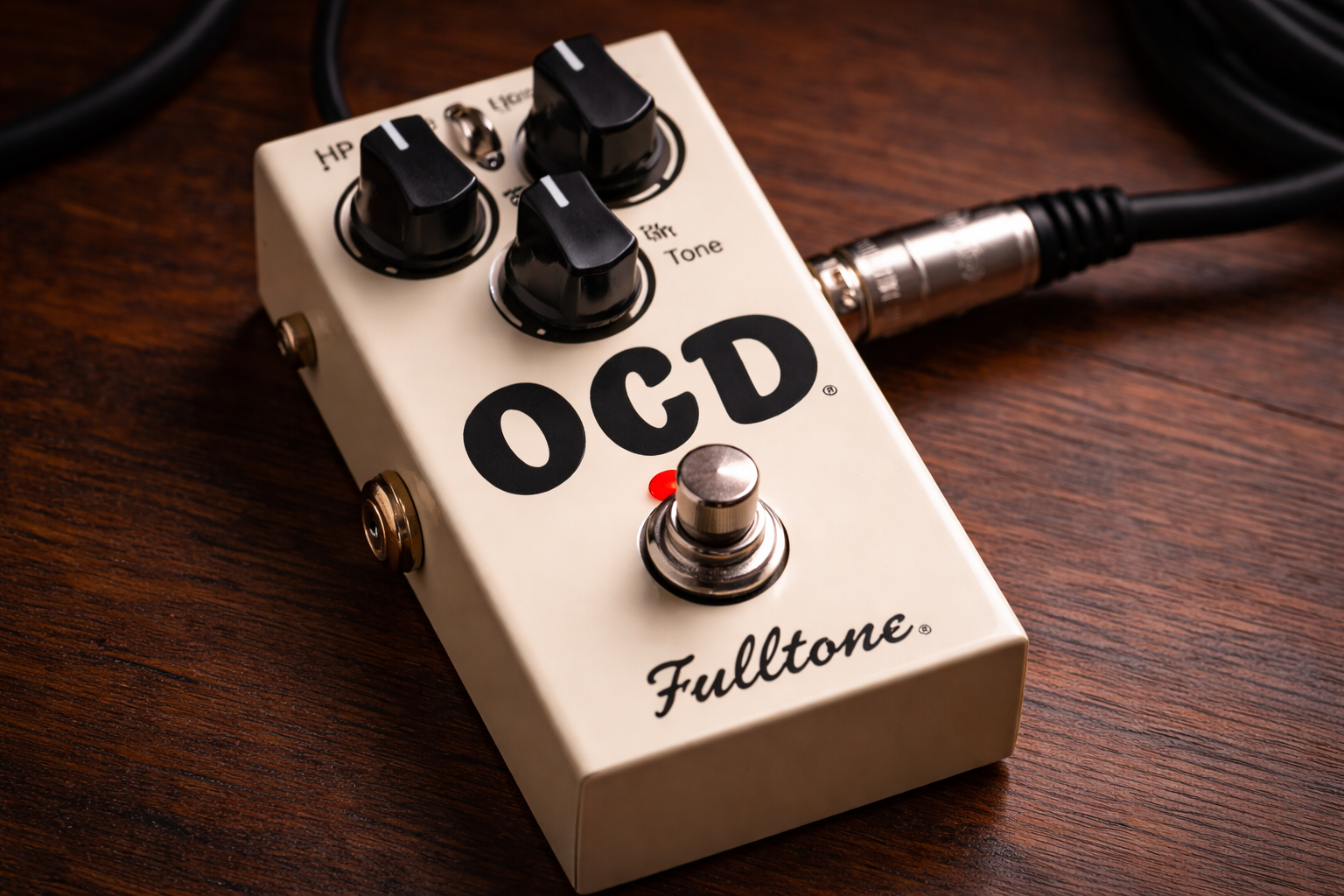
| Model | Fulltone OCD overdrive pedal, compact drive designed to mimic a pushed tube amp. |
|---|---|
| Type | Medium-to-high gain overdrive/distortion with strong output and touch-sensitive feel. |
| Controls | Volume, Drive, Tone plus a HP/LP-style toggle to shift overall voicing and low end. |
| Bypass & I/O | Standard input/output jacks, with true or enhanced bypass depending on the specific fulltone ocd version. |
| Power | 9V DC, center-negative supply or battery on most units; some support higher voltage for extra headroom. |
| Typical use | Main gain stage into a clean or edge-of-breakup amp, boost into already breaking-up amps, or stacked with lower gain drives. |
| Price bracket | Above entry-level overdrives and below many boutique units, with strong used-market value for a proven ocd guitar pedal. |
Who the Fulltone OCD is actually for
This fulltone ocd review is for players who want one main drive they can keep on the board for years, not another short-lived experiment. Most people interested in the OCD are upgrading from a basic drive, coming back to guitar after a break, or already rehearsing and wanting a more serious gain sound.
In all of those cases, the OCD sits in the middle: clear enough to reward better technique, flexible enough for several styles, and easy to resell if you eventually decide to move on.
Real-world use cases
When it makes a lot of sense
- You have a solid, reasonably clean amp and want one main drive for edge-of-breakup, crunch and classic rock gain.
- You like hearing your picking dynamics and guitar volume changes rather than a very compressed drive sound.
- You plan to rehearse or gig and need an overdrive that stays clear when a drummer and bass player join in.
- You prefer pedals that can live on your board for years and hold their value if you eventually decide to sell.
When it’s probably overkill right now
- You are still at the basic chord and rhythm stage and do not practise consistently.
- Your current bottleneck is “my guitar fights me” – in that case, beginner guitar checklist and electric guitars under $300 will move you further than a more expensive drive.
- You almost always play at whisper level and rarely turn your amp up past 1 or 2.
- You mainly want subtle breakup and never plan to play with a drummer – a simpler low-gain drive may feel more natural.
If your home tone is harsh, thin or boomy no matter which drive you use, basic EQ and gain staging matter more than any single ocd pedal. The bedroom tone guide and guitar EQ cheat sheet are worth a read before you blame any specific overdrive.
How the different OCD versions compare
The Fulltone OCD has gone through several revisions and special runs, but the core idea stays the same: an open, amp-like overdrive with strong output and a recognisable character.
| Version | General character | Best for |
|---|---|---|
| Early OCD (v1.x era) | Rawer feel, lively top end and plenty of gain on tap. | Players who like an immediate, slightly aggressive response and do not mind some bite. |
| Later classic versions | Still open and punchy, but generally a touch more controlled and refined. | “One main drive” users who want a balance between cut, clarity and day-to-day practicality. |
| Recent/current production | Modernised bypass and power arrangements while keeping the familiar ocd guitar pedal voice. | Players who prefer to buy new, want warranty, and like the security of current production support. |
Whichever fulltone ocd version you end up with, your amp, speakers and the way you play will shape the result far more than tiny circuit revision differences.
Tone and feel in the real world
The OCD is often described as “amp-like”. In practice that means the pedal responds clearly to pick attack and guitar volume, has enough output to push your amp harder, and keeps its low end relatively firm compared with many soft, mid-focused overdrives.
Low gain and edge-of-breakup
With the drive control low, the ocd overdrive pedal behaves like a pushed clean channel. Chords thicken, single notes gain bite, and you can move from cleaner to gritty with how hard you pick.
This is where the HP/LP toggle shines. One position adds more low end and presence to make small combos feel bigger; the other tightens the sound for focused rhythm parts.
Medium gain rhythm sounds
In the middle of the range, the OCD covers classic rock rhythm, crunchy riffs and heavier pop tones. Palm mutes stay articulate and extended chords remain more intelligible than on many high-compression drives.
- Start with the tone control around the middle and adjust your amp’s EQ before extreme pedal settings.
- Moderate drive with higher volume into a slightly breaking-up amp often sounds fuller than maxing gain into a totally clean one.
Higher gain and lead tones
With the drive higher, the Fulltone OCD moves into singing lead territory. Sustain increases and the attack stays clearer than on many smooth, mid-heavy designs.
- There is enough gain on tap for many rock leads when combined with your amp’s own crunch channel.
- Basic gain-staging rules apply: the gain vs volume vs master guide helps avoid thin, harsh high gain at low volume on any rig.
Home, rehearsal and small gigs
Many fulltone ocd reviews simply say “great at home, great on stage”. That can be true, but only if your idea of home volume and your amp choice match the way this circuit was designed to work.
Home and headphone practice
At bedroom volume into a clean amp, the OCD can still sound inspiring, but you will not hear its full low-end punch or dynamic range. Like most drives, it feels better once the speaker moves a little air.
- Very low master on the amp plus very low pedal volume often sounds small and fizzy.
- For late-night practice, running the ocd guitar pedal into a modeler or interface and using good headphones from headphones for practicing guitar keeps things under control.
Rehearsals
In a band mix, the OCD’s strengths become obvious. It has enough cut and output to keep your parts present without turning shrill, and the low end feels more solid than many softer drive pedals.
With a Strat-style or similar guitar into a 1×12 combo, medium drive and a healthy master volume setting are usually enough for typical rock rehearsals with a sensible drummer.
- Keep some midrange in the overall tone – extreme scoops tend to disappear regardless of which overdrive you use.
Small gigs
On bar stages and in small clubs, the ocd overdrive pedal is a straightforward, reliable gain tool. It works into clean pedal-platform amps, many combo amps, and digital rigs that respond well to external drives.
Stacking and pedalboard roles
One reason the fulltone ocd shows up on so many boards is how flexible it is in a chain. It can be your primary drive, a second gain stage, or a relatively clean boost, depending on settings and amp.
Into a clean pedal-platform amp, the OCD provides most of the character: set the amp fairly flat, treat the drive as your “amp channel”, and use guitar volume and pick dynamics to move between cleaner and dirtier sounds.
Stacking with other drives is straightforward. Lower gain into the OCD can smooth things out; the OCD into a darker drive can add clarity and bite. Time-based effects usually sit best after the drive, especially at rehearsal volume. If you are still learning how delay and reverb interact with your main overdrive, the guide on using delay and reverb pedals together helps keep things clear instead of muddy.
Buying checklist: OCD vs alternatives
You are not just buying a box; you are choosing how your rig will behave for the next few years. Answer the questions below quickly before you decide whether an ocd overdrive pedal or something else fits better.
- Is your main amp fairly clean and neutral, or already quite mid-forward and bright?
- Do you need one main gain sound, or several distinct drive flavours on one board?
- Will you mostly play at home, or do you realistically expect rehearsals and gigs in the next 6–12 months?
- Do you prefer open, dynamic tones, or more compressed drives that hide small mistakes?
| Your situation | Best fit | Why this works |
|---|---|---|
| You have one main amp and want a single, flexible drive that can cover most band and home situations. | Fulltone OCD | Wide gain range, strong output and clear response make it a practical “anchor” drive as your rig evolves. |
| You already know you prefer ultra-smooth, mid-heavy overdrives that hide picking and timing imperfections. | A more compressed alternative | The OCD is relatively open and revealing; a softer drive will feel more like a cushion under your playing. |
| Your amp is very dark or bass-heavy and you mainly play at modest volume. | OCD or similar open drive | Extra presence and tight low end can help your parts cut without extreme treble on the amp. |
| You rarely play beyond bedroom volume and just want a small rig that sounds good very quietly. | Simpler, practice-first setup | You are paying for versatility and headroom that you may not use; a low-gain drive or modeler can be easier day to day. |
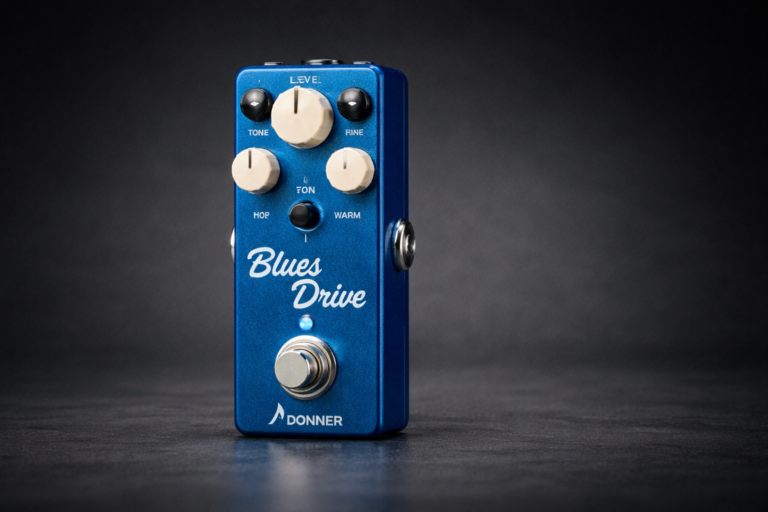
If you are comparing the Fulltone OCD with other popular drive pedals, these in-depth reviews and the main roundup can help: Donner Blues Drive, Boss SD-1, Boss BD-2, Ibanez TS9, Wampler Tumnus, MXR Timmy Overdrive, and the full cluster guide best overdrive pedal for guitar.
When the Fulltone OCD is overkill or the wrong choice
As solid as the OCD is, there are situations where your money is better spent elsewhere for now.
- You are just starting out and do not yet have a comfortable, well-set-up guitar.
- Your main frustration is how things sound at extremely low volume; learning basic EQ and levels will help more than any new pedal.
- You strongly dislike any hint of bite in your tone and always gravitate to very smooth, compressed sounds.
- You want extreme metal or very saturated modern tones as your main sound – the OCD can help, but it is not a dedicated high-gain pedal.
Summary: is the Fulltone OCD still worth it?
The OCD’s core strengths are its touch response, wide usable gain range and ability to sit in a band mix without getting lost or turning painfully harsh. It is not the smoothest, darkest or most forgiving drive, but that is exactly why many players keep coming back to it after trying alternatives.
If you want a single ocd pedal you can build a rig around, and you are willing to spend a little time learning how it reacts with your amp, the Fulltone OCD remains an easy recommendation. If you mainly play quietly at home and prefer ultra-soft, compressed tones, a different overdrive will probably make you happier faster.
Fulltone OCD FAQ
Is the Fulltone OCD a good first overdrive for beginners?
It can be, but with some caveats. The OCD rewards players who already have basic chord changes and timing under control, because it responds clearly to dynamics and volume changes. If you are still very early in your journey, a simpler, lower-gain pedal may feel less intimidating while you build fundamentals.
Does the Fulltone OCD work with solid-state and modeling amps?
Yes. The ocd guitar pedal is often used into solid-state combos and modelers set to a clean or slightly breaking-up sound. As with any drive, results depend heavily on the base tone.
Is the Fulltone OCD still worth buying used or new?
If you are looking for a versatile, amp-like overdrive with a long track record and strong resale potential, the OCD remains a sensible option. Whether you buy new or used depends on pricing in your area and how much you value warranty and condition.