MXR Timmy Overdrive Review: Transparent Drive That Actually Stacks
If you’re the kind of player who spends more time actually playing than chasing the “perfect” overdrive on YouTube, you’ll get the MXR Timmy immediately: it’s built for real rigs, real rooms, and the small EQ fixes that make a pedalboard work night after night.
The MXR Timmy is a rare overdrive that doesn’t try to “win” by imposing a big signature mid-hump or heavy compression. Instead, it’s built around a simple promise: keep your guitar and amp character intact, then let you shape what gets cut and what gets pushed.
This MXR Timmy Overdrive pedal review is written for normal players using real setups—clean platforms, edge-of-breakup combos, pedalboard rigs, and rehearsal/gig volumes. I’ve used Timmy-style drives before and know exactly where they shine (stacking, tightening lows, taming harshness) and where they don’t (instant mid-hump solo voice, high-gain saturation). I’m not including audio/video demos here, so I’m focusing on what matters in practice: how it reacts, how it sits in a mix, how to dial it fast, and when to skip it. If you’re still deciding what type of drive fits your board overall, this guide helps: best overdrive pedal for guitar.
What you’ll get from this guide:
- Who the MXR Timmy Overdrive is actually for, and who should skip it.
- A clear Cochrane Timmy vs MXR Timmy explanation (so SERP confusion doesn’t waste your time).
- How the EQ behaves and what the knobs actually do in real life.
- Best Timmy OD settings for clean boost, low gain, and stacking.
- Simple signal chain recipes you can copy in 60 seconds.
MXR Timmy Overdrive: pros and cons at a glance
Pros
- Transparent character: keeps your amp and pickups sounding like themselves.
- Powerful EQ: easy to tame harsh amps or tighten flubby lows.
- Excellent for stacking: works before or after other drives without turning messy.
- Great as an always-on foundation or a “make everything better” light drive.
Cons
- If you want a big mid-hump “solo push,” a TS/SD-1 style pedal may feel easier. (Here’s a practical reference point: Ibanez TS9 review.)
- Not built for modern high-gain saturation by itself.
- Transparent drives can feel “too subtle” if your amp tone is already uninspiring.
| Your situation | Verdict | Why |
|---|---|---|
| You want a low-gain overdrive that keeps your amp’s core tone intact. | Strong fit | The Timmy OD is designed to be transparent and EQ-flexible instead of heavily voiced. |
| You want a pedal that stacks cleanly with other drives. | Strong fit | It tightens lows and shapes highs without collapsing dynamics. |
| You mainly want an instant, thick mid boost for solos. | Maybe | You can boost Level and tune EQ, but TS/SD-1 style pedals do “mid push” more automatically. |
| You want high-gain distortion or modern metal saturation from one pedal. | Look elsewhere | This is a low-to-mid gain pedal timmy overdrive, not a dedicated distortion. |
Cochrane Timmy vs MXR Timmy: what’s the difference?
A lot of “Timmy overdrive” searches mix two things: the original Timmy concept associated with Paul Cochrane, and the mass-market MXR Timmy version. In real-world use, the important part is this: both aim for a transparent, low-to-mid gain drive that preserves amp character and gives you practical EQ control for bass and treble shaping.
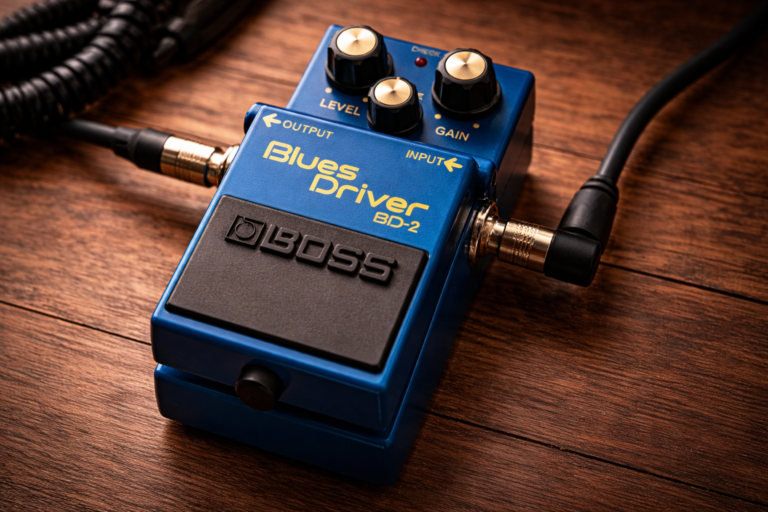
The MXR Timmy is not trying to be a different “genre” of overdrive. It’s still the same core idea: add grit without forcing a big mid-hump, then use the EQ to fix real rig problems (boominess, harshness, congestion). If you landed on this page searching timmy od or timmy overdrive, just know the MXR Timmy is the accessible “store shelf” option built around that transparent Timmy-style approach. If you want another “transparent but gritty” reference point in the Boss world, this is useful context: Boss BD-2 review.
If your goal is a strict collector-grade “original vs clone” comparison, that’s a separate rabbit hole. This review is for the player question: will the MXR Timmy overdrive pedal solve the everyday problems you actually have on a pedalboard?
MXR Timmy specs and controls at a glance
| Model | MXR Timmy Overdrive pedal. |
|---|---|
| Type | Low-to-mid gain “transparent” overdrive with strong EQ shaping. |
| Core idea | Keep your rig’s character, then adjust bass/treble shaping to avoid boominess or harshness. |
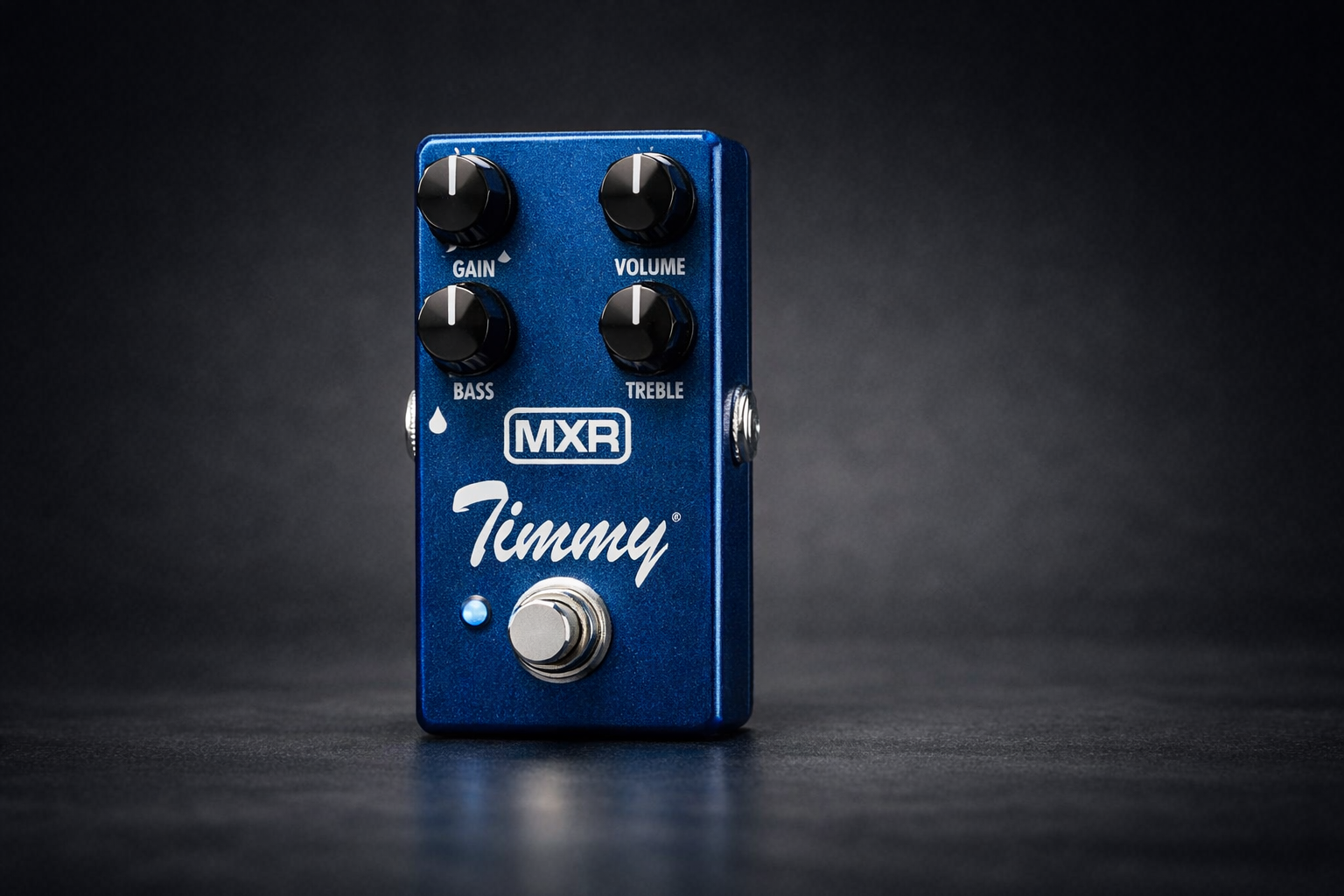
| Controls | Gain, Level, Bass, Treble. |
| Typical roles | Always-on tone shaper, clean-ish boost, low-gain drive, stacking layer. |
| Best use case | Players who want control over low end and top end without forcing a TS-style mid hump. |
How to use the Timmy OD (micro dial-in guide)
The simplest way to dial the MXR Timmy Overdrive is to do it in this order: Level first, then Gain, then Bass and Treble last. Most people do the opposite and end up chasing harshness or boom with the wrong knob.
60-second dial-in method (works on almost any rig)
Step-by-step
- Set Gain low (around 8–9 o’clock) and put Bass and Treble at noon.
- Raise Level until it’s just above unity (slightly louder than bypass).
- Increase Gain slowly until you get the texture you want.
- Now fix the rig: lower Bass to tighten lows, lower Treble to tame bite, or raise Treble slightly if you’re getting buried.
What each knob really does (quick feel)
- Gain: adds grit; too much can feel grainy in bright rigs.
- Level: makes the amp react; a healthy Level often feels bigger than extra Gain.
- Bass: tightens or loosens the low end; lowering it prevents flub and mud.
- Treble: controls bite and cut; lowering it removes ice-pick, raising it helps presence.
Fast fixes for common problems
If it’s harsh or fizzy
- Lower Treble a small amount before you lower Gain.
- Keep amp presence/treble sensible; don’t run the amp painfully bright.
- Use more Level and less Gain for a fuller “amp push” feel.
If it’s boomy or muddy
- Lower Bass first; don’t rely on Gain changes to fix low-end flub.
- For humbuckers, tighten Bass earlier than you think.
- In a band mix, tighter Bass usually sounds bigger, not smaller.
How I’m judging the MXR Timmy Overdrive (and what this review is not)
This is a practical “player review,” not a lab spec breakdown. I’m evaluating the Timmy OD based on how Timmy-style drives behave in normal setups: clean and edge-of-breakup amps, single-coils and humbuckers, and the typical volume jump from bedroom to rehearsal.
What I’m not doing here: making claims based on one five-minute store demo, or pretending audio clips alone tell the full story. A pedal like the MXR Timmy changes a lot depending on your amp EQ and how loud you’re actually playing. That’s why the focus below is on repeatable behaviors (tightening lows, taming highs, stacking cleanly) rather than hype.
Tone and feel in the real world
The MXR Timmy is often described as “transparent.” In practice, that means it generally preserves your pickup and amp identity while adding drive and letting you choose how much bass and treble stays in the signal. It doesn’t do the classic “compressed mid hump” thing. It’s more about clarity, control, and stacking.
Clean boost and edge-of-breakup
With Gain low and Level up, the Timmy OD behaves like a clean-ish push that makes your amp feel more responsive. This is the “always-on” zone: you keep your clean tone, but it feels more alive and easier to push into breakup.
- If your amp gets harsh, reduce Treble slightly before you drop Gain too far.
- If your rig gets boomy, reduce Bass first and keep Level healthy.
Low-to-mid gain drive
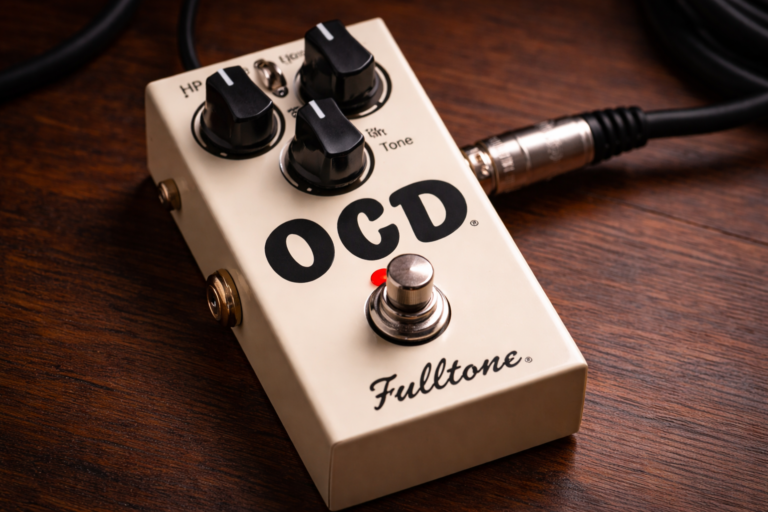
At moderate Gain, the MXR Timmy Overdrive becomes a flexible rhythm drive that stays articulate. It’s strong for chord clarity and dynamic picking because it doesn’t squash your attack as much as more voiced overdrives. If you prefer a more aggressive, “amp-like” rock drive with a bigger footprint, this comparison point may help: Fulltone OCD review.
- For single-coils: keep Treble conservative and use Bass to stop low-end bloom.
- For humbuckers: tighten Bass earlier than you think; it keeps the drive clear.
Lead tones and “solo lift”
For leads, the Timmy overdrive works best as a Level-forward boost with controlled bass. If you want a dramatic “mid jump,” you may prefer stacking it with a mid-forward pedal after it, or using a TS/SD-1 style pedal for the solo role.
- For a clean lead lift: lower Gain, increase Level, keep Bass tighter than your rhythm tone.
- If you’re not cutting through: add a touch of Treble or stack a mid-focused pedal.
Best MXR Timmy settings (fast presets)
| Scenario | Gain | Bass | Treble | Level | Notes |
|---|---|---|---|---|---|
| Clean-ish boost (always-on) | 8–9 o’clock | 10–11 o’clock | 10–11 o’clock | Above unity | Use Bass/Treble to correct boom/harshness fast. |
| Low gain rhythm drive | 9–11 o’clock | 10–12 o’clock | 10–12 o’clock | Unity to slight boost | Keep Bass tighter for clearer chords. |
| Mid gain gritty rhythm | Noon | 9–11 o’clock | 10–noon | Unity | If it gets fizzy, reduce Treble before lowering Gain. |
| Solo lift (cleaner boost) | 8–9 o’clock | 9–10 o’clock | 10–noon | Noticeable boost | If you need more cut, add Treble or stack a mid-forward drive. |
| Bright amp “tame harshness” | 9–10 o’clock | 10–11 o’clock | 9–10 o’clock | Unity to slight boost | Reduce Treble first; keep amp mids present. |
| Flubby amp “tighten lows” | 9–11 o’clock | 8–10 o’clock | 10–11 o’clock | Unity | Lower Bass aggressively; it keeps palm-mutes cleaner. |
Home, rehearsal and gig volume behavior
Transparent drives can feel underwhelming at whisper volume because your amp isn’t moving air. The good news is the MXR Timmy Overdrive gives you more control than most low-gain pedals when volume changes. In practice, it tends to get better as you turn up because its clarity and low-end control help your guitar stay defined in a mix.
Home practice (low volume)
At low volume, focus on feel and balance rather than “big amp” drama. Use Bass to prevent boominess and Treble to stop ice-pick highs. If your tone feels thin, slightly raise Level and reduce Gain rather than turning Gain up.
- Keep Bass tighter than you would at rehearsal volume.
- If the amp is bright, Treble control is your fastest fix.
Rehearsals
In a band mix, the Timmy OD tends to shine because it stays articulate and doesn’t compress too much. It can sit under vocals while keeping chords readable, and it stacks well when you need a second gain stage.
- Use Bass control to keep the low end out of the bass guitar’s space.
Gigs and louder rooms
At gig volume, the MXR Timmy overdrive behaves like a practical gain stage: it adds drive while keeping definition. For a bigger solo lift, it often works best paired with a mid-focused pedal or an EQ/boost after it.
- If you’re not cutting, raise Treble slightly or stack a mid-forward drive.
Stacking: Timmy overdrive with other drives
The Timmy OD is popular because it stacks without getting mushy. Think of it as a “control stage” in your gain chain: it can tighten lows before another pedal, or add clarity after a warmer drive.
Simple stacking recipes
Timmy first (tighten then push)
- Use when your next drive gets flubby or congested.
- Lower Bass, keep Gain low, use Level to hit the next pedal.
- Great into fuzz-adjacent drives that need tightening.
Timmy second (clarify after warmth)
- Use after a warmer drive to restore definition and cut.
- Keep Gain low-to-moderate, tune Treble for bite.
- Good for turning a thick rhythm sound into a clearer lead sound.
Signal chain examples you can copy
Clean platform (one-pedal board)
- Guitar → MXR Timmy Overdrive → amp clean
- Set Gain low, Level slightly above unity, then tighten Bass until chords stay clean.
Edge-of-breakup amp (always-on)
- Guitar → Timmy OD → amp edge-of-breakup
- Use more Level than Gain; trim Treble slightly to keep the top end smooth.
Two-drive board (rhythm + solo)
- Guitar → Timmy OD (rhythm) → TS/SD-1 style (solo) → amp
- Use Timmy to keep rhythm clear; kick TS/SD-1 for the mid push and cut.
Warm drive first, clarity second
- Guitar → warm drive → MXR Timmy Overdrive → amp
- Use Timmy second to re-add definition and control harshness/boom with EQ.
If you’re building a full board, it helps to choose ambience pedals that stay clear after gain stages. These guides can help: best delay pedal for guitar and best reverb pedal for guitar.
Buying checklist: MXR Timmy vs alternatives
The MXR Timmy Overdrive makes the most sense when you want low-gain control and stacking flexibility. If you want a pedal that forces a specific signature sound, you may prefer a more voiced option.
- Do you want your amp to stay the main “voice,” or do you want the pedal to reshape the tone?
- Do you need low-end tightening and top-end control from the pedal?
- Do you plan to stack multiple drives?
- Are you trying to solve a harsh/boomy rig problem without changing amps?
| Your situation | Best fit | Why this works |
|---|---|---|
| You want a transparent low-gain drive that stacks cleanly. | MXR Timmy Overdrive pedal | EQ control + open feel makes it a reliable “foundation” drive. |
| You want a strong mid push for solos and tightening high-gain amps. | TS/SD-1 style overdrive | Mid-hump voicing is the fastest way to cut through. |
| You want a smooth, warm low-gain breakup with softer attack. | Bluesbreaker-style drive | Often feels more forgiving and “polite” at home volume. |
| You want a clean-to-gritty push with tight lows and clear leads. | Klon-style drive | Strong for boosting and stacking, with a different mid presence. |
If you’re comparing the MXR Timmy with other popular overdrive pedals, these detailed reviews and the main roundup help you see where it fits in a real-world rig: Donner Blues Drive, Boss SD-1, Boss BD-2, Ibanez TS9, Fulltone OCD, Wampler Tumnus and the full cluster guide best overdrive pedal for guitar.
When the MXR Timmy is the wrong choice
Skip the MXR Timmy overdrive if you want a pedal that does the tone-shaping for you automatically. This is a control-forward overdrive timmy-style pedal, and it rewards players who like small EQ tweaks and stacking flexibility.
- You want a thick, compressed drive that instantly “fills” the sound.
- You want modern high-gain tones from one pedal.
- You strongly prefer a mid-hump voice for solos without any stacking.
- Your amp tone is flat and uninspiring; transparent pedals won’t magically create character.
Summary: is the MXR Timmy Overdrive worth it?
The Timmy OD’s real value is control: tightening lows, taming highs, and keeping your dynamics intact. For players building a pedalboard gain structure—especially one with multiple drives—this pedal timmy overdrive style approach is exactly what makes it useful long-term.
MXR Timmy Overdrive FAQ
What is the MXR Timmy Overdrive pedal best for?
It’s best for clean-ish boosting, low-gain overdrive, and stacking. The key advantage is EQ control that lets you tighten bass and tame treble without losing your amp’s identity.
Is the MXR Timmy the same as the Paul Cochrane Timmy?
They’re connected by the same Timmy-style idea: transparent low-to-mid gain overdrive with practical EQ shaping. The MXR Timmy is the widely available production version built around that concept, aimed at the player who wants the Timmy approach in a standard pedalboard format.
Is the Timmy overdrive really “transparent”?
It’s transparent in the sense that it generally doesn’t force a big mid-hump voice. You still add drive and coloration, but it tends to preserve the feel and identity of your guitar and amp more than heavily voiced pedals.
Where should I place the Timmy OD in a drive stack?
If you want to tighten the next pedal, put Timmy first with lower Bass and higher Level. If you want clarity after a warmer drive, put Timmy second with conservative Gain and tuned Treble.
Does the MXR Timmy work for solos?
Yes, but it’s not an automatic “mid jump” pedal. For solos, it often works best as a Level-forward boost with tightened bass, or stacked with a mid-focused drive or EQ after it.
What should I buy instead of the MXR Timmy?
If you want a stronger mid push, look at TS/SD-1 style pedals. If you want a softer low-gain breakup, Bluesbreaker-style drives are often a better match. If you want a tight boost with a different mid presence, a Klon-style drive is worth considering.