Blackstar HT-1R vs Yamaha THR5: Which One Works Better at Apartment Volume?
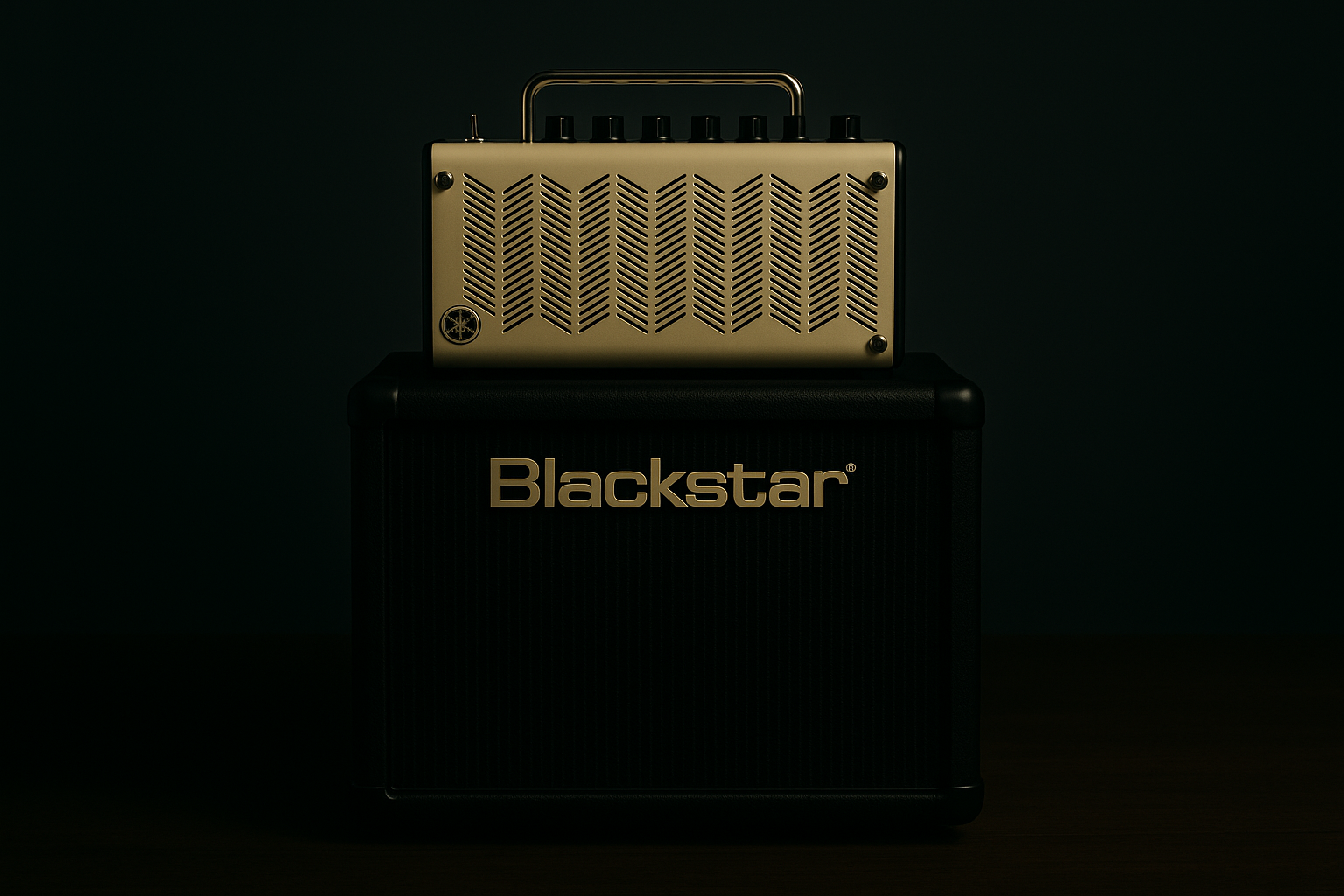
Blackstar HT-1R vs Yamaha THR5 is a classic home-practice dilemma: do you want real amp feel in the room, or a polished “finished” sound at very low volume?
If your tone also feels thin, harsh, or “boxed” at home, it’s often not the amp—it’s volume + room + EQ. Start here first: Why Your Electric Guitar Sounds Bad at Home (And How to Fix It). And if you ever get confused by the front panel knobs, this will save you time: Gain vs Volume vs Master: What They Actually Do on Your Amp.
Quick overview: HT-1R and THR5 in one glance
| Feature | Blackstar HT-1R | Yamaha THR5 |
|---|---|---|
| What it is | 1-watt tube combo with a real power section | Desktop modeling amp / practice system |
| Best at | “Amp feel” and touch response (when you can turn it up a bit) | Finished tones at very low volume + easy backing track practice |
| Controls / flexibility | Simple: gain, volume, ISF, reverb | Multiple amp models, effects, USB audio |
| Room sound | Moves air through a real speaker; more “in the room” | More like nearfield speakers on your desk; controlled |
| “Late night” use | Possible, but sweet spot may be louder than you want | Designed to sound good at whisper-quiet levels |
Apartment-volume verdict (fast version):
- If you need whisper-quiet tones late at night: THR5 is usually the easier win.
- If you can play at moderate volume during the day and want “real amp” feel: HT-1R starts to make more sense.
- If you hate gear fiddling and want plug-and-play with backing tracks: THR5 fits the lifestyle.
- If you enjoy pedals and “amp reacts to my hands” dynamics: HT-1R is more satisfying.
How loud are they really?
At first glance, 1 watt vs 10 watts (THR5’s rated power) sounds like a huge difference. In a real living room, it’s not that simple.
Blackstar HT-1R
- Even at 1 watt, the built-in 8″ speaker moves air.
- At “TV volume” levels, the amp can feel a bit compressed and closed.
- Turn the volume up and it starts to push, open up, and feel more like a real stage amp—but that sweet spot may already be too loud for thin apartment walls at night.
Yamaha THR5
- Voiced to sound complete at very low levels.
- You can get usable tones at volumes where you can still clearly hear your pick scraping the strings.
- It doesn’t move air like a combo; it feels more like nearfield speakers right in front of you.
Bottom line: if your “allowed volume” is truly tiny, THR5 wins. If you have daylight hours and a little volume freedom, HT-1R can feel more rewarding.
“Amp feel” vs “polished sound” (the real dividing line)
This is the real difference between these two: HT-1R is about feel, THR5 is about polished results.
HT-1R feel
- Has that small-amp “give” when you dig in.
- Clean-to-crunch transition can be touch-sensitive when gain and volume are balanced.
- Chords feel like they live in the room, not inside desk speakers.
THR5 feel
- Feels more like a great recorded guitar sound being played back at you.
- The dynamic feel is there, but it’s controlled and smoothed.
- Perfect for hearing yourself clearly with backing tracks, less about chasing “cab punch.”
If you’re chasing finger feel, HT-1R has the edge. If you’re chasing easy, mix-ready home practice, THR5 is usually simpler to live with.
Clean, crunch and lead tones
Blackstar HT-1R: simple but responsive
Clean / edge of breakup
- Set gain lower, volume higher.
- You’ll get a slightly gritty clean that reacts when you hit the strings harder.
- Great base for pedals or classic rock rhythm tones.
Crunch
- Increase gain until open chords start to growl.
- ISF lets you sweep between more “British” mid-range and more “American” scoop.
- With the right balance, it gives a convincing classic-rock crunch, especially with a humbucker.
Lead
- Push gain higher and add a boost or overdrive pedal.
- Single notes sustain more naturally than you’d expect from a 1-watt combo.
- At apartment levels, the sweet spot often isn’t at whisper-quiet settings—volume matters.
If you want practical low-volume recipes (clean/crunch/lead) without cranking, use this as your “tonight” guide: Bedroom Tone Guide: Clean, Crunch and Lead Sounds at Low Volume.
Yamaha THR5: many flavors, always controlled
Clean
- Multiple clean models designed to stay well-behaved at low volume.
- Very friendly with single-coils and bright rhythm parts.
- More “recorded clean track,” less “amp in a room.”
Crunch / edge
- Several classic crunch models that break up nicely at very low levels.
- Easy to dial in subtle drive that doesn’t overwhelm backing tracks.
- Great for indie/pop/classic rock rhythm at home volume.
High gain / lead
- Modern drive models offer more gain than most people need for apartment practice.
- Built-in delay and reverb make it easy to dial a lead tone without pedals.
- Perfect if you don’t want a pedalboard at all.
How they take pedals
HT-1R with drive and boost pedals
- Overdrives and boosts: an overdrive into a pushed HT-1R can feel surprisingly big. Transparent drives and mid-hump pedals both work well.
- Reverb and delay: built-in reverb is subtle and usable at home levels. External delay/reverb in front can get mushy with higher gain, but it’s fine for classic rock and blues.
THR5 and the “no pedal” lifestyle
- It can take pedals, but most players don’t need to: built-in FX cover most home practice needs.
- Amp models range from clean to high gain without extra boxes or cables.
- External drives can sometimes feel redundant or less interactive than with a real amp.
If you’re also deciding pickup layouts for home gain/noise, this may help you choose faster: HSS vs SSS vs HH Pickups: Which Setup Fits Your Style?
Practical stuff: size, connections and living with the amp
Space and portability
- HT-1R: small combo, but still a “box on the floor” (or on a stand). Easy to move, not really a crowded-desk amp.
- THR5: desktop form factor, fits on a shelf or desk, very easy to move around the apartment.
Headphones, recording and neighbors
- HT-1R: has a headphone/line out. Still feels more natural through the speaker; headphones are a useful backup for late night.
- THR5: headphone out stays very close to what you hear through the speakers. USB makes it easy to capture ideas into a DAW. Great if silent practice is a big part of your life.
Which one should you buy?
Choose the Blackstar HT-1R if:
- You care most about amp feel and touch dynamics.
- You already own (or plan to build) a small pedalboard.
- You can play at moderate volume during the day without constant complaints.
- You want a tiny combo that behaves like a “real amp,” just scaled down.
Choose the Yamaha THR5 if:
- You need very low volume tones that still sound finished and inspiring.
- You like practicing with backing tracks and want an easy all-in-one setup.
- You don’t want extra pedals/cables/space on the floor.
- You want a desktop amp that can double as small speakers.
Final thoughts
The HT-1R and THR5 both solve the “how do I get a good tone at home?” problem, but from opposite angles:
- HT-1R: feel, interaction, and the satisfaction of pushing a real amp (even if it’s just 1 watt).
- THR5: practicality, low-volume control, and multiple amp flavors/effects in one compact box.
If you can, imagine where the amp will physically live in your space and how often you’ll realistically plug in. That usually answers the question faster than specs.
FAQ
Is the Blackstar HT-1R loud enough for an apartment?
Yes. Even 1 watt can be surprisingly loud through a real speaker. The real question is whether you can reach its “feels alive” zone without annoying people.
Is the Yamaha THR5 better for late-night practice?
Usually, yes. It’s voiced to sound complete at very low volume and stays usable when you can’t turn up.
Which one is better if I use overdrive pedals?
If you like stacking drives and feeling the amp react, the HT-1R generally plays nicer with pedals. The THR5 can take pedals, but many players find its built-in models/FX make external drives less necessary.
Which one is better with backing tracks?
The THR5 is usually easier for backing tracks because it’s designed like a compact “practice + playback” system. The HT-1R is more about traditional amp feel in the room.
My tone is harsh/boxed at home—should I blame the amp?
Not immediately. Room placement, volume level, EQ choices, and gain staging cause most “bad at home” tone problems. Start with: Why Your Electric Guitar Sounds Bad at Home (And How to Fix It).