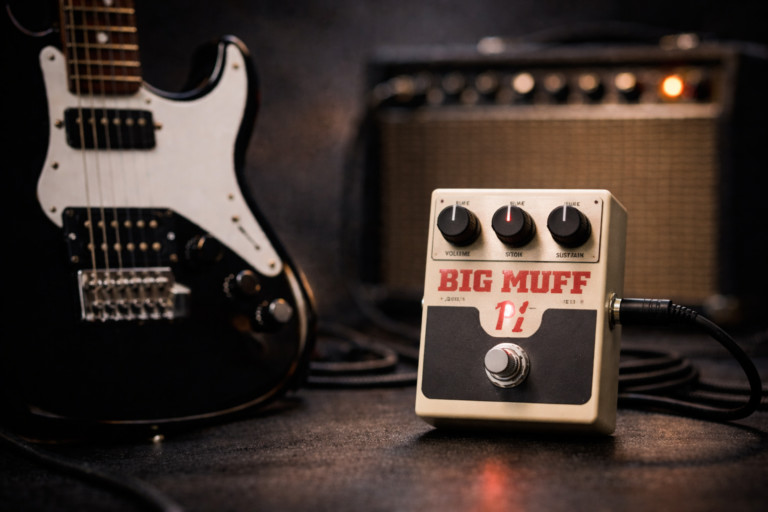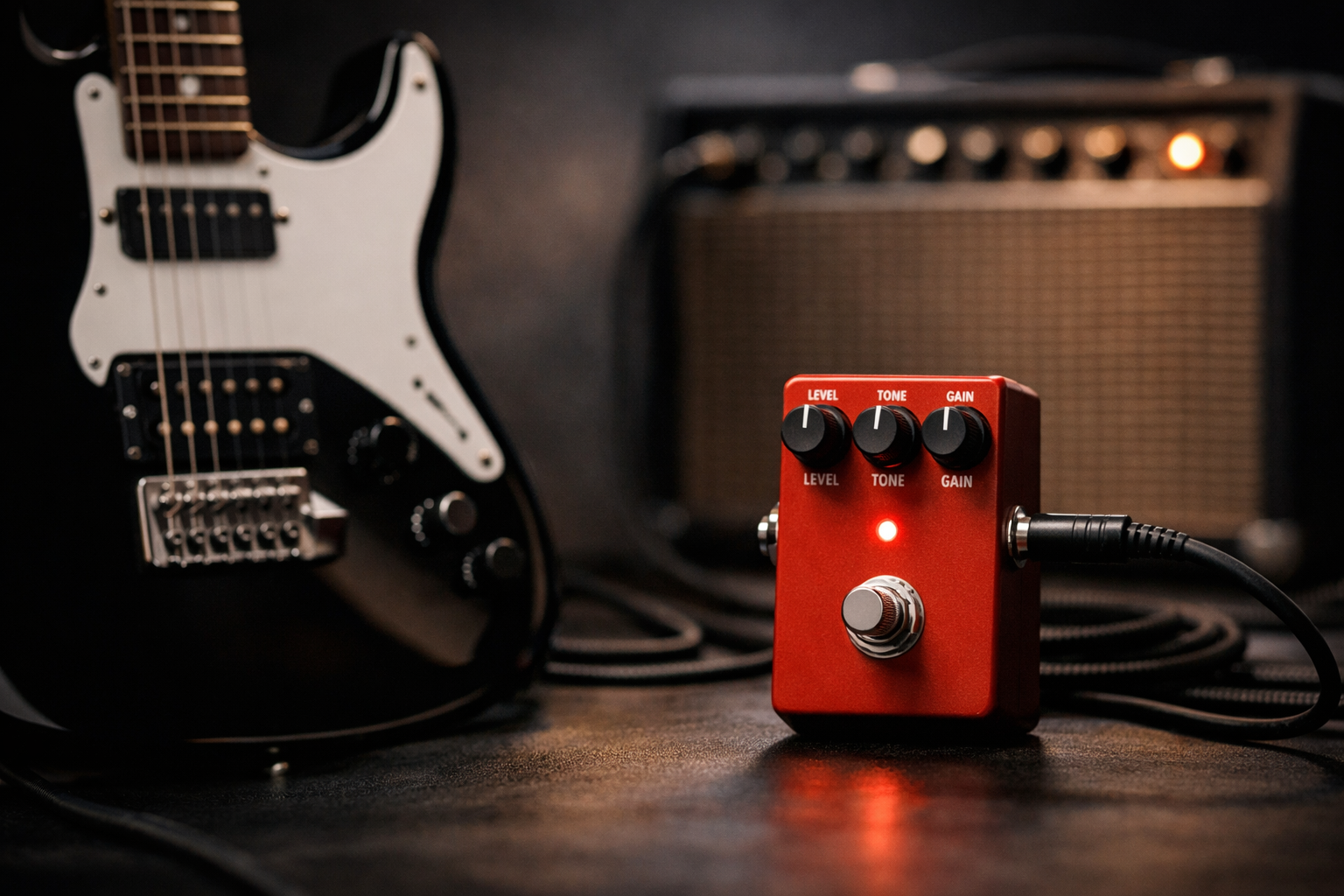
Electric Guitar Distortion Pedal: Dial In Tight, Smooth Tones
If your distortion sounds fizzy, muddy, or weirdly small, it’s usually not “your hands” — it’s gain staging and EQ choices. This is a practical setup guide for an electric guitar distortion pedal: what it actually changes, how to pick a pedal type that fits your rig, and how to dial a tone that stays tight for riffs and smooth for leads at realistic home volume.
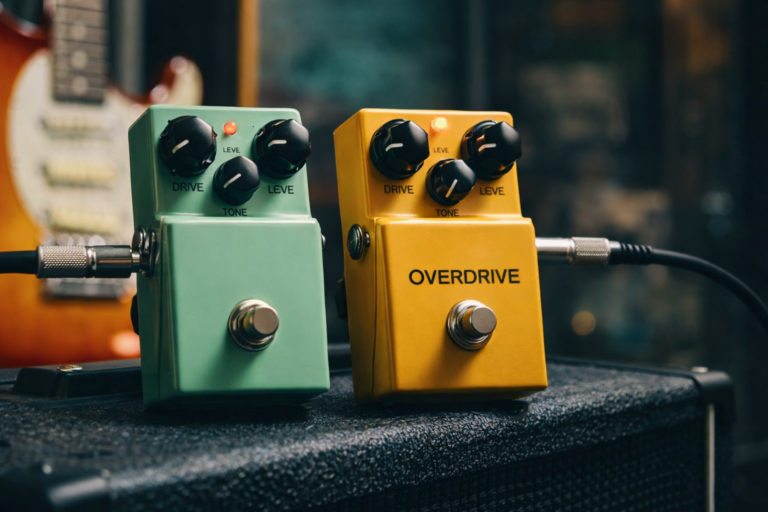
Distortion is easy to overdo at home. The goal isn’t max gain — it’s definition (attack) and space (chords don’t collapse). If you already understand mild drive and want to compare the feel and control differences, a good place to start is this detailed breakdown: overdrive pedal explained.
If your distortion sounds harsh or weak at “don’t annoy the neighbors” volume, it often means the base rig and EQ need a little help before you blame the pedal. Later in this guide you’ll see how low-volume behavior, EQ, and gain interact so you can get a usable sound without cranking the amp.
If you want the bigger picture of where distortion sits in the full pedal ecosystem, use the hub: guitar pedals for beginners.
If you want one simple answer:
- Best “tight rhythm” move: reduce Gain first, then control lows and fizz with EQ/Tone
- Best “smooth lead” move: slightly less Gain + slightly more Level, then tame top end
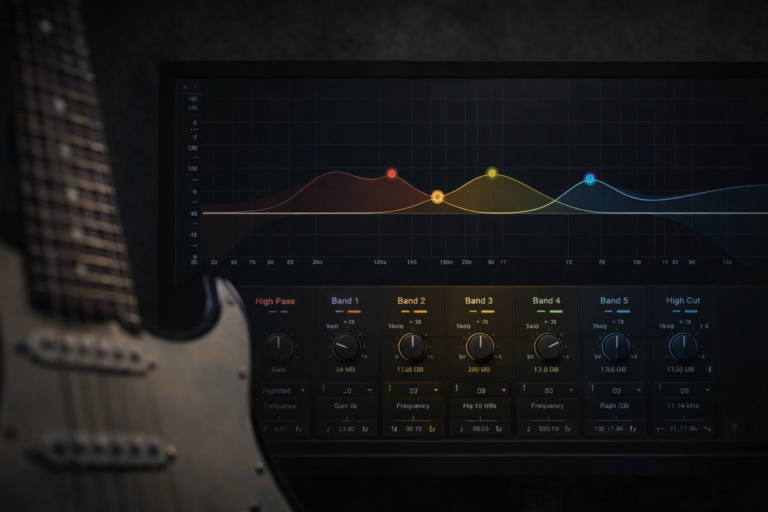
- Best “fix everything faster” move: start from a neutral EQ baseline and adjust in small moves using guitar EQ cheat sheet
60-second setup (table)
Use this when you want a fast, repeatable starting point. It works on most rigs because it puts the “big levers” in the right order: baseline first, then Level, then Gain, then top-end control.
| Step | Set this | Listen for | Fast fix |
|---|---|---|---|
| 1 | Amp baseline (clean or barely breaking up) | No harsh spikes, no boomy lows | Moderate amp EQ first (don’t fix with pedal Gain) |
| 2 | Level (unity or tiny lift) | No big jump on engagement | Set Level first; don’t “solve” with Gain |
| 3 | Gain (start low) | Tight palm-mutes; clear chords | If messy, reduce Gain before anything else |
| 4 | Tone/Filter (fizz control) | Bite without sandpaper highs | Cut fizz first, then add back a touch |
10-second reality check: Play a power chord, then palm-mute the low strings. If the palm-mutes turn into a loose “woof,” your gain is too high or your low end isn’t controlled.
What a distortion pedal really does
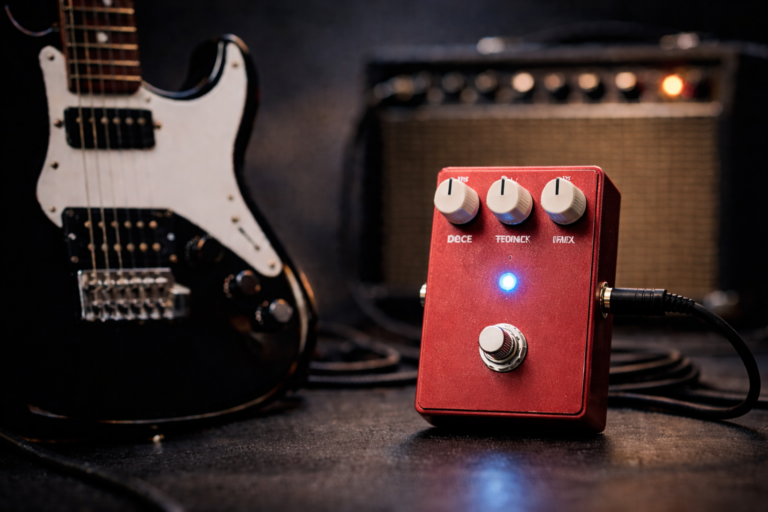
A distortion pedal clips your signal harder and more consistently than mild drive. That means more sustain, more density, and a more “compressed” feel. For many players an electric guitar distortion pedal is simply the fastest way to get a confident, saturated tone even if the amp itself is clean.
The catch is just as simple: distortion magnifies whatever is already happening in your rig. Bright speaker? More fizz. Too much low end? More mud. So the goal isn’t “max gain.” The goal is a tone that keeps attack (pick definition) and space (chords don’t collapse).
If you’re choosing a distortion pedal for electric guitar, think “tight lows + manageable top end” before you think “more gain.”
If you’re still on the fence between using distortion as your main sound or leaning more on overdrive and fuzz for character, this full comparison can help you choose a direction: overdrive vs distortion vs fuzz.
Electric guitar distortion: the stuff that matters
Electric guitar distortion is basically clipping plus compression. Compression is why it feels easier to play (notes stay loud longer), but it’s also why chords can get smeared. If your distortion feels “huge” alone but disappears with drums, it’s usually too bassy or too scooped.
There’s a sweet spot: enough saturation to feel good, but not so much that everything turns into one flat texture. For most home rigs, that sweet spot is lower gain than people expect — especially at true bedroom volume. If you struggle to get any satisfying distortion at low volume, pair this guide with the dedicated low-volume guitar tone article.
At a glance: “heavier” is usually less Gain + tighter lows • definition beats saturation • home volume punishes extremes.
Common distortion pedal flavors (why they feel different)
Different electric guitar distortion pedals are voiced differently. Same knobs, different outcomes.
Hard-clipping, brighter distortion
Immediate and aggressive, but can get fizzy on bright amps/speakers. Great for cutting rhythm if you keep gain controlled.
Mid-forward, gritty distortion
More punch in the mids, often reads better in a mix and feels “bigger” with less gain.
High-gain voiced distortion
Designed for heavier saturation and tighter feel, but easiest to overdo at home volume. Use less Gain and more Level than you think.
Quick takeaway: If you’re fighting fizz, you may be fighting the pedal’s top-end voice (or your speaker), not your technique.
If you want to see how these flavors contrast with overdrive and fuzz in real use, there’s a deeper breakdown here: overdrive vs distortion vs fuzz.
How to choose a distortion pedal for electric guitar
Choosing a distortion pedal for electric guitar or building a practical distortion pedal electric guitar setup is mostly about two things: low-end tightness and top-end behavior. If those don’t match your rig, you’ll never feel “at home” no matter how long you tweak.
1) Low end: tight vs loose
If you play palm-mutes or down-picked riffs, tight low end matters more than extra gain. Loose low end makes everything feel harder.
2) Top end: smooth vs fizzy
Bright pedals can sound great through darker speakers — and painful through bright ones. If your rig is already bright, prioritize smoother top end.
3) Pickups: single-coil vs humbucker reality
Single-coils can feel thinner and brighter; humbuckers can get muddy faster. Humbuckers usually need less gain and stricter low-end control.
Practical rule: If you need “more heaviness,” reduce gain and tighten lows first. More gain often makes the guitar smaller, not bigger.
Dial-in method (works on most rigs)
These steps are intentionally boring. They work because they remove guessing and force you to fix the cause, not the symptom.
- Set the amp to a stable baseline: start clean or barely breaking up. If the baseline is boomy or harsh, distortion will exaggerate it.
- Set Level first, then Gain: aim for unity first, then build Gain slowly. This avoids low Level + high Gain = noise + mud.
- Use Tone/Filter to kill fizz: cut sandpaper highs on palm-mutes, then add back only a touch of bite.
- Final check with chords: if power chords smear, reduce Gain or tighten lows before chasing “more saturation.”
One sentence that saves time: If your tone is messy, reduce Gain first. If it’s thin or dull, adjust Level and EQ next.
When you’re unsure which EQ move is “neutral,” start from a simple baseline and change in small steps: guitar EQ cheat sheet.
Realistic starter settings (table)
Instead of fake “clock positions,” these are practical starting points based on how people actually run an electric guitar distortion pedal at home. Land quickly, then adjust by ear.
| Preset | Rig | Gain | Tone / Filter | Level |
|---|---|---|---|---|
| A | Clean amp | Low → mid (stop before palm-mutes loosen) | Middle → down (kill fizz, add back a touch) | Unity or small lift |
| B | Edge-of-breakup amp | Low (amp already has grit) | Slightly lower (avoid spiky highs) | Slightly above unity |
| C | Amp already has gain | Very low (tightness, not more gain) | Conservative (avoid fizz stacking) | Tiny moves for feel |
Preset watch-outs:
- A: too much Gain turns tight palm-mutes into “woof” and chords into blur.
- B: if it gets harsh, the fix is usually less Gain plus smoother top end (not more bass).
- C: stacking high gain on high gain kills definition fast.
Pickup tip: Humbuckers usually want less gain than single-coils. If it’s getting muddy, the first move is lowering Gain, not boosting treble.
Fix fizz, mud, volume jumps, and noise
Problem: Fizzy / harsh top end
First move: lower Tone/Filter, then re-check palm-mutes.
- Roll Tone/Filter back until palm-mutes lose the “sandpaper” edge.
- Reduce Gain slightly and raise Level a touch — this often feels smoother and clearer.
- If your speaker is bright, avoid stacking bright settings across pedal and amp at the same time.
Problem: Muddy / flubby low end
First move: lower Gain. This fixes more mud than almost any EQ move.
- Back Gain down until palm-mutes tighten, then adjust from there.
- Trim amp bass slightly and re-check with full chords and single notes.
- With humbuckers, keep Gain conservative and let Level do more of the work.
Problem: Big volume jump when engaged
First move: reset Level to unity, then rebuild Gain and Tone.
- Match pedal Level to your bypassed tone first; only then tweak Gain and Tone.
- Don’t use huge Level boosts just to “make it feel better” — that usually masks a gain or EQ issue.
Problem: Hiss / noise
First move: reduce Gain before you buy a noise gate.
- Most noise is gain. Back Gain down and see if the hiss drops to a manageable level.
- Check power and cables if hiss is extreme — cheap daisy chains can be brutal.
If you’re troubleshooting electric guitar distortion, the fastest win is almost always: less Gain, tighter lows, smoother top end.
For deeper EQ moves (shaping low mids, taming harsh presence, dealing with boom from the room), pair this section with the dedicated guitar EQ cheat sheet.
FAQ
Is an electric guitar distortion pedal just the same thing as “gain”?
Not exactly. Gain is how hard the signal is driven; distortion is what happens when it clips. On most pedals the Gain knob controls how hard you push the clipping, so in practice they feel linked — but they’re not identical.
Why does my electric guitar distortion sound huge alone but bad in a mix?
Usually too much bass and too much saturation. In a mix that blurs the guitar and it disappears. Reduce Gain slightly and trim low end; you’ll often sound bigger with less distortion.
How do I dial in an electric guitar distortion pedal at home volume?
Start with a clean or barely breaking-up amp, set Level to unity, then bring Gain up until palm-mutes stay tight and chords remain readable. Use Tone/Filter to remove fizz first, then add back only a touch of bite. If the rig still fights you, check your base setup here: low-volume guitar tone.
Do I need multiple electric guitar distortion pedals?
Not at the start. One pedal that matches your amp and speaker can cover a lot of ground. Later, some players add a second flavor (brighter vs smoother, tighter vs grittier) for specific songs, tunings, or alternate gain structures. If you’re unsure whether to lean more on distortion, overdrive, or fuzz, this comparison helps: overdrive vs distortion vs fuzz.
About this guide
- How it’s built: repeatable dial-in order (baseline → Level → Gain → Tone/Filter) plus fast checks (palm-mutes, chord readability, fizz control).
- What we test while dialing in: palm-mute tightness • chord clarity at realistic volume • top-end “sandpaper” vs smoothness • whether the guitar stays defined when you play harder.
- Typical rigs: small clean combos, edge-of-breakup practice amps, and gainy amps that need tightening — the three most common home setups.
- How the examples are chosen: settings and troubleshooting steps are based on real-world low-volume use with backing tracks and simple mix checks, not just reading spec sheets.
- Who this is for: players who want a distortion sound that stays tight for rhythm and smooth for leads without relying on maxed-out settings.
- What it’s not: a “best distortion pedal” ranking or brand-based recommendation list.
- Last updated: 2026-01-02
Note: If your rig is already bright, start by taming the top end and keeping gain conservative. If you’re stuck, start from a neutral EQ reference and move in small steps using guitar EQ cheat sheet.