Gain vs Volume vs Master: What They Actually Do on Your Amp (For Home Players)
Gain vs Volume vs Master: What They Actually Do on Your Amp (For Home Players)
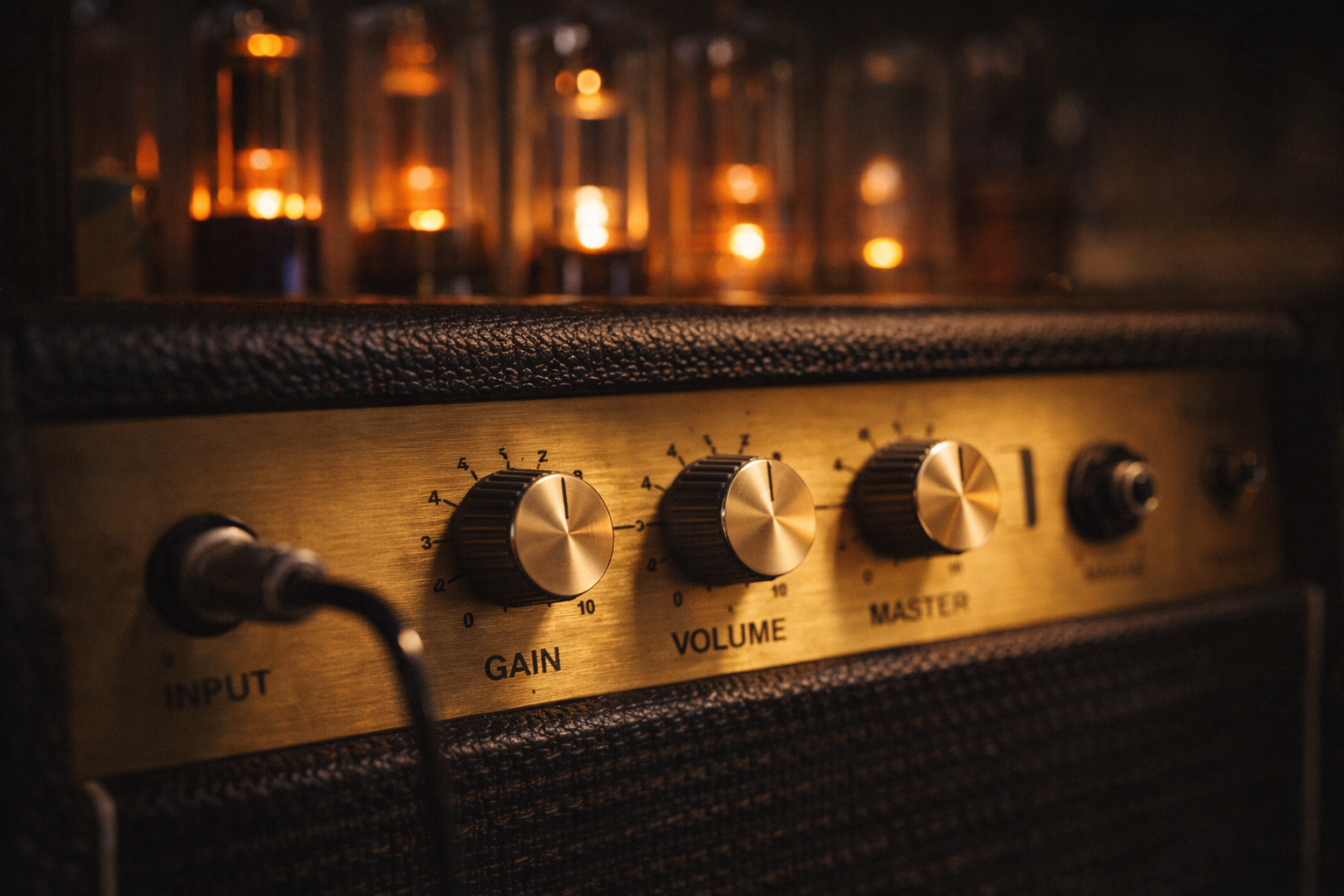
Gain vs volume vs master is confusing until you understand what each knob actually controls. They don’t all do the same thing: one mainly changes how dirty your sound is, one controls channel level, and one controls how much of that sound hits the room. Once this clicks, dialing in a good home tone gets way easier.
This guide is for bedroom and living-room players using small tube amps (1–5W), solid-state combos, or desktop/practice amps who want better tones without turning the house into a war zone.
Related: If your tone feels thin/harsh/boxed at home, start here: Why Your Electric Guitar Sounds Bad at Home (And How to Fix It). For low-volume “recipes” you can copy tonight: Bedroom Tone Guide.
The 10-second answer (most people only need this)
Gain
What it changes: How hard you hit the preamp → distortion + compression.
Common home mistake: Cranking gain while keeping master whisper-low → fizz + small sound.
Quick fix: Lower gain slightly, raise master to a reasonable level.
Channel Volume / Volume
What it changes: Channel level → how hot the signal is before the master stage.
Common home mistake: Channel volume too low → amp feels flat/thin.
Quick fix: With master set, raise channel volume until it feels alive.
Master
What it changes: How much sound leaves the amp into the room → “amp feel”.
Common home mistake: Master too low → lifeless, choked, tiny.
Quick fix: Push master as high as you can comfortably get away with.
The simple mental model
Think of your amp in three stages:
- Your guitar hits the preamp (this is where gain lives)
- The signal is shaped and may overdrive
- The power section + speaker turns it into real volume in the room (this is where master lives)
In practice:
- Gain = how saturated / compressed the sound becomes
- Channel volume = how loud that channel is before the master stage
- Master = how loud the amp is in the room right now
What gain actually does (and why it’s addictive)
Turning gain up usually:
- Adds distortion and sustain
- Compresses your attack so playing feels easier
- Hides some sloppiness under a thicker wall of sound
The catch at low volume: High gain with a very low master often feels weird. You get fizz and noise, but not much “push” or punch. That’s a big reason people say: “this amp sounded great loud in demos, but thin at home.”
Safe home rule: Don’t dime the gain. Aim for crunch where chords still sound like chords, then use your guitar’s volume knob and picking dynamics to move between cleaner and dirtier.
What channel volume does (when your amp has it)
If your amp has separate volumes for clean/drive channels, think of channel volume as a balance knob:
- It doesn’t change distortion character the way gain does
- It mainly sets how loud that channel is before the master stage
Common home problem: Master high + channel volume very low can feel flat. Channel volume high + master whisper-low gives you more preamp action but less “amp in the room” feel.
What master volume actually controls (and why small amps still get loud)
Master is the “how much sound is coming out of this box into the room” knob. For home players:
- Master is often the first thing you turn down to keep the peace
- But turning it too low can make even great tones feel tiny and lifeless
- There’s usually a sweet spot where the amp feels awake without being antisocial
On compact amps you’ll often notice:
- Very low master = fizzy, small, slightly choked
- A bit higher master (still home volume) = fuller, more “amp-like”
Common knob layouts (how to read your amp fast)
1) Single volume, no gain
- That “volume” is basically your master
- No true gain control; dirt comes from pushing the amp or using pedals
2) Gain + volume (no master)
- Gain = how dirty it gets
- Volume = how loud it is in the room (acts like master)
3) Gain + channel volume + master
A simple approach:
- Set master to a safe home level
- Set gain for the amount of distortion you want
- Use channel volume to bring the channel up or down without changing saturation
How to dial in a good home tone (step by step)
1) Start neutral
Do this: Put EQ around noon. Set gain low–medium.
Why it works: Gives you a clean reference point before you chase anything.
2) Find your safe master level
Do this: Start with master very low, then raise it to your “safe room level.”
Why it works: Master changes the “amp feel” more than people think.
3) Set gain for the sound you want
Do this: Clean/edge = lower gain. Crunch = medium. Heavy = medium-high (not max).
Why it works: Too much gain at low volume usually equals fizz + fatigue.
4) Use channel volume to balance (if you have it)
Do this: With master set, raise channel volume until the amp feels alive.
Why it works: Fixes the “flat/thin” feel without changing saturation.
5) Fine-tune EQ last
Do this: If harsh → ease treble/presence. If muddy → lower bass first. If disappearing → add mids.
Why it works: EQ works best after gain/master behavior is already right.
Why your amp sounds great loud and weird at low volume
At low volume:
- The speaker barely moves air
- Your ears hear bass/treble differently at quiet levels
- The power section doesn’t “wake up” much
You can’t fully cheat physics, but you can improve it fast:
- Use less gain than you think you need
- Bring mids up a bit so you don’t disappear
- Avoid huge bass that turns into flub at bedroom volume
The “pro move”: use your guitar volume knob
- Set your amp so that at guitar volume 10 it’s slightly dirtier than you need
- Play most of the time at 6–7 for rhythm
- Roll up to 9–10 for leads
This works best when:
- Your gain isn’t maxed out
- The amp reacts to playing dynamics
- You’re not relying on one extreme setting for everything
Quick starting points for home players
These are not laws—just solid first guesses you can adjust in minutes.
Clean-ish tone at home volume
- Gain: Low
- Channel Volume: Medium
- Master: As high as you can comfortably go
- EQ hint: Mids slightly up, bass/treble around noon
Crunch rock tone
- Gain: Medium (enough to crunch when you dig in)
- Channel Volume: Medium-high
- Master: Set for room level
- EQ hint: Control bass first; don’t be afraid of mids
Heavier rhythm at low volume
- Gain: Medium-high (not max)
- Channel Volume: Enough to feel alive at your master setting
- Master: As high as you can get away with
- EQ hint: Mids up; reduce bass if palm-mutes get flubby
Final thoughts: stop being scared of the knobs
Most home players stick to one setting because they’re afraid they’ll ruin their tone. In reality, controlled experimenting is how you find tones that work in your room at your volume.
If you remember only one thing:
- Gain shapes how dirty and compressed your sound is.
- Master shapes how much of that sound actually hits the room.
FAQ
Why does my tone get fizzy when I raise gain at low volume?
At bedroom volume you get more preamp fizz and less speaker/power-section “push.” Try lowering gain slightly and raising master to a reasonable level—often it sounds bigger and smoother.
Can I get good tone with the master very low?
Yes, but the “amp in the room” feel usually shrinks. For a more alive feel, push master as high as you can comfortably get away with and manage dirt with gain.
Is volume the same as master?
Not always. On some amps, “volume” behaves like master. On others, it’s channel volume. The quickest way to tell is to adjust them separately and listen: one tends to control channel level, the other controls overall loudness in the room.