Ibanez AZES40 Review: Is This Beginner Ibanez Actually Good?
If you are shopping for an affordable HSS guitar right now, the ibanez azes40 shows up everywhere. The specs say “modern beginner guitar”, but the price still sits in that uncomfortable zone where you do not want to end up with a toy.
This ibanez azes40 review comes from actually owning and playing the guitar as a home player. I have used the azes40 with small practice amps, modelers, amp sims and headphones, and done the usual setup tweaks. Below is what it is really like to live with day to day, where it quietly over-delivers, and where the compromises of a budget Ibanez still show up.
| Model | Ibanez AZES40 (AZ Essentials series) |
|---|---|
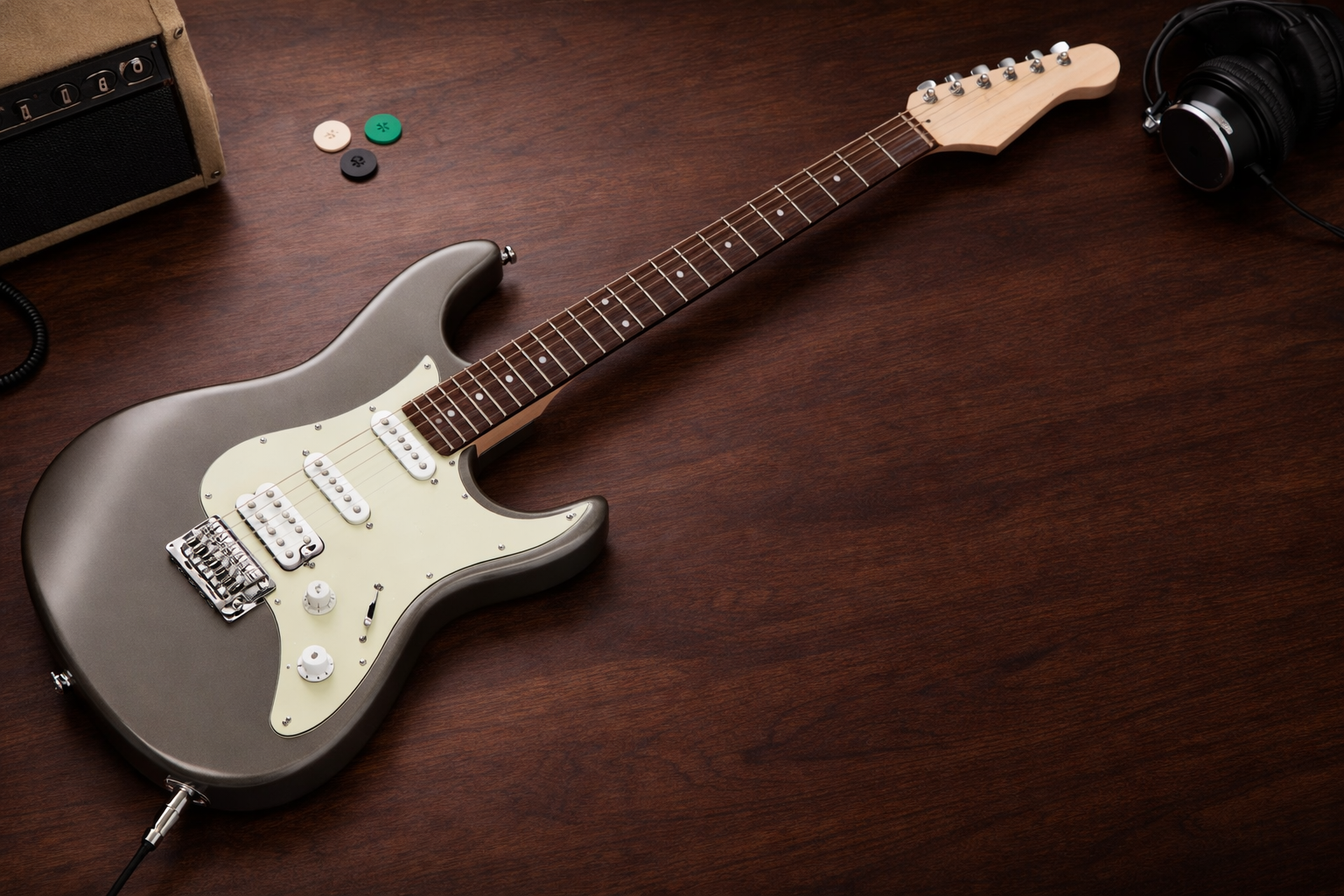
| Configuration | HSS, Ibanez Essentials single coils + Accord humbucker, dyna-MIX9 / Alter switch |
| Scale / frets | 25.5″ scale, 22 frets, modern C-ish neck |
| Bridge | Two-point tremolo, traditional style |
| Typical use | First or second electric for home practice, jams and early band rehearsals |
| Price bracket | The azes40 ibanez price usually sits above “bundle guitars” and below mid-tier instruments, similar to the models in electric guitars under $300. It moves with local sales and stock, so checking current pricing in your region still matters. |
| Your situation | AZES40 verdict | Why |
|---|---|---|
| First “real” electric guitar after a lot of YouTube research, budget limited but not rock-bottom. | Strong yes | Feels like a real instrument, HSS covers many styles, and you will outgrow your skills before you outgrow the guitar. |
| Upgrading from a cheap starter bundle guitar that always feels a bit off. | Very likely yes | Better neck, tuning and switching; a big psychological jump even though the spec sheet does not look dramatic. |
| You already own a decent mid-range S-style and want a clear upgrade. | Probably no | The ibanez azes40 sits below true mid-range; you may feel like you moved sideways rather than up. |
| Your main focus is low-tuned, high-gain metal with a fixed bridge. | Better options exist | You can make it work, but the trem bridge and stock pickups are not optimised for that world. |
Who the Ibanez AZES40 makes sense for
On paper this looks like a typical beginner Ibanez. In practice the azes40 is aimed at a specific mindset: you want something affordable that still feels like a guitar you could see on a real stage, not just in a starter bundle.
When the AZES40 is a good fit
- You want your first serious electric rather than a throwaway starter kit.
- You prefer modern S-style ergonomics over strict vintage specs.
- Your playlist is a mix of pop, rock, worship and lighter hard rock rather than only extreme metal.
- You care about tuning stability, feel and inspiring practice more than about the logo on the headstock.
- You like the idea of a flexible HSS layout while you are still discovering your favourite tones, as covered in HSS vs SSS vs HH pickups.
When you will probably outgrow it fast
- You are already committed to tight low tunings and high-gain metal with a fixed bridge.
- You are obsessed with vintage-correct Strat specs and small historical details.
- You know you will buy a significantly more expensive guitar within a year and do not want an extra flip in between.
- You strongly dislike tremolos and want a hardtail-only setup.
For a wider look at true beginner options, you can cross-check with what electric guitar is best for beginners and beginner guitar checklist.
Real-world experience with my AZES40
Build quality and feel
The main psychological fear in this price range is that the guitar will feel hollow and cheap. The ibanez azes40 clears that bar. When I first unboxed mine the impression was “slightly simplified AZ”, not “starter-pack special”.
- Weight is light-to-medium, comfortable on the shoulder and balanced sitting or standing.
- The neck is slim without being a razor-thin shred plank; it feels like a friendly modern C.
- Fretwork out of the box on my guitar was playable with only minor fret-end roughness.
- The satin-style finish on the back of the neck helps your hand glide instead of sticking when it gets sweaty.
You can still see the price point in the finer details such as nut work and how precisely the trem returns to pitch, but the overall feel is much closer to a “real” instrument than to a disposable beginner piece.
Playability and setup
From the factory the setup is conservative: action slightly higher than necessary, a bit more relief, and the trem floated for light use. The geometry is friendly enough that a simple setup turns it into a very playable guitar.
- 25.5″ scale and 22 frets will feel familiar to anyone who has touched a Strat-style instrument.
- Upper fret access is good enough for lead practice and solos without feeling cramped.
- After lowering the action a touch and adjusting relief, bends and legato lines became noticeably smoother on my azes40.
This matters more than people admit: a guitar that fights you at normal action quietly kills your practice motivation. If you run into buzzing or dead spots, the quick checks in guitar buzz causes & quick fixes are a good first step before paying for a full pro setup.
Pickups, tones and noise
On paper the electronics are modest: Ibanez Essentials single coils, an Accord humbucker and the dyna-MIX9 switching system. In practice the flexibility is one of the reasons many players stay happy with the ibanez azes40 instead of jumping between several budget guitars.
Clean and edge-of-breakup
Neck and neck+middle positions deliver familiar S-style clean tones that work for chords and arpeggios. In-between sounds cover a lot of pop, worship and light funk. Through a decent amp they do not shout “budget guitar”, especially if you take room and volume into account using tips from bedroom tone guide and why does my guitar sound bad at low volume.
Crunch and higher gain
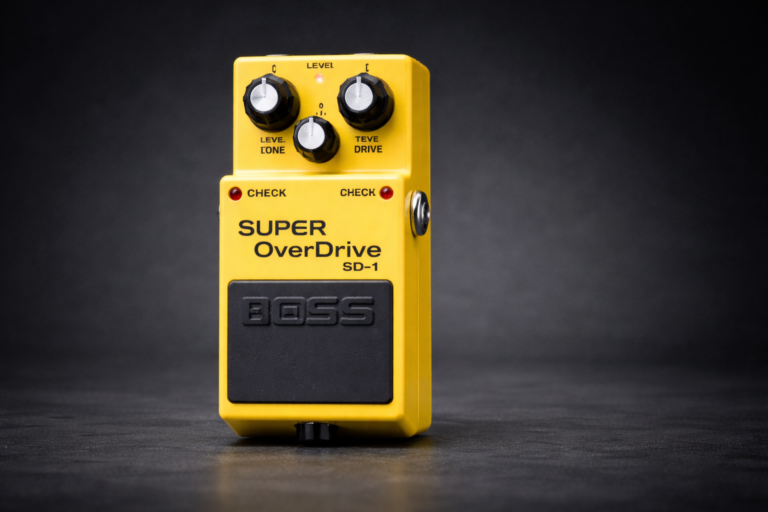
With overdrive or distortion the bridge humbucker does most of the work. Voicing is tight enough for medium gain and classic rock, especially if you stack it with a sensible drive from overdrive pedal explained or overdrive vs distortion vs fuzz.
- Classic rock and pop-punk rhythm tones are easy to dial in.
- Lead lines cut through better if you give them a small mid boost in your pedal or amp.
- Modern, very tight metal is possible with the right high-gain rig, but you start to feel the ceiling of the stock pickups.
Single-coil positions have normal 60-cycle hum and the in-between positions help. The Alter switch adds split and series options, which turns the guitar into a small tone lab while you are still figuring out what you actually like.
Price, value and upgrade anxiety
The azes40 ibanez price sits in an awkward middle: not dirt cheap, not premium. That is exactly why people overthink it. The fear is buying it now and wishing you had stretched to something “proper” a few months later.
In practice the guitar feels more like a simplified proper instrument than a dressed-up beginner box. You get a comfortable neck, a flexible HSS layout and a platform that responds well when you improve the rest of your rig. If you later move to a higher tier, the azes40 still works as a backup, mod project or alternate tuning guitar rather than ending up as clutter.
First guitar vs upgrade: how the AZES40 fits
As a first electric guitar
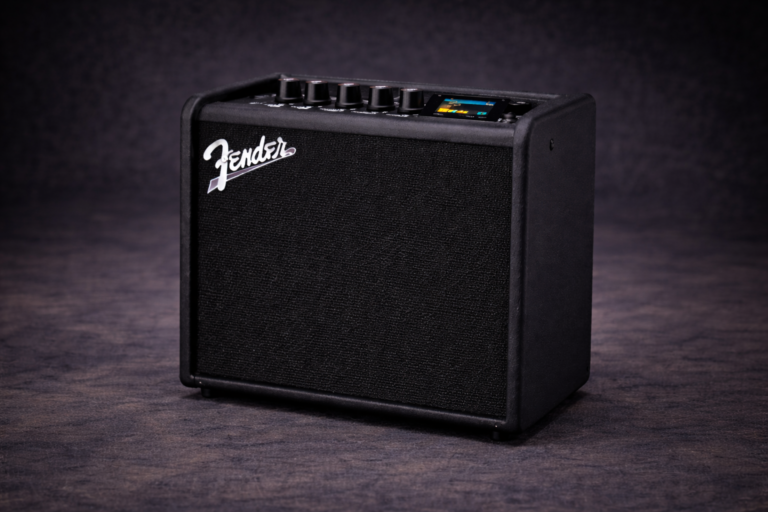
As a first guitar the ibanez azes40 works because it does not constantly remind you that it is the cheap one. It looks and feels like something you could bring to a rehearsal or small gig without embarrassment. Pair it with a sensible amp from best guitar amps for under $200 or a compact practice amp like Boss Katana Mini or Fender Mustang LT25, and you have a rig that makes practice feel like playing music, not punishment.
As an upgrade from a starter pack
Coming from a very basic starter bundle, the azes40 feels like stepping into the “real guitar” world. The neck lets you run lower action without constant buzzing, tuning stability is more trustworthy and the switching system rewards experimentation. At that point the next big improvements usually come from your amp and pedals, where guides like guitar pedals for beginners and gain vs volume vs master help more than swapping to yet another budget instrument.
Rigs and practice setups that suit the AZES40
Because the ibanez azes40 is fairly neutral and versatile, it adapts well to different rigs: small solid-state amps, modelers, amp sims and headphone setups. How inspiring it feels depends as much on the rest of the chain as on the guitar itself.
- If you are torn between a practice amp, a modeler or going straight into software, guitar amp simulator vs practice amp vs modeler breaks down the trade-offs.
- For silent practice, pairing the guitar with something from best budget headphones for guitar practice makes a bigger difference than changing guitars.
- If your home sound is still disappointing no matter what you do, why does my guitar sound bad at home is worth a read before blaming the azes40.
Ibanez AZES40 pros and cons
| Pros | Cons |
|---|---|
| Feels like a real instrument, not a toy, even though it is priced for beginners. | Stock pickups and hardware are firmly in the budget category; there is a clear ceiling. |
| Comfortable modern neck and body shape make long practice sessions easier. | Factory setup is conservative; you really feel the benefit of a proper setup. |
| HSS layout and dyna-MIX9 switching give a lot of usable tones while you figure out your style. | Trem bridge will not be ideal if you want extreme stability, heavy dives or only hardtail guitars. |
| Works well as both a first and second guitar; later it can become a backup or mod platform. | Players with an established taste for vintage-correct or very high-end instruments may find it too “middle of the road”. |
Ibanez AZES40 review verdict
The real answer to “is the ibanez azes40 good” depends on your expectations. If you are hoping for premium hardware, hand-finished frets and perfectly tuned pickups, you will hit its limits. If you want a comfortable, versatile HSS guitar that helps you practice more, fits a wide mix of styles and leaves budget for a decent amp and a couple of pedals, it makes a lot of sense.
Ibanez AZES40 FAQ
Is the Ibanez AZES40 good?
Within its price range, the ibanez azes40 is a good guitar. The neck, ergonomics and switching system make it more usable than many entry-level instruments, and once it is set up properly it feels closer to a simplified “real” guitar than a starter pack. In this ibanez azes40 review the short version is that for most beginner to early-intermediate players the answer is yes, as long as you keep your expectations in line with the price.
Is the Ibanez AZES40 good for beginners?
Yes. The azes40 is beginner-friendly without being patronising: the neck is comfortable, the body is light, and the HSS layout covers clean, crunchy and driven sounds without extra gear. If you are completely new, pairing it with beginner guitar checklist will make the first months smoother.
What styles does the AZES40 suit best?
The guitar is most at home in pop, rock, worship, indie and lighter hard rock. With the right amp or modeler it can stretch into heavier territory, but players focused only on tight low-tuned metal may prefer something designed specifically for that job.
Which upgrades are worth doing on an AZES40 later?
The most common upgrades are a better nut, locking tuners and a pickup swap tailored to your style. None of these are mandatory on day one. It usually makes sense to live with the stock guitar first, then decide what you actually miss while you improve your playing and explore different tones.