Is Guitar Hard to Learn? Honest Truth for Beginners
Before buying their first instrument, a lot of people quietly search “is guitar hard to learn” and hope someone will just give them a straight answer.
Reality: the first weeks are clumsy and uncomfortable, but it’s nowhere near as impossible as it can look from the outside. Your fingertips aren’t used to the strings yet, chord shapes feel weird, and keeping a steady rhythm is its own skill. All of that is normal—not a sign that you’re broken or “not talented”.
This guide shows what the first year typically looks like, why learning can feel harder than it really is, and what to do if you want learning guitar to feel easier in real life (not just in theory).
Short version: Guitar feels hardest in the first 2–4 weeks (sore fingertips, awkward chords, messy rhythm). With 10–20 focused minutes most days, many beginners can strum simple songs in 1–3 months—and feel genuinely “able to play” within 6–12 months.
Is Guitar Hard to Learn? The Short Answer
If you’re asking how hard is it to learn guitar, what you usually mean is: “How long until I can play actual songs without everything falling apart?” With consistent practice, it’s often sooner than people expect—but it doesn’t happen overnight.
| Time playing | What it feels like | Typical wins |
|---|---|---|
| Week 1–2 | Sore fingertips, buzzing chords, lots of stopping and starting. | Learn basic open chord shapes and very slow strumming. |
| Month 1–3 | Still messy, but you can hear progress if you record yourself. | Change between a few chords in time at slower tempos; play parts of simple songs. |
| Month 3–6 | Hands start to cooperate, rhythm feels more natural. | Play straightforward songs all the way through; stay with a metronome or backing track. |
| Month 6–12 | You feel like “a guitarist”, not just someone holding a guitar. | Cleaner chord changes, basic riffs and easy solos; more control over dynamics. |
Quick reality check: If you feel like you’re stuck in the “Week 1–2” row, that’s normal. Most of what changes next is simply your hands and timing catching up.
So, is it hard to learn guitar? The beginning is definitely challenging—but it’s a temporary phase. Once your hands adapt and rhythm stops feeling mysterious, progress speeds up.
What Actually Makes Learning Guitar Difficult?
When somebody types “how difficult is it to learn guitar” into a search bar, they’re usually already struggling with something specific. A few factors team up to make guitar feel harder than it needs to be.
1. Your fingers and hands aren’t used to the work yet
Pressing down strings, stretching for chord shapes, and keeping clean pressure are all new movements. Until your fingertips toughen and the small muscles in your hands adapt, even “easy” chords can feel demanding.
2. Chord changes and rhythm at the same time
Most beginners can form a chord if they’re allowed to stop and think. The real challenge is changing between chords while a steady beat is happening. That’s where questions like “how hard is it to learn to play guitar in time with a song?” come from—your brain is juggling two skills at once.
3. Expectations shaped by polished videos
Online you mostly see highlight moments: clean chord changes, perfect timing, and fast solos. You rarely see the repetitive practice behind them. If you expect to sound polished quickly, learning will feel impossibly hard no matter what you do.
4. Fighting against your gear
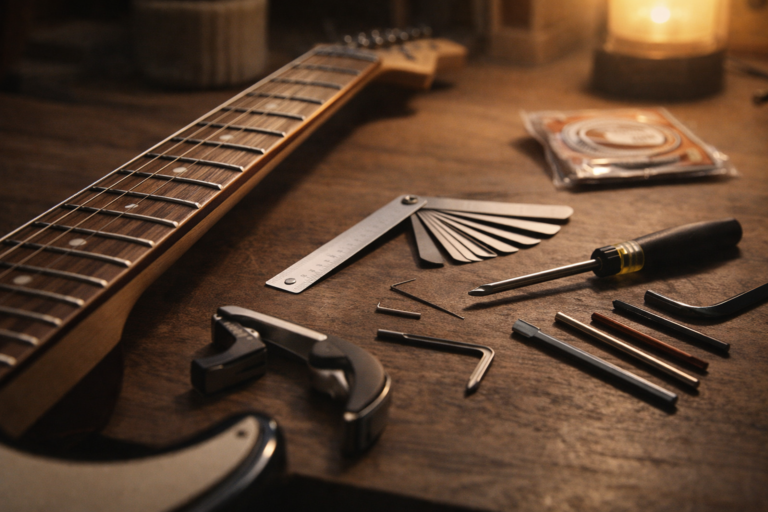
Sometimes the obstacle isn’t your ability—it’s the instrument. High string action, poor intonation, or uncomfortable setup can make every chord feel worse than it should. If you’re constantly getting buzz or dead notes, fix that first: start with guitar buzz causes and quick fixes.
5. Too much information, not enough direction
There’s endless free guitar content. That’s great, but it also means you can bounce from open-chord lessons to advanced theory in a single evening. If you keep switching focus, nothing gets enough repetition to stick—which is a huge reason learning to play guitar feels difficult.
Is It Easy to Learn Guitar as a Beginner?
People ask “is it easy to learn guitar?” when they’re worried they’re too old, too busy, or “not musical”. The truth: if “easy” means strumming a handful of simple songs in a few months, that’s realistic for most beginners. If “easy” means sounding polished quickly, then no instrument is easy in that sense.
Two ingredients do most of the heavy lifting:
- A beginner-friendly guitar. A bad setup makes everything harder. If you’re choosing your first electric, what electric guitar is best for beginners helps you avoid instruments that fight back.
- A simple, repeatable practice plan. Ten to twenty focused minutes most days beats a single long, unfocused weekend session. A beginner guitar checklist keeps you from guessing what to do every time you pick up the guitar.
Once those pieces are in place, “how hard is it to learn guitar?” becomes a much more practical question: can you show up consistently this month?
Electric vs Acoustic: Which Is Easier to Learn On?
If you’re trying to decide before you start, this question matters. For many beginners, electric is physically easier at the start because the strings are often lighter and the action can be set lower—so pressing chords takes less effort.
Acoustic can still be a great choice (especially if you love that sound), but it may feel a bit tougher on the hands early on. That doesn’t mean it’s the “wrong” instrument—it just means your first few weeks can feel more demanding.
- Choose electric if comfort and low-volume practice are priorities, or if you mainly want to play riffs and rock-style parts.
- Choose acoustic if you want a simple grab-and-play setup and you love the sound of strumming songs without extra gear.
Either way, the core difficulty is the same: building chord changes and timing. That’s the part behind most searches like “how difficult is it to learn the guitar?”
Is It Hard to Learn Guitar on Your Own?
These days, tons of players are self-taught. Between YouTube lessons, structured courses, and tab sites, the information is there. The tricky part is turning that information into a path instead of a random collection of videos.
If you’ve been asking “how hard is it to learn to play guitar by yourself?”, these habits make a big difference:
- Pick one main resource at a time. Choose a course, book, or channel as your “home base”. Restarting with a new method every week is a common reason people feel it’s hard to learn guitar on their own.
- Record yourself regularly. Quick phone recordings are enough. Listening back helps you hear progress in timing and chord clarity, even when you feel stuck.
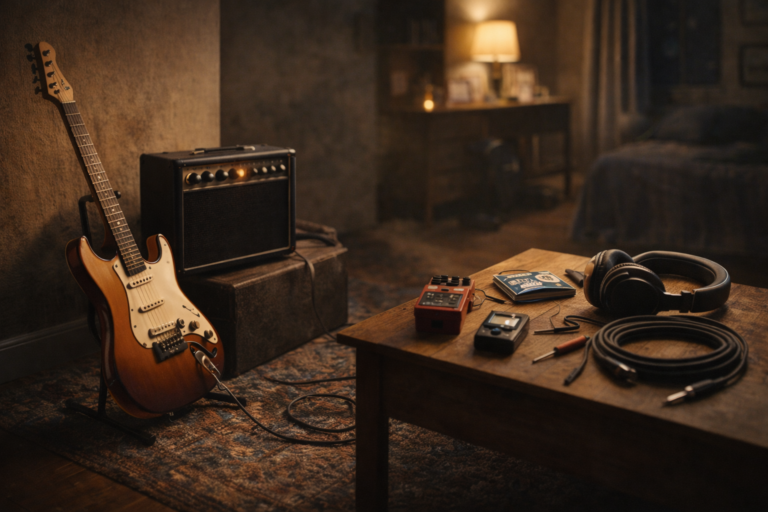
- Make practice convenient and quiet-friendly. If volume is an issue, headphones for practicing guitar can remove a huge friction point and make you practice more often.
If you’re choosing between gear routes for home practice, guitar amp simulator vs practice amp vs modeler breaks it down in plain language.
How Hard Is It to Play Guitar Compared to Other Instruments?
Another common angle is “how hard is it to play guitar compared to piano or drums?” It’s less about one being harder and more about the kind of challenge each instrument gives you.
- Piano is visually straightforward. Notes are in a straight line and every key gives a clean sound. The difficulty is reading more complex music and coordinating two hands that often do different things.
- Guitar uses repeating shapes across the fretboard (which is powerful long-term), but you’re responsible for muting extra strings, keeping notes clean, and controlling noise with both hands.
If your goal is to strum songs, play riffs you like, and maybe jam with friends, guitar is one of the most rewarding choices you can make. Once you get past the early awkwardness, it becomes very forgiving for real-world playing.
Ways to Make Learning Guitar Easier Day to Day
Instead of getting stuck on “how difficult is it to learn to play guitar” in theory, reduce the little bits of friction that make practice hard to start. Small changes add up fast.
1. Make your practice setup pleasant
When your sound is comfortable, you reach for the guitar more often. That doesn’t mean buying a huge rig on day one—it just means avoiding tones that make you want to stop after two minutes. A solid small amp from best guitar amps for under $200 can make home practice feel like real music instead of a chore.
2. Keep goals small and specific
Swap “I want to be good at guitar” for targets you can actually hit this week, such as:
- Change cleanly between two chords at a set tempo.
- Play one whole song without stopping (even if it’s slow).
- Hold a steady strumming pattern for a full verse and chorus.
3. Limit what you work on each session
A simple rule: focus on no more than three things per session—for example, chords, rhythm, and one song. If a new lesson doesn’t help one of those priorities this week, it can wait. Narrow focus makes progress easier to notice.
FAQ: How Hard Is It to Learn Guitar?
Is it hard to learn guitar?
It’s hard at the very beginning because your hands and timing are adapting. After the first few weeks, it usually gets noticeably easier—especially if you practice a little most days instead of cramming once a week.
Is it hard to learn the guitar if you have no musical background?
It can feel that way at first, but you don’t need a “musical background” to start. Beginner progress is mostly about repetition: chords, rhythm, and learning a few simple songs you can return to regularly.
How hard is it to learn guitar versus how difficult is it to learn guitar?
People use both phrases to ask the same thing: what the struggle looks like early on and how long it takes to sound decent. The difficulty is front-loaded—then it tapers as your hands and timing catch up.
How hard is it to learn to play guitar well?
“Well” depends on your goal. If “well” means clean chord changes and steady rhythm for real songs, many beginners can reach that within months. If it means advanced lead playing and tight technique, that’s a longer, multi-year journey (still doable—just a different target).
How difficult is it to learn to play guitar compared to just learning chords?
Chords are only one part. The bigger leap is changing chords in time while keeping a steady strum. That’s why early practice that combines chords + rhythm usually feels more productive than “learning shapes” alone.
How hard is it to play guitar for complete beginners?
The first days can feel awkward because everything is new. Expect buzzing, slow changes, and tired fingers. If you stay consistent, you’ll usually feel a clear shift around weeks 2–4 when your hands stop fighting you as much.
Is it easy to learn guitar if you only want to play songs?
If you want to strum common chord songs, yes—it’s one of the most approachable goals. Start with a small set of open chords and one strumming pattern, and focus on playing whole songs slowly rather than chasing lots of exercises.
How easy is it to learn guitar if you’re older?
For most adults, the biggest limiter isn’t age—it’s consistency and comfort. A playable setup and short daily practice usually matter far more than starting at 16 versus 36.
Final Thoughts: Hard at First, But Worth It
So where does this leave the original question: is guitar hard to learn, or is it actually a fairly friendly instrument? The honest answer is that the first months can be challenging—but they’re completely survivable if you know what to expect and set yourself up well.
If you’ve been searching variations like “how hard is it to learn to play guitar” or “how easy is it to learn guitar,” the most useful takeaway is simple: make it consistent, make it comfortable, and measure progress in small wins. That’s how the awkward phase ends—and how the fun part starts.