Why Does My Electric Guitar Sound Bad at Home? (7 Real-World Fixes)
Guitar sounds bad at home when your tone turns thin, harsh, or “boxed” in a bedroom or living room. If you keep asking yourself “why does my guitar sound bad?” or even “why does my electric guitar sound bad at home?” every time you plug in, most of the time it’s not your guitar — it’s the room + volume + EQ interaction.
Here are 7 fixes you can do in minutes (no new gear): speaker/IR choice, EQ moves, gain staging, pickup height, and simple room placement. The short answer: it’s almost never “you bought the wrong gear” – and you probably don’t need to replace your guitar from this list of electric guitars under $300 just yet.
Quick fixes (do this first):
- Turn the amp down, raise master (if available), lower preamp gain
- Cut lows slightly, reduce high treble, add a small mid bump
- Move the amp off the corner / away from the wall
- Lower pickup height a bit (especially bridge)
If you’re still confused by the front panel knobs, this will save you time: Gain vs Volume vs Master: What They Actually Do.
Most of the time your electric guitar sounds bad at home because of a mix of volume, room, settings and expectations, not because your guitar or amp are trash.
This guide breaks down the main reasons electric guitar tone falls apart at home and gives you simple, practical fixes you can actually try in a bedroom or living room without a sound engineer or a new credit card. If you want a deeper dive into low-volume tone in general, you can also check out the dedicated low volume guitar tone guide.
Why does my guitar sound bad?
If you’re wondering “why does my guitar sound bad at home?” even though the same rig sounded fine elsewhere, the quick answer is that your ears, your room and your settings behave totally differently at low volume. Before you blame the gear, it’s worth fixing the boring stuff: volume, amp placement, EQ and basic setup.
Reason 1: You’re hearing your amp at a totally different volume than in demos
The biggest, most boring truth: guitar gear is designed and marketed at “fun” volume, but most people actually use it at “please don’t kill me” volume.
At higher volume:
- The speaker moves more air
- The amp’s power section works harder
- Your ears hear more bass and treble naturally
- The room joins in and makes things feel bigger
At bedroom volume:
- The speaker barely moves
- The amp’s power section is half asleep
- Your ears are less sensitive to bass and sparkle
- The room gives you almost no “bigness”
So the same amp that sounded warm and full when turned up to 3–4 in a store suddenly feels thin, brittle or small at home on 0.5. That’s usually when people first type “why does my guitar sound bad at home?” into Google.
What you can do about it:
- Accept that you’re playing at a different volume “universe” than most demos
- Stop chasing “cranked amp in a studio” at whisper volume
- Push the master or output as high as you can realistically get away with, then control dirt with gain and your guitar volume knob instead of living on master 0.1 and gain on 10
- Consider whether a smaller practice amp or amp sim would actually fit your reality better – I compare the two here: practice amp vs amp sim
- You’re not trying to recreate the exact tone from a mic’d 4×12 on YouTube. You’re trying to get the best possible version of your tone at the volume real life allows.
Reason 2: Your amp is in the worst possible spot in the room
You can get everything else right and still sound bad if the amp is just… parked in a terrible place.
Common home setup crime scene:
- Amp on the floor
- Pushed into a corner
- Pointing at your ankles or a wall
What your ears hear in that scenario has almost nothing to do with what the amp actually sounds like. You’re mostly hearing reflections, boomy low end from the corner and harsh highs bouncing off hard surfaces.
Simple placement fixes that matter more than another pedal:
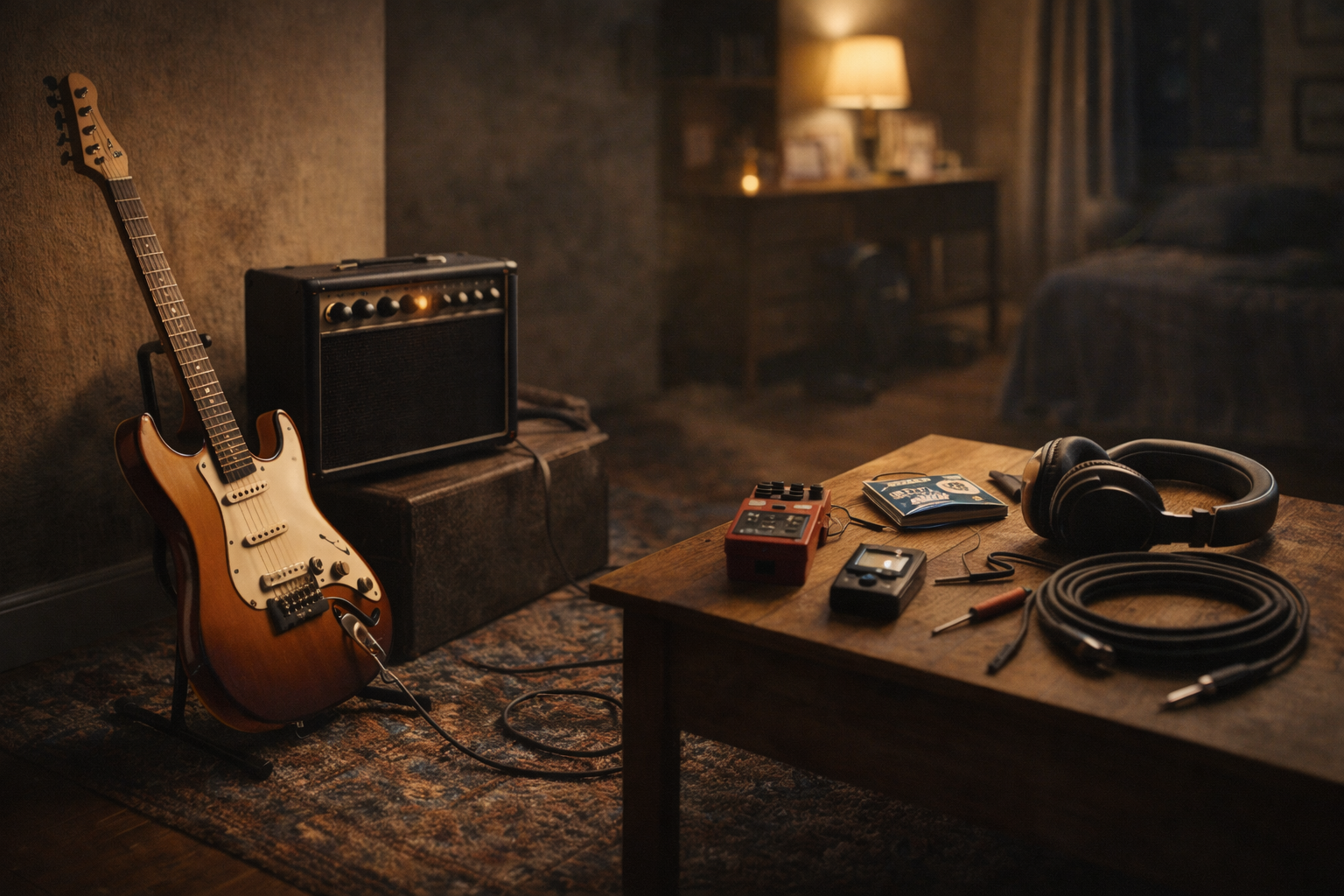
- Get the amp off the floor — put it on a chair, desk, amp stand or even a sturdy box so the speaker is closer to ear height. This alone often feels like buying a better amp.
- Aim the speaker roughly at your head — tilt the amp back slightly or angle it so it’s not firing directly at your legs or straight into a wall. You want some direct sound, not only reflections.
- Avoid ramming it into a corner — corners exaggerate bass and make everything mushy. Even pulling the amp 20–30 cm away from the corner or wall can tighten up the sound.
If you’ve never moved your amp from the floor-corner setup, try this first before assuming your gear sucks. And if you’re still hunting for a small home-friendly combo, this list of practice amps under $200 is a good place to start.
Reason 3: Your EQ is copied from the internet, not from your room
Most of us are guilty of this: we see “recommended settings” in a demo or a forum, set our amp to those positions and wonder why it still sounds bad.
Those settings were:
- For a different room
- At a different volume
- With a different guitar
- Mic’d through different speakers/headphones
At home, especially at low volume, too much bass and not enough mids are the most common problems.
Typical “bad at home” settings:
- Bass on 7–10
- Mids on 0–4 (“scooped” because it sounds big alone)
- Treble too high trying to “add clarity”
Result: muddy, boomy tone that somehow still feels harsh and disappears completely when you play with a backing track.
Better starting point for bedroom EQ:
- Bass: slightly below noon (around 10–11 o’clock)
- Mids: around noon or even a bit higher
- Treble: around 11–12 o’clock, then tweak by ear
Then:
- If it’s boomy → reduce bass first, not mids
- If it’s harsh → ease treble or presence down a bit, don’t instantly kill all high end
- If it disappears in a mix → add mids, don’t just turn everything up
Think of EQ as “fixing what the room and volume are doing” rather than “copying the knobs you saw on a thumbnail”. If you want a deeper walkthrough on each band, there’s a full guitar EQ guide that expands on this.
| What you hear at home | Most likely cause | Fast fix |
|---|---|---|
| Boomy / muddy | Too much bass for the room + low volume | Lower bass first, keep mids healthy |
| Harsh / fizzy | Treble/presence too high + gain too high | Reduce treble/presence slightly, dial gain back |
| Thin / small | Master too low, scooped mids | Raise master a bit (if possible), add a small mid bump |
| Disappears with backing track | Not enough mids, too much bass | Increase mids and control low end |
Reason 4: You’re using way too much gain at low volume
High gain is fun. It makes everything sustain longer and hides a lot of mistakes. The problem: at low volume, too much gain makes your electric guitar sound fizzy, small and two-dimensional.
What high gain does at bedroom volume:
- Smears your picking dynamics so every note feels the same
- Adds noise and hiss that you notice more in a quiet room
- Turns chord voicings into one big block of fuzz instead of individual notes
In a loud band mix, that big block can be useful. Alone, at low volume, it often just sounds bad and tiring. So if you’re still asking yourself why does my guitar sound bad even with good gear, look at how much gain you’re stacking at the volume you actually play at.
How to fix your gain without killing the fun:
- Dial gain down until open chords still have definition
- If palm-muted chugs turn into a buzz cloud, you’ve gone too far
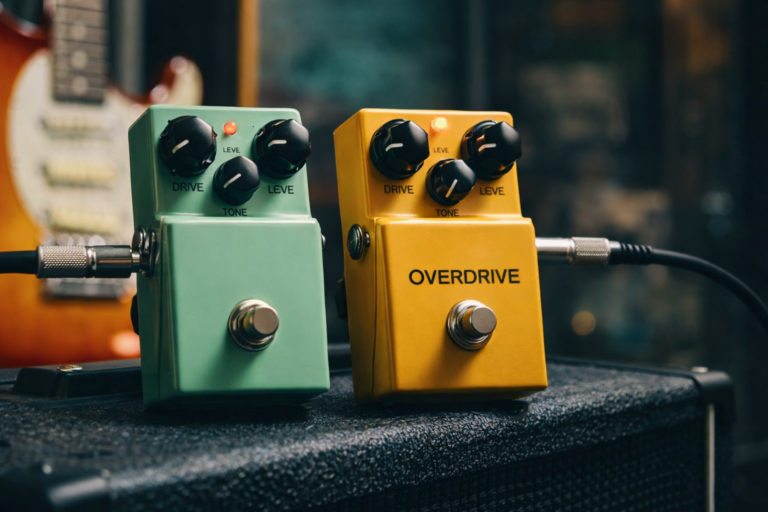
- Use an overdrive pedal with low gain, higher level into a medium-gain amp sound instead of maxing the amp’s gain knob
- Use your guitar volume knob: amp set for medium crunch at guitar volume 10; play most of the time at 6–8 for rhythm; roll up for leads
You can still have saturated sounds at home, but if you want them to feel “good” instead of “cheap”, gain has to work with your volume, not against it. For more on how gain, volume and master interact specifically on practice amps, there’s a full breakdown in the bedroom tone guide.
Reason 5: Your gear and your room are fighting each other
Sometimes the problem isn’t that your gear is bad, it’s that your gear is wrong for how you’re actually using it.
Examples:
- A loud, 50–100W amp that never gets off “1” on the master
- A tiny practice amp with a very small speaker trying to cover bass-heavy tones
- High-output metal pickups into a super bright amp in a bare, echoey room
What happens:
- Big amps feel stiff and thin when they’re barely on
- Tiny speakers sound boxy when you expect them to sound like a 4×12
- Bright pickups + bright amp + bright room = instant ice pick
Realistic tweaks without buying a whole new rig:
If you have a big amp:
- Use the lowest-wattage or “half power” mode if available
- Consider an EQ or overdrive pedal to shape things at lower master levels
- Remember it might never be at its ideal state in a small bedroom, and that’s okay
If you have a tiny amp:
- Embrace more mids and less bass; don’t ask a 6–8″ speaker to do full stadium low end
- Raise it up to your ear level
- Use backing tracks and keep your guitar tone focused, not huge
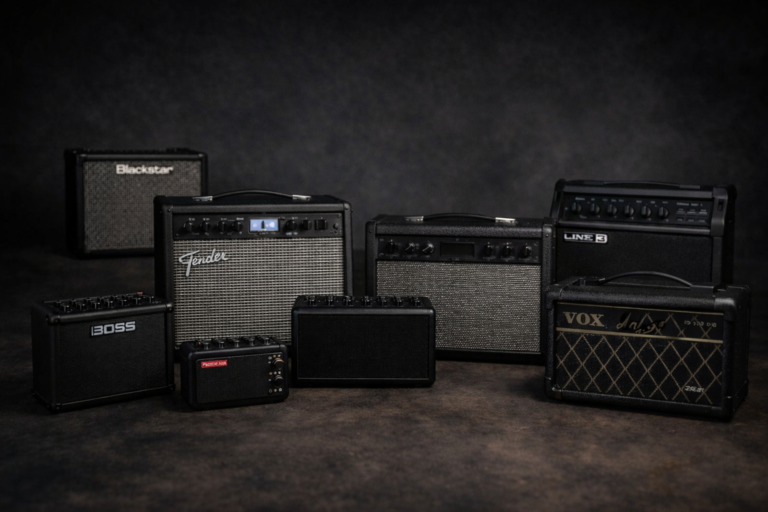
- If you’re shopping for this kind of amp, reviews like the Blackstar ID:Core 10 V4, Hotone Pulze or Fender Mustang LT25 will give you a realistic idea of what to expect at home volume.
If your rig is overly bright:
- Try the neck pickup more
- Roll back your guitar’s tone control just a touch
- Use less treble/presence and don’t be afraid of the mid knob
You’re matching tool to job now: “sound good in this actual room at this volume”, not “sound like my favorite live album”.
Reason 6: Your guitar setup is fighting you (so everything sounds worse)
Sometimes it’s not even the amp. A poorly set up guitar makes everything feel worse and makes people ask, again, “why does my guitar sound bad?” even when the amp settings are reasonable.
- Old, dead strings that won’t tune properly
- Action either painfully high or buzzing everywhere
- Intonation off, so chords sound sour higher up the neck
- Pickup height way too close or too far from the strings
Result: even with decent amp settings, your electric guitar just sounds… wrong. Chords don’t ring nicely, bends are out of tune, nothing feels “in tune with itself”.
Basic setup checks that change more than another pedal:
- Put on a fresh set of strings and stretch them in properly – if you’re unsure what to buy, this guitar string gauge guide walks through the options
- Check tuning up and down the neck; if chords sound off above the 5th fret, you need intonation set
- Look at the action: if playing feels like a workout, it’s probably too high
- Check pickup height: too close = harsh/boomy/weird sustain; too far = weak/thin/uninspiring
If you’re not comfortable adjusting this stuff yourself, one proper setup from a decent tech often makes your existing gear sound “suddenly way more expensive”. For a more technical checklist, you can skim a generic setup article like this basic electric guitar setup checklist from Sweetwater and then apply the ideas at your own pace. And if your problem is specifically ugly fret noise, you might want to read this separate guide on guitar buzz causes and quick fixes.
Reason 7: You’re judging your sound through bad speakers or wrong monitoring
Another reason your electric guitar sounds bad at home: you’re listening in the wrong way.
Common situations:
- Listening to a modeler through laptop or phone speakers
- Using cheap, hyped consumer headphones with tons of bass and treble
- Listening very quietly with a fan or outside noise covering details
A guitar tone that sounds big and warm through proper monitors or a real amp can sound like a mosquito through tiny speakers. On the flip side, some “YouTube tones” are heavily EQ’d and compressed to sound good through phones, not in real rooms.
How to judge your tone more fairly:
- If you use an amp: stand in front of it at ear height and judge from there, not from across the room
- If you use headphones: use decent, neutral-ish headphones if possible, not bass-boosted gaming cans – there’s a whole roundup of budget headphones for guitar practice if you need ideas
- Keep the volume at a level where you hear detail without fatigue
- Don’t obsess over matching a recorded demo exactly — one is mic’d, the other is air in a space
The goal is: “does this make me want to keep playing for another 20–30 minutes?”, not “does this sound exactly like that one video from a different universe?”.
Quick rescue checklist: how to make your electric guitar sound better at home in 10–15 minutes
If you’re overwhelmed, here’s a simple order of operations you can try tonight.
- Move the amp: off the floor, away from corners, pointed roughly at your head
- Reset the tone controls: bass 10–11 o’clock, mids noon–1 o’clock, treble 11–12 o’clock, reverb low
- Tame the gain: start low–medium, turn up the master until you hit “comfortable but not scary”, raise gain only until chords still sound like chords
- Use the right pickup: neck/middle for cleans, bridge or bridge+middle for rock crunch, roll tone down a hair if it’s too bright
- Check your guitar basics: fresh strings if it’s been a long time, tune carefully, plan a setup if chords go sour higher up the neck
- Play along with a backing track: judge your tone with drums/bass, then adjust mids and bass to sit in that mix
Final thoughts: it’s not that your gear is terrible
When your electric guitar sounds bad at home, it’s easy to jump straight to:
- “I bought the wrong amp”
- “My guitar is cheap, that’s why”
- “I need more pedals / a different plugin / a better cab sim”
Sometimes upgrades are justified, sure. But most of the time the real issues are:
- Volume reality vs YouTube fantasy
- Room and amp placement
- Too much gain, not enough mids
- Guitar setup being neglected for months
- Wrong expectations for what a small amp in a small room can actually do
If you fix those first, your existing gear might be much better than you think. And even if you eventually upgrade, you’ll understand what you’re really chasing – not just buying new stuff hoping it will magically sound good at whisper volume by itself.
That’s how you go from “why does my electric guitar sound so bad at home?” to “okay, this is actually fun to play now.”