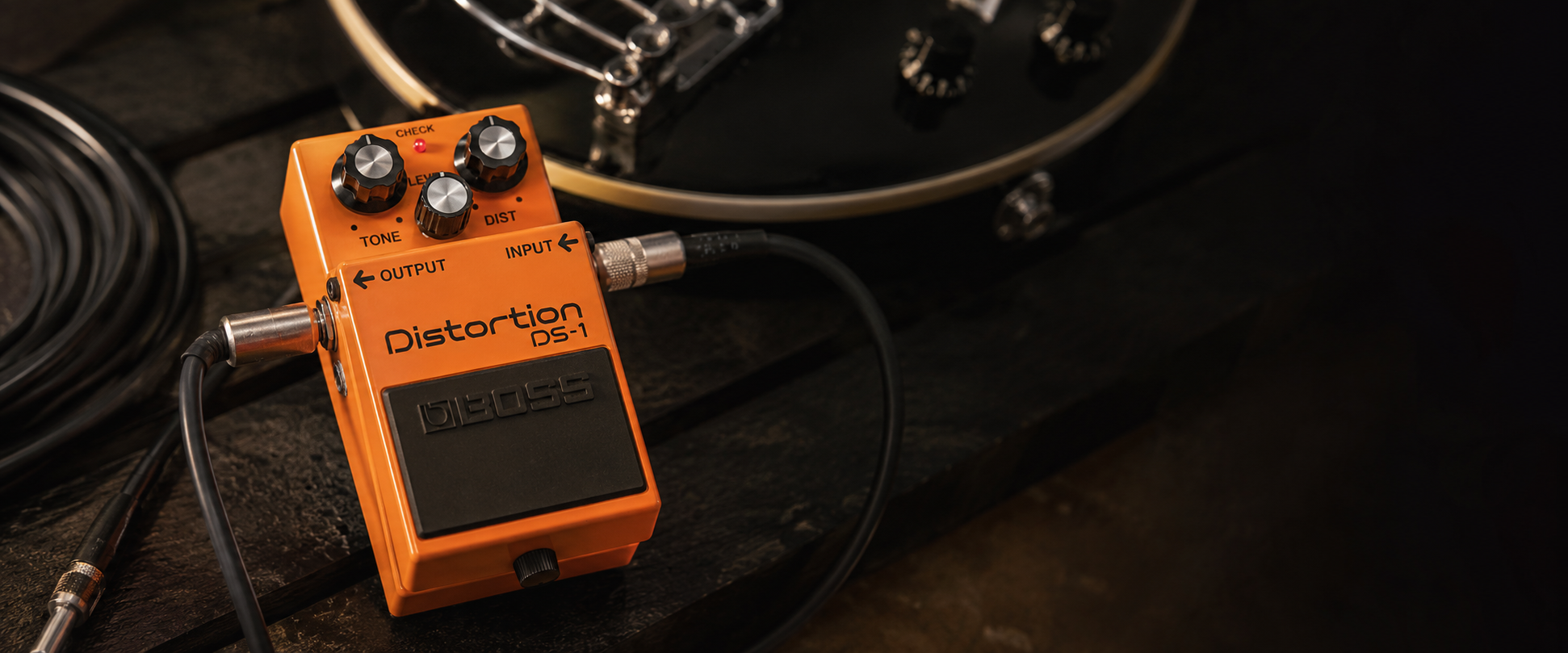
Boss DS-1 Review: Is This Cheap Distortion Still Worth It?
The Boss DS-1 is one of those pedals almost every guitarist meets eventually: cheap enough to buy early, famous enough to stay relevant, and misunderstood enough to sound either great or painfully fizzy depending on how you use it.
This Boss DS-1 review is written for normal players using normal rigs: small practice amps, clean combo amps, beginner pedalboards, bedroom volume, rehearsal volume, and budget-conscious setups where every pedal has to earn its spot. The DS-1 can be a useful classic distortion pedal, but it is not magic. It works best when you understand what it is good at: sharp attack, classic rock/punk/grunge gain, simple lead sustain, and a bright cutting voice that needs careful tone control.
If you are comparing it against other distortion pedals, start with the full hub here: best distortion pedal for guitar. This page focuses on the DS-1 itself: who should buy it, who should skip it, how to dial it, and what to choose instead if the orange box is not the right fit.
In this Boss DS-1 review, the main question is not whether the pedal is famous; it is whether it still makes sense for a modern home player, beginner pedalboard or budget rock rig.
What you’ll get from this guide:
- Who the Boss DS-1 distortion pedal is actually for.
- Why it can sound harsh at bedroom volume and how to fix that.
- Best Boss DS-1 settings for rhythm, lead, punk/grunge and amp boosting.
- Clear alternatives like the Pro Co RAT 2, MXR Super Badass, JHS Angry Charlie and Boss MT-2W.
- A practical verdict on whether the Boss DS-1 is still worth buying.
Boss DS-1: pros and cons at a glance
Pros
- Affordable, widely available and easy to understand.
- Classic hard-edged distortion voice for rock, punk and grunge.
- Works as a simple first distortion pedal or backup board pedal.
- Can cut through a mix when the Tone and Distortion controls are set carefully.
- Rugged Boss enclosure and standard compact pedal format.
Cons
- Can sound sharp, fizzy or thin through small bright practice amps.
- Not as flexible as pedals with 3-band EQ, like the MXR Super Badass Distortion.
- Not the easiest path to tight modern metal; the Boss MT-2W Metal Zone is stronger there.
- Players wanting a smoother, more dynamic drive may prefer an overdrive instead.
Boss DS-1 review: quick verdict
The Boss DS-1 is worth buying if you want a cheap, simple, classic distortion pedal for rock, punk, grunge, basic lead tones, or a first pedalboard. It is not the best choice if you want smooth low-gain overdrive, modern tight metal, or a warm “amp-like” distortion that sounds polished with no effort.
Who the Boss DS-1 distortion pedal is actually for
The DS-1 makes the most sense for players who want a simple, cheap distortion sound with a bright edge and enough gain for classic rock, punk, grunge and lead practice. It is not a “make any amp sound expensive” pedal. It is better understood as a blunt but useful distortion tool: clear, cutting, recognizable, and sometimes unforgiving.
Buy the Boss DS-1 if…
- You want your first distortion pedal and do not want to spend much.
- You play rock, punk, grunge, garage rock or simple lead parts.
- You like classic, cutting distortion more than smooth boutique drive.
- You already have a usable clean amp tone and need a dirt box for songs.
- You want a cheap pedal that can also serve as a backup distortion later.
- You want something simple enough to learn in one practice session.
Skip the Boss DS-1 if…
- You mainly want warm bluesy breakup or touch-sensitive low gain.
- You play modern metal and need tight palm-mutes with deep EQ control.
- Your amp already sounds harsh at home volume.
- You want one polished “amp-in-a-box” rock tone with a bigger EQ section.
- You hate bright, cutting distortion voices.
- You expect a cheap pedal to fix a rig you already dislike.
If your real problem is that every distorted tone sounds fizzy at home, fix your low-volume setup first: bedroom guitar tone guide and guitar EQ cheat sheet.
| Your situation | Verdict | Why |
|---|---|---|
| You want a cheap first distortion pedal for rock and punk. | Strong fit | Simple, affordable and strong enough for classic distorted rhythm and lead tones. |
| You want grunge, garage rock or raw classic distortion character. | Strong fit | The DS-1’s bright, hard-edged voice works well when you want bite and attitude. |
| You need a polished all-round distortion with deeper EQ control. | Maybe not | A 3-band EQ pedal like the MXR Super Badass is easier to shape across different amps. |
| You want tight modern metal or metalcore tones. | Look elsewhere | The Boss MT-2W or another high-gain pedal gives more control over low end and mids. |
| You want smooth blues overdrive or edge-of-breakup feel. | Wrong category | Look at overdrive instead; start with the best overdrive pedal guide. |
Boss DS-1 specs and controls at a glance
| Model | Boss DS-1 Distortion. |
|---|---|
| Type | Classic compact distortion pedal. |
| Controls | Tone, Level, Distortion. |
| Power | 9V battery or standard Boss PSA-style adaptor. |
| Best use case | Affordable rock/punk/grunge distortion and simple lead sustain. |
| Main limitation | Can get bright or fizzy with too much Tone/Distortion, especially at low volume. |
The controls look simple, but the Tone knob matters a lot. Turning it too high is the fastest way to make the DS-1 sound sharp through a small amp. Start with Tone lower than you expect, then raise it only if the guitar gets buried.
For official specs and current production details, see the Boss DS-1 product page.
Tone and feel in real-world rigs
The Boss DS-1 is not a smooth transparent drive. It has a clear distortion voice: bright attack, firm clipping, enough sustain for leads, and a hard edge that can either cut through or become harsh depending on the rig.
What the DS-1 does well
- Classic rock rhythm: power chords and simple riffs with a raw edge.
- Punk and grunge: direct, aggressive, not too polite.
- Lead sustain: enough compression to make single-note lines feel easier.
- Budget boards: a usable distortion voice without boutique pricing.
Where it struggles
- Bright practice amps: the top end can become piercing fast.
- Modern metal: low-end tightness and mid control are limited.
- Warm amp-like drive: it sounds like a distortion pedal, not a full amp channel.
- Maxed settings: Distortion and Tone high together often produce more fizz than power.
If you want a more amp-like rock distortion, compare it with the JHS Angry Charlie V3. If you want a gritty character pedal that can move toward fuzz, compare it with the Pro Co RAT 2.
Best Boss DS-1 settings (fast starting points)
Do not start with every knob at noon and then crank the Distortion. The DS-1 usually works better when Tone is controlled and Distortion is used with restraint.
| Scenario | Tone | Level | Distortion | Notes |
|---|---|---|---|---|
| Classic rock rhythm | 9–10 o’clock | Unity to slight boost | 10–noon | Keep Tone conservative; let mids from the amp carry the riff. |
| Punk / garage rock | 10–11 o’clock | Unity | Noon–2 o’clock | Raw and direct; avoid scooped amp EQ. |
| Grunge-style rhythm | 9–11 o’clock | Unity | 1–3 o’clock | Use bridge humbucker or hotter single-coils if possible. |
| Lead sustain | 10–noon | Slight boost | Noon–2 o’clock | If it gets thin, lower Tone before adding more Distortion. |
| Boosting an amp channel | 9–10 o’clock | Above unity | 8–9 o’clock | Use Level more than Distortion. This can push an already-working amp. |
| Small bright practice amp | 8–9 o’clock | Unity | 9–11 o’clock | Low Tone is your friend; fix amp placement before blaming the pedal. |
60-second dial-in method
Start here
- Set your amp clean or edge-of-breakup with mids present and bass controlled.
- Set DS-1 Tone around 9 o’clock, Distortion around 10 o’clock, Level at unity.
- Raise Distortion only until riffs feel saturated enough.
Then fix problems
- Raise Tone only if the guitar disappears in the mix.
- If it gets fizzy, lower Distortion first, then Tone.
- Do not solve fizz with more gain.
Home, rehearsal and headphone use
Bedroom volume
At bedroom volume, the DS-1 can sound harsher than it does in a band mix. The speaker is not moving much air, your room is exaggerating highs, and the pedal’s bright edge becomes more obvious.
- Keep Tone low, often below 10 o’clock.
- Use less Distortion than you think.
- Raise amp mids slightly instead of adding pedal Tone.
- Move the amp off the floor and away from corners before buying another pedal.
If every distorted sound feels bad at home, read why your guitar sounds bad at low volume.
Rehearsal volume
The DS-1 usually makes more sense when the amp is loud enough to give the guitar some body. It can cut through a band, but the trick is not to scoop mids or overdo bass.
- Use a little less Tone than you would alone.
- Do not set the amp with bass-heavy bedroom EQ and expect it to work in a mix.
- If the sound is disappearing, add mids or Level before adding more Distortion.
Headphones and amp sims
Through headphones, the DS-1 can feel direct and unforgiving. Cab simulation, EQ and speaker choice matter a lot here.
- Use a darker cab/IR if the top end is scratchy.
- Keep the pedal Tone lower than you would through a real speaker.
- If your headphone tone is harsh, fix the monitoring chain before changing pedals.
These two guides are useful companions: headphones for practicing guitar and amp simulator vs practice amp vs modeler.
Using the DS-1 with overdrive, EQ and amp gain
The Boss DS-1 can work alone, but it often becomes more useful when you treat it as one part of a gain structure instead of the whole sound.
Simple DS-1 signal chain ideas
DS-1 alone into clean amp
- Best for simple rock/punk/grunge tones.
- Keep Tone low and amp mids present.
- Works best if the clean amp is not painfully bright.
Overdrive into DS-1
- Use low-gain overdrive to tighten and push the DS-1.
- Keep overdrive gain low and level up.
- Good if you want more focus without maxing the DS-1.
DS-1 into amp gain
- Set DS-1 Distortion very low and Level higher.
- Use it more like a bright boost into an amp that already breaks up.
- Works better than maxing the pedal into a dead-clean tiny amp.
DS-1 with EQ after it
- Use EQ to tame harsh highs and restore mids.
- Good for recording or headphone rigs.
- If you keep fighting the same harshness, the EQ guide will help.
If you are still figuring out gain types, this comparison helps: overdrive vs distortion vs fuzz. If you are building your first board, start here: guitar pedals for beginners.
Boss DS-1 vs alternatives
The DS-1 is cheap and iconic, but it is not the best answer for every player. Use the table below to choose the direction that actually fits your rig.
| If you want… | Better direction | Why |
|---|---|---|
| More gritty character and fuzz-adjacent sustain | Pro Co RAT 2 | More personality and range from gritty rhythm to fuzzy lead tones. |
| A more flexible all-round distortion | MXR Super Badass Distortion | 3-band EQ makes it easier to adapt to different guitars and amps. |
| Marshall-style rock in a box | JHS Angry Charlie V3 | More amp-like and fuller for classic/hard rock rigs. |
| Modern metal and aggressive high-gain | Boss MT-2W Metal Zone | More EQ control and better fit for tight heavy riffs. |
| Smoother low-gain drive | Overdrive pedal | Better for edge-of-breakup, blues, dynamic picking and amp pushing. |
When the Boss DS-1 is the wrong choice
The DS-1 is a good cheap distortion pedal, but it is not the right answer if your actual problem is monitoring, room tone or the wrong gain category.
- Do not buy it to fix a harsh amp that already hurts your ears clean.
- Do not buy it if you want instant modern metal tightness without EQ work.
- Do not buy it if you really want overdrive touch sensitivity.
- Do not buy it expecting boutique amp-in-a-box polish.
If your guitar itself feels hard to control, do not ignore setup basics. String gauge, fret buzz and action can change how satisfying distortion feels: guitar string gauges and guitar buzz causes and quick fixes.
Summary: is the Boss DS-1 worth it?
The best way to treat the DS-1 is not as “the ultimate distortion pedal,” but as a classic budget tool with a specific voice. Keep the Tone control sensible, avoid maxing the Distortion knob, and pair it with a rig that already sounds decent. If that sounds like your situation, the DS-1 is a smart cheap buy. If you want modern tightness, deeper EQ or amp-like fullness, choose one of the alternatives above instead.
That is the honest Boss DS-1 review verdict: still useful, still cheap, but much better when you dial it with restraint.
Boss DS-1 FAQ
Is the Boss DS-1 still worth it?
Yes, if you want an affordable classic distortion pedal for rock, punk, grunge or a first pedalboard. It is less ideal if you want modern metal tightness, smooth low-gain overdrive or a polished amp-in-a-box tone.
Is the Boss DS-1 good for beginners?
It can be, because it is simple and affordable. The catch is that beginners often set too much Tone and Distortion, which makes it sound fizzy. Start with lower settings and focus on amp EQ first.
Is the Boss DS-1 good for metal?
It can handle some heavier rock and old-school metal sounds, but it is not the easiest choice for tight modern metal or metalcore. For that, a pedal with stronger EQ control like the Boss MT-2W usually makes more sense.
What are the best Boss DS-1 settings?
A safe starting point is Tone around 9–10 o’clock, Level at unity or slightly above, and Distortion around 10 o’clock to noon. Raise Distortion slowly and keep Tone lower than you think, especially through bright practice amps.
Why does my Boss DS-1 sound harsh?
Usually the Tone knob is too high, Distortion is too high, or the amp is already bright at low volume. Lower Tone first, reduce Distortion, keep amp mids present, and avoid scooped EQ settings.
What should I buy instead of the Boss DS-1?
Choose the Pro Co RAT 2 for more character, the MXR Super Badass for more EQ flexibility, the JHS Angry Charlie for amp-like rock distortion, or the Boss MT-2W for modern high-gain and metal.