Harley Benton DNAfx AmP10 Review: Four Useful Sounds for Less Than $100?
The Harley Benton DNAfx AmP10 costs less than plenty of single pedals, yet it is meant to cover an entire first practice rig. It is a 10-watt RMS Class-D combo with a custom 6-inch full-range speaker, four amp models, four programmable presets, modulation, delay and reverb effects, Bluetooth, line input, headphones and a built-in tuner. That sounds almost suspiciously complete for a sub-$100 amp. The useful question is not whether the feature list is long. It is whether those features fit together well enough for everyday practice.
Pros and Cons
Pros
- Four amp models and four savable presets cover the main practice sounds.
- Physical controls make quick adjustments possible without an app.
- Bluetooth, line input, headphones and tuner support everyday practice.
- The 6-inch speaker gives it a more familiar combo feel than pocket amps.
Cons
- The small full-range speaker cannot deliver rehearsal volume or deep cabinet weight.
- Four presets require careful organization if you use many sounds.
- USB does not function as a recording interface.
- Footswitch is optional and adds to the total cost.
Specs & Feature Overview
The figures below are checked against Harley Benton’s official DNAfx AmP10 specifications. That matters here because retailer listings sometimes mix up RMS and peak power or describe the model set loosely.
- Power: 10 watts RMS, 25 watts peak; Class D
- Speaker: One custom 6-inch full-range speaker
- Amp models: Clean, Blues, Rock and Lead
- Presets: Four programmable user presets
- Modulation: Flanger, Phaser, Tremolo and Chorus
- Delay/reverb: Spring, Delay, Delay + Reverb and Hall; tap tempo
- Controls: Drive, Master, Bass, Mid and Treble
- Practice features: Chromatic tuner, Bluetooth audio, line input and headphone output
- Foot control: Optional footswitch for preset changes
- Weight: About 4.5 kg / 9.9 lb
Build & Everyday Use
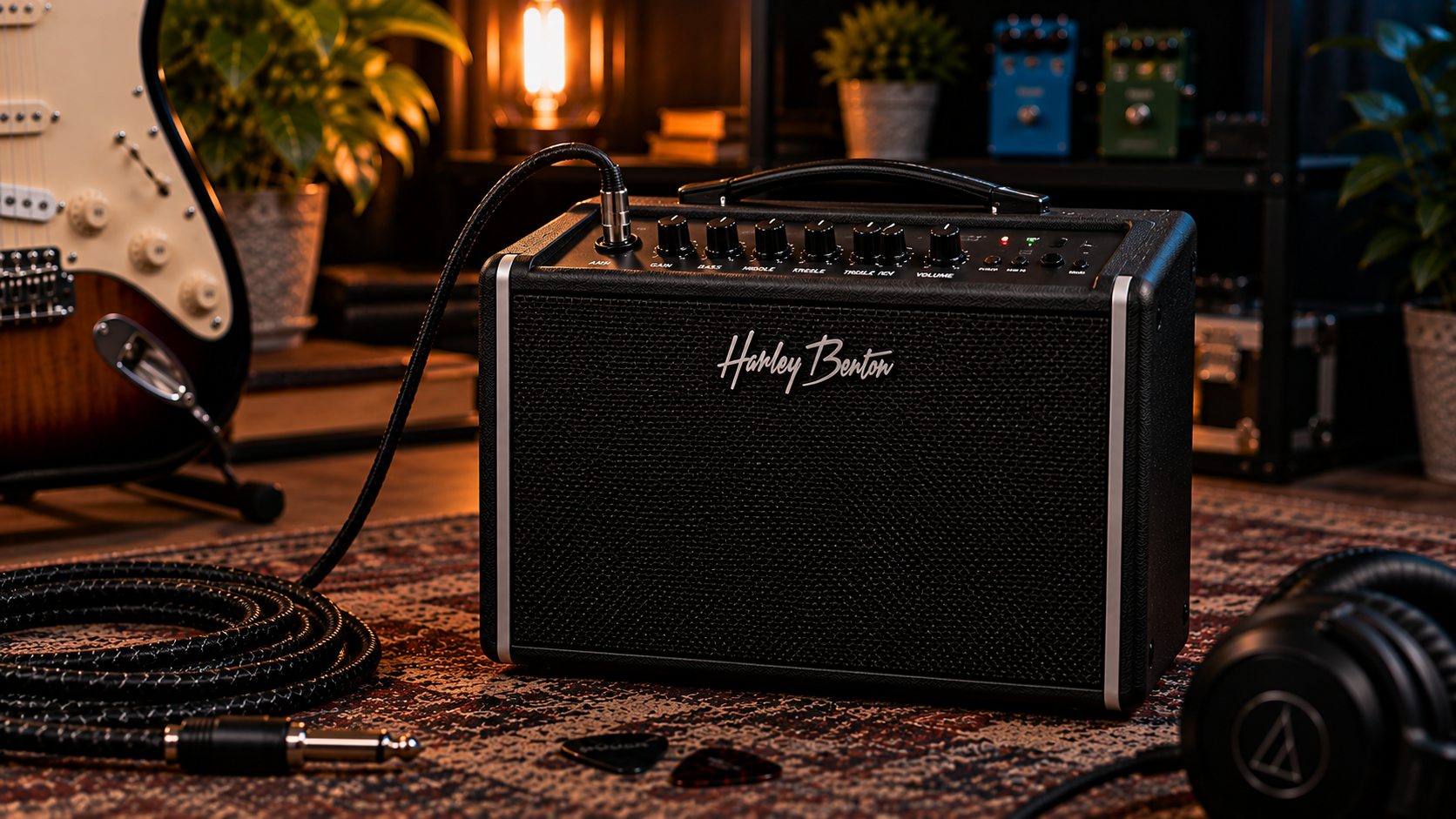
The AmP10’s best design choice is the control panel. Drive, Master and a full three-band EQ make sense to anyone who has used a normal combo. The effect knobs use LEDs to show the selected mode, and four sounds can be stored for later. You can ignore the presets, turn the knobs and play; or save a clean, blues, rhythm and lead sound so practice starts in seconds.
There is no companion app and no deep model library. That will sound limited to some players and refreshing to others. At this price, a clear front panel is more useful than a weak app built around dozens of nearly identical presets.
Sound: Four Amp Models
Clean is the base for chord work, effects and brighter practice sounds. Blues adds warmer breakup without jumping straight into heavy compression. Rock is the obvious rhythm voice, with enough crunch for power chords and classic hard-rock gain. Lead provides the most saturation and sustain.
There is no dedicated Metal model. Heavy practice tones will come from the Lead voice with careful EQ: keep bass under control, leave enough midrange for pick attack, and resist turning Drive all the way up. Calling that a limitation is fair; calling the amp incapable of heavy music would be an overstatement.
Speaker Feel and Volume Range
The custom 6-inch driver is larger than the speakers in pocket and desktop mini amps, but it is still a practice speaker. It should give clean and mid-gain sounds enough body at room volume while keeping backing tracks reasonably clear. It will not produce the low-end push of an 8- or 12-inch guitar speaker.
That matters most on palm-muted riffs. Adding bass does not create cabinet size; it uses headroom and makes a small enclosure sound congested. Put the amp near ear level, start with Bass below noon and let the Rock or Lead voice provide the aggression. The placement ideas in our bedroom guitar tone guide work particularly well with small combos.
Effects & Presets
The modulation side offers Flanger, Phaser, Tremolo and Chorus. The time-based section offers Spring, Hall, Delay and a combined Delay + Reverb mode, with tap tempo for delay. This is a practical set rather than an effects catalog. Chorus and Hall can open up clean sounds; Spring suits blues and light crunch; Delay or Delay + Reverb handles lead practice.
The trade-off is fine control. You are choosing a broad effect and adjusting the available parameter, not building a studio chain. For a first amp, that is often the right compromise. It gives a player enough variety to learn what the effects do without turning every session into programming.
Four presets in daily use
The four programmable slots are easy to overlook, but they are one of the strongest reasons to choose this over a completely analog mini amp. Save one balanced sound for each amp voice and the AmP10 becomes quick to live with. The optional footswitch can recall presets without reaching for the panel, which matters more for jamming than bedroom practice.
Preset storage also prevents the usual beginner problem of losing a good sound after moving every knob. Keep levels matched between slots; a louder preset almost always seems better during a quick comparison even when the tone itself is not.
Bluetooth, Line Input & Headphones
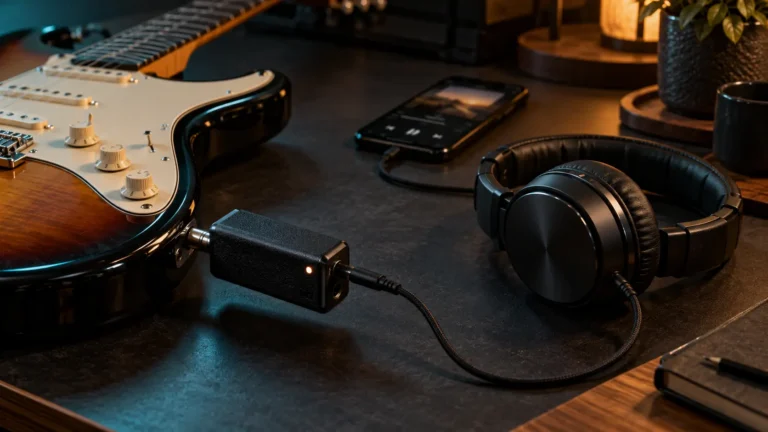
Bluetooth and the 3.5 mm line input both handle external audio, so backing tracks, lessons and songs can play through the amp while the guitar stays wired. That avoids Bluetooth latency on the instrument signal. The headphone output gives the AmP10 a proper late-night role and may make Lead sounds feel more complete than the small speaker can.
Headphone voicing is still important. A heavily bass-boosted consumer pair can make the Lead model feel muddy. Our headphones for guitar practice guide covers sensible low-cost choices.
AmP10 or AmP20?
The larger DNAfx AmP20 moves to a 20-watt platform with an 8-inch speaker, eight amp voices and six presets. It is the better choice when fuller speaker response and more headroom matter. The AmP10 wins when price, size and a simpler four-sound layout matter more.
Neither is built to overpower an acoustic drummer. They are home and small-room amps. If recording over USB or deep app editing is central, the NUX Mighty Lite BT MKII or another smart amp is a better fit.
Alternatives to Check Out
The Boss Katana Mini is easier to carry and has an established reputation for good basic sounds, but it gives up Bluetooth, preset storage and the AmP10’s broader effect selection. The Harley Benton is the more complete first rig; the Boss is the more stripped-down grab-and-go amp.
The NUX goes in the other direction. Its app, cabinet IRs and USB recording provide much deeper control, while the AmP10 keeps everything on the front panel. A beginner who wants to learn normal amp controls may prefer Harley Benton. A player who enjoys building signal chains and recording direct will outgrow it faster.
The practice amp vs amp sim vs modeler guide is worth reading before buying any of them. The important difference is not simply tone quality. It is whether you want a self-contained speaker amp, a software-centered rig or a modeler that can move between headphones, recording and powered speakers.
Small Details That Will Matter After a Month
Four presets are enough only if they are organized. Keep their output levels close and give each one a clear job instead of saving four variations of the same high-gain sound. The tuner is useful for quick checks, although its LED display is simpler than a dedicated pedal tuner. Bluetooth is for backing audio, and the line input remains useful when wireless pairing is inconvenient or unavailable.
The optional footswitch is not essential for bedroom use. It becomes worthwhile if you regularly switch between rhythm and lead presets while playing complete songs. Add its price before comparing the AmP10 with an amp that includes foot control or offers more accessible panel switching.
How to Get a Good Sound Before You Start Tweaking
Set Bass, Mid and Treble at noon. Choose Clean or Blues, bring up Master to the real room level, then add Drive until the response starts to compress. For Rock and Lead, lower Bass first, keep Mid at noon or slightly above, and use Treble for attack rather than trying to create clarity with more gain.
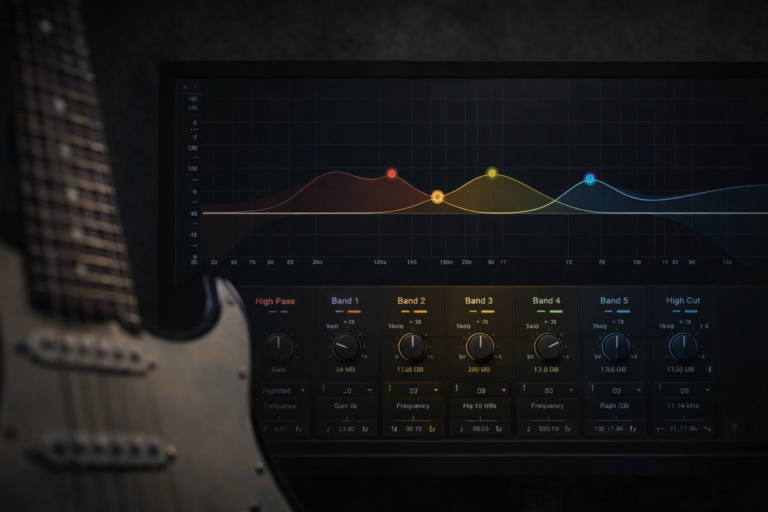
For heavier rhythm, start on Rock before assuming Lead is automatically better. Rock may keep chords and palm mutes clearer, while Lead makes more sense when sustain is the priority. If the sound is both muddy and sharp, reduce Drive and Bass before boosting treble. The quick frequency map in our guitar EQ cheat sheet explains why that works.
For backing tracks, set music level first and bring the guitar up until it is easy to hear without sitting miles in front of the mix. If the guitar is always much louder than the song, timing problems stay hidden.
Who the AmP10 Suits Best
The AmP10 is for a beginner, student or experienced player who wants a cheap second amp with physical controls, presets and modern practice inputs. It makes less sense for anyone who wants USB recording, an effects loop, detailed cabinet editing or rehearsal volume.
Shipping and returns also matter with a value-focused house brand. Compare the delivered price with locally supported amps and check return costs. A sub-$100 combo is compelling only when getting a faulty unit replaced does not erase the savings.
Verdict: A Simple Practice Amp With Useful Extras
The DNAfx AmP10 is not impressive because it pretends to be a huge rig. It is impressive because Harley Benton put the useful beginner features—four distinct gain stages, real EQ, saved presets, effects, tuner, Bluetooth, line input and headphones—into one inexpensive box. The 6-inch speaker is the boundary, not a hidden surprise. Stay inside that boundary and the amp has a very clear purpose.
FAQ
Does the AmP10 have a Metal amp model?
No. Its four models are Clean, Blues, Rock and Lead. The Lead model is the starting point for heavier tones.
How many presets can it save?
It stores four programmable user presets, which can also be changed with the optional footswitch.
Can it record over USB?
No USB audio function is listed. For direct USB recording, choose an amp or modeler designed as an audio interface.
Is it loud enough for a drummer?
It is a 10-watt practice combo with a 6-inch speaker. It is not the right tool for competing with a loud acoustic drum kit.