Jackson JS11 Review: Fast Neck, Cheap Hardware—Still Worth It?
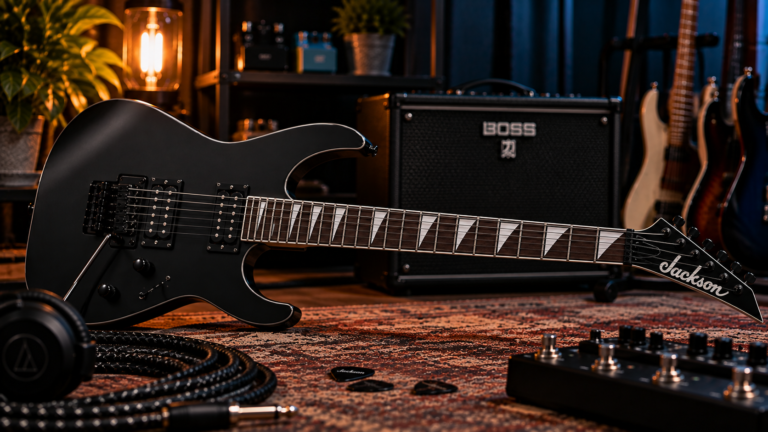
The Jackson JS11 is one of the cheapest ways to buy a guitar that looks unapologetically built for metal. I have played one enough to understand both sides of its reputation. The slim neck, light Dinky body and straightforward humbucker layout make fast riffs immediately inviting. The low price also means setup consistency, tremolo stability and hardware quality require realistic expectations. This Jackson JS11 review is not about pretending an entry-level guitar competes with a Pro Series model. It is about whether the basic instrument is good enough to learn, practice and enjoy—and which shortcomings actually matter.
Pros and Cons
Pros
- Slim, quick-feeling neck makes riffs and position changes inviting.
- Light Dinky body and useful upper-fret access suit longer practice sessions.
- Affordable entry point for rock and metal, especially after a proper setup.
- Straightforward HH layout keeps high-gain playing simple.
Cons
- Factory setup and fret finishing vary between individual guitars.
- Basic tremolo and nut limit tuning stability under heavy use.
- Stock pickups lose definition if the amp is already dark or bass-heavy.
- Replacing several hardware parts can cost more than moving up a model.
Specs & Feature Overview
- Body: Poplar Dinky body
- Neck: Bolt-on maple, graphite reinforcement
- Scale: 25.5 inches
- Fingerboard: Amaranth, 12-inch radius
- Frets: 22 jumbo
- Pickups: Two Jackson high-output humbuckers
- Bridge: Two-point fulcrum tremolo
- Controls: Master volume, master tone, three-way switch
Build & Design
For reference, Jackson’s current JS11 specifications confirm the 22-fret, 12-inch-radius neck, dual humbuckers and two-point tremolo discussed below. Individual setup quality can still vary from guitar to guitar.
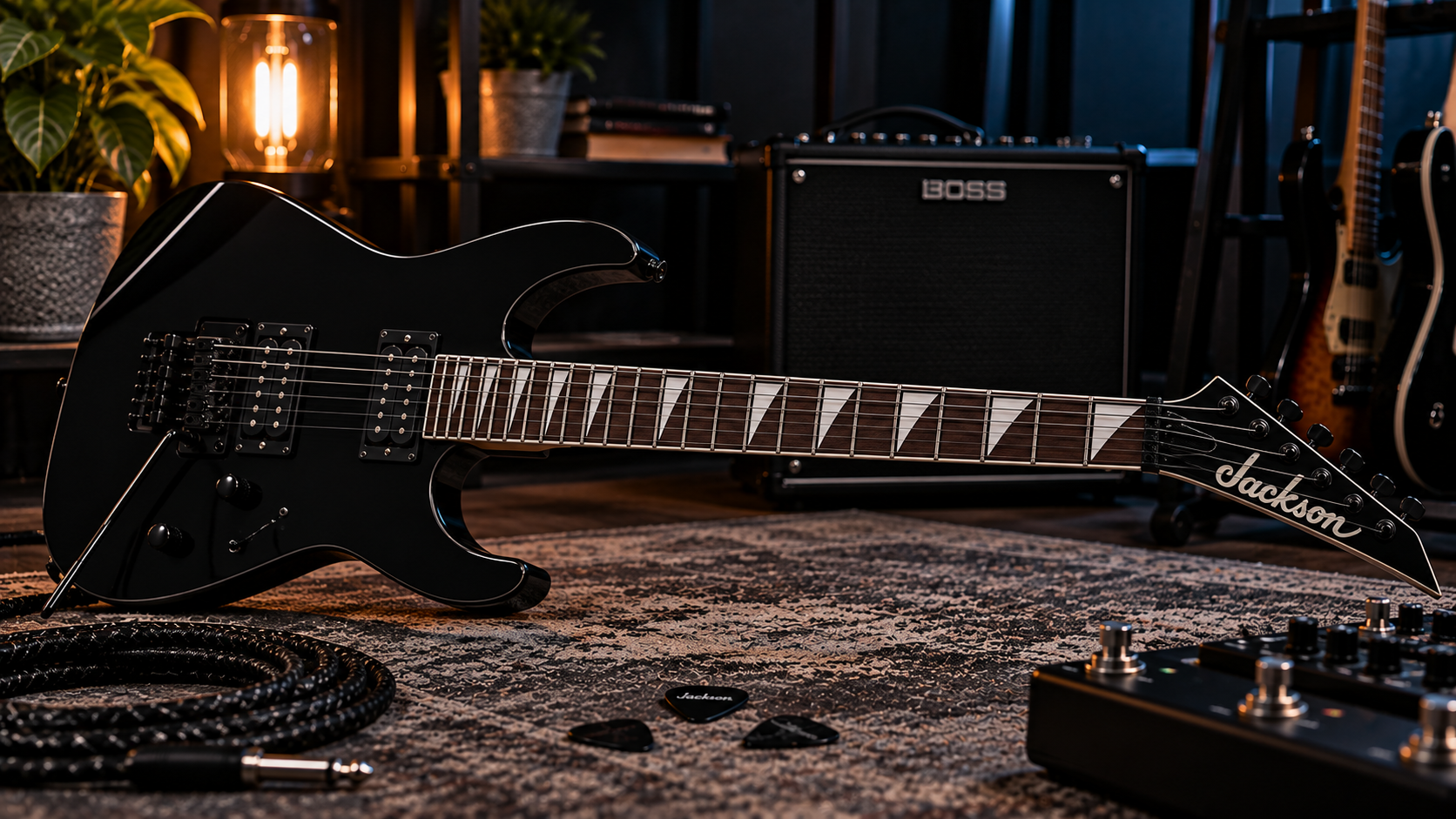
The first thing I noticed was how little the JS11 fights the player. The Dinky body is smaller and lighter than a traditional Strat-style body, the contours sit comfortably, and upper-fret access is uncomplicated. It does not feel substantial in the way a heavier mahogany guitar does, but that lightness is an advantage for a beginner practicing standing up.
The finish and hardware are plainly budget grade. That does not automatically make the guitar fragile; it means the individual example matters. Check the neck pocket, tuner movement, fret ends and bridge alignment. Cosmetic simplicity is harmless. A badly cut nut or uneven fret is not, because either can make the guitar feel much cheaper than it needs to.
Neck, Frets & Playability
The neck is the reason I can understand the JS11 developing loyal owners. It feels slim without being absurdly flat, and the 12-inch radius supports bends and power-chord work better than a round vintage board. Jumbo frets reduce the effort needed for fretting and bending, although they also expose excessive grip pressure: squeeze too hard and notes can go sharp.
Mine made fast position changes feel natural, especially compared with thicker beginner guitars. The last part of the experience depends on setup. High action disguises the neck’s advantage, while action set too low can reveal uneven frets. Our beginner electric guitar guide explains why a comfortable neck and competent setup matter more than decorative specifications.
Factory Setup and Fretwork
At this price, I would never assume the guitar is ready simply because it is new. Neck relief, string height, intonation and nut-slot height should all be checked. The basic construction can support a good setup, but entry-level production allows more variation between examples. That explains why owner opinions range from “surprisingly great” to complaints about buzz and tuning.
A setup is not an admission that the guitar is bad. Even expensive instruments move during shipping and seasonal humidity changes. The important distinction is whether normal adjustment solves the issue. A twisted neck, badly misplaced bridge or severe fret problem is a return; slightly high action is routine. Our guitar buzz guide helps separate setup noise from a structural problem.
Pickups & Sound
The stock humbuckers have enough output for distortion and keep the guitar quiet compared with single coils. The bridge pickup produces the bright attack and compressed push expected for metal rhythm. It works well for power chords, palm-muted riffs and saturated practice-amp tones. The neck pickup is warmer and smoother, useful for leads, but can become cloudy if the amp already has too much bass or gain.
These are not highly detailed pickups. Clean tones are functional rather than complex, and chord separation under heavy gain is behind better aftermarket sets. I still would not replace them immediately. Lowering the pickups slightly, reducing gain and adding mids can produce a clearer result. The guitar EQ cheat sheet is a better first upgrade than buying hardware blindly.
Rock and metal tones
The JS11 naturally suits classic metal, punk, hard rock and modern beginner riffing. Its bridge pickup has enough edge to make tight alternate picking audible. Through a decent high-gain model, I can get an aggressive sound without a boost pedal, though lowering bass is important because the pickup and small practice speakers can combine into mud.
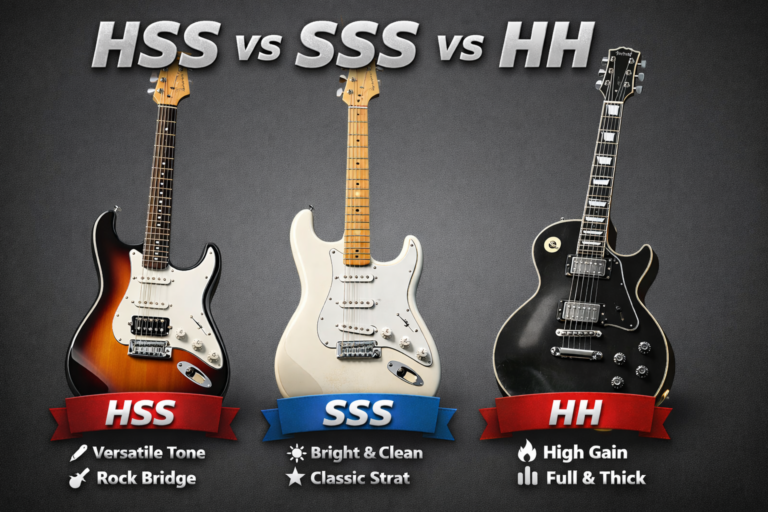
It is less convincing when the goal is sparkling clean nuance or broad dynamic range. That is not a failure of the guitar’s intended role. The HH layout prioritises quiet operation and gain. Players who want Strat-like neck cleans and heavier bridge sounds in one instrument may prefer the flexibility discussed in our HSS vs SSS vs HH guide.
Tremolo & Tuning Stability
The two-point tremolo can handle light vibrato, but I would not treat it like a double-locking system. Large dives and repeated aggressive use expose friction at the nut and movement at the tuners. For a beginner, keeping the bridge close to decked and using the bar gently gives a much calmer ownership experience.
Tuning stability starts with correct string installation, stretched strings and a properly cut nut. Replacing tuners rarely fixes binding in the nut slots. If you do not use the tremolo, adding spring tension so the bridge rests against the body simplifies tuning and makes alternate tunings less frustrating.
Is the JS11 Good for Beginners?
Yes, especially for a beginner motivated by metal aesthetics. A guitar that looks exciting gets picked up more often, and the JS11’s light body and accessible neck reduce physical resistance. Twenty-two frets are enough for almost all early learning, while the simple controls keep the focus on playing.
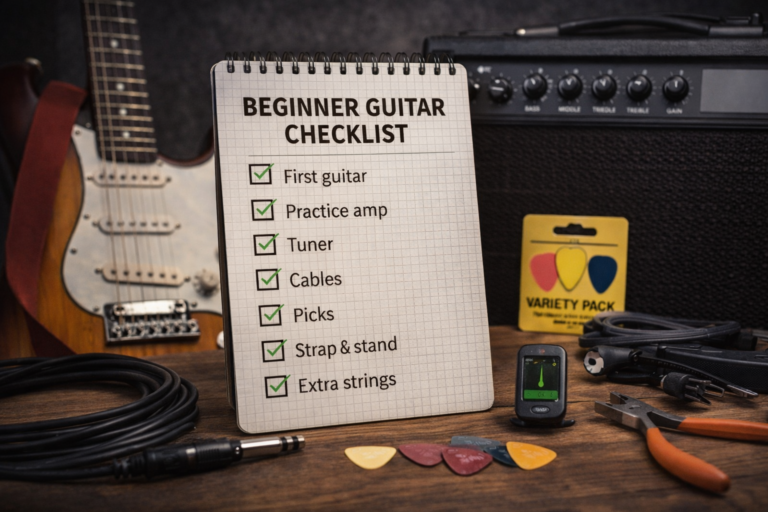
The caveat is purchase support. Buying from a seller with easy returns or basic setup service is worth more than receiving a bundle full of poor accessories. The JS11 appears in our best electric guitars under $300 discussion because it delivers the correct fundamentals, not because every box is perfect.
JS11 vs JS22
The Jackson JS22 adds an arched-top body, 24 frets and a compound-radius fingerboard on common DKA versions. Those differences make it feel more purpose-built for lead playing and give the upper register two extra semitones. The JS11 remains lighter, simpler and often cheaper.
Neither model automatically wins on setup quality, and the stock electronics occupy a similar budget tier. If both are comfortable financially, I prefer the JS22 for the more complete neck specification. If buying the JS22 means skipping an amp, cable or setup, the JS11 is the smarter complete-rig choice.
Upgrades That Make Sense—and Those That Do Not
A professional setup, correctly cut nut and dependable output jack are sensible fixes because they address function. Pickup replacement can make sense later if the player already owns a good amplifier and can describe what is missing. Cosmetic knobs and expensive locking tuners are low priority unless a part is actually defective.
It is easy to spend the original price again turning the JS11 into a project. That can be enjoyable, but it rarely produces the resale value or refinement of buying the next model up. Play it long enough to identify a specific limitation. If the real issue is harsh bedroom distortion, the low-volume tone guide may save more money than a pickup swap.
Who the JS11 Suits Best
Buy the JS11 if you want an affordable, light, fast-feeling guitar for rock and metal and accept that a setup may be part of the purchase. It also makes sense as a backup or modification platform when bought used at the right price.
Skip it if you need flawless out-of-box consistency, rely heavily on tremolo tricks, or want refined clean tones. Players already committed to recording may also benefit from spending more on fretwork and hardware rather than planning a chain of upgrades.
What Stood Out in Practice
The neck is the part I kept liking. On fast down-picked riffs and simple position shifts, the JS11 feels quicker than its price suggests. The body is light enough that I never had to fight the guitar while sitting, and the upper frets are easier to reach than on chunkier single-cut beginner guitars. Those are not glamorous selling points, but they are the reasons I would rather practice on the Jackson than on a better-finished guitar with an awkward neck.
The bridge pickup is usable for metal, but I got better results once I stopped trying to make it sound huge. Too much gain and bass turn palm mutes into one soft block. Backing the gain down and keeping the mids present gives the pick attack somewhere to live. The neck pickup is smoother for leads, though it is the first place I hear the limits of the stock electronics: low notes can blur if the amp is already dark.
I would also keep the tremolo expectations modest. Light vibrato is fine. Repeated dives are where the basic nut and bridge remind you what the guitar costs. If I owned one as my only guitar, I would set the bridge close to the body, spend money on a good setup, and leave the pickups alone until the amp and playing had clearly outgrown them.
Verdict: A Good JS11 Starts With a Good Setup
A well-set-up JS11 is a genuinely fun first electric guitar for rock and metal. The neck and ergonomics are its strongest assets; the generic pickups, basic tremolo and variable factory setup are the price. Buy the individual guitar after checking it, budget for a setup, and resist upgrading every component before you know what limits you.
FAQ
Is the Jackson JS11 good for metal?
Yes. Its bridge humbucker, slim neck and 25.5-inch scale suit metal rhythm and lead practice, although the stock pickup benefits from controlled gain and EQ.
Does the Jackson JS11 stay in tune?
It can stay in tune during normal playing when set up correctly. Aggressive tremolo use exposes the limits of the basic nut, tuners and bridge.
Should I upgrade the JS11 pickups?
Not immediately. Adjust pickup height and amp settings first. Upgrade only when you can identify a repeatable problem the new pickup will solve.
Is the JS22 better than the JS11?
The JS22 usually offers 24 frets and a compound radius, but a well-set-up JS11 is better than a poorly set-up JS22. Budget for the whole rig.