JHS Angry Charlie v3 Review: Amp-Like Distortion Feel Without the Guesswork
This review answers a practical question: does the jhs angry charlie v3 deliver an amp-like distortion feel you can actually rely on across real rooms and volumes—or does it turn into “too much” the moment you push it?
Rather than rating one sweet spot, I’m evaluating how it behaves in the situations players live in: clean-to-edge-of-breakup platforms, bright home practice levels, and louder rehearsal-style volume where mix cut matters. If you want the broader context first, this guide to the best distortion pedal for guitar shows where “amp-in-a-box” distortions sit compared to more raw classics and more EQ-driven designs.
Decision first below, then the details that change outcomes: pick response, EQ logic, tightness, and how it stacks without getting spiky.
- Who it fits, and who should skip it.
- What the gain range feels like for rhythm and leads.
- How to dial it fast without harshness or mud.
| Your situation | Verdict | Why |
|---|---|---|
| You want one main distortion that feels like an amp channel for rock and heavier rhythm. | Strong fit | It’s voiced to feel “channel-like” and stays controllable when you shape mids instead of boosting treble. |
| You love raw, grainy distortion and don’t want “refined” or amp-like behavior. | Maybe not | This is smoother and more structured than classic grind boxes; it won’t scratch that same itch. |
| You mostly play quietly at home on a bright clean platform. | Mixed | It can sound great, but the top-end needs restraint; dial mids first, then treble last. |
| You want a single pedal to instantly produce ultra-tight modern metal into any amp. | Look elsewhere | It can get heavy, but it’s not a “finished modern metal” shortcut without rig support. |
- Channel-like feel: responsive pick attack and a more “amp” structure than many distortions.
- EQ is genuinely usable for adapting to different amps and speakers.
- Rhythm clarity stays intact when you keep mids present.
- Works as a main gain stage rather than only a “flavor” pedal.
- Stacks predictably when you assign clear roles per gain stage.
- If you want raw grind, it may feel too refined.
- Bright rigs can get sharp if you chase presence with treble instead of mids.
- At very low volume, too much gain can feel fizzy on some speakers/modelers.
- Not the most direct path to ultra-tight modern metal without additional shaping.
- It rewards dialing; “everything at noon” isn’t always the best sound.
If you’re after an amp-style distortion that behaves like a usable channel, it’s easy to recommend. If your taste is raw, chaotic grind, you might prefer a classic voice instead.
Specs and variants at a glance
| Model | JHS Angry Charlie v3 |
|---|---|
| Type | Distortion with an “amp-like” voice and a practical EQ for shaping bite and mids. |
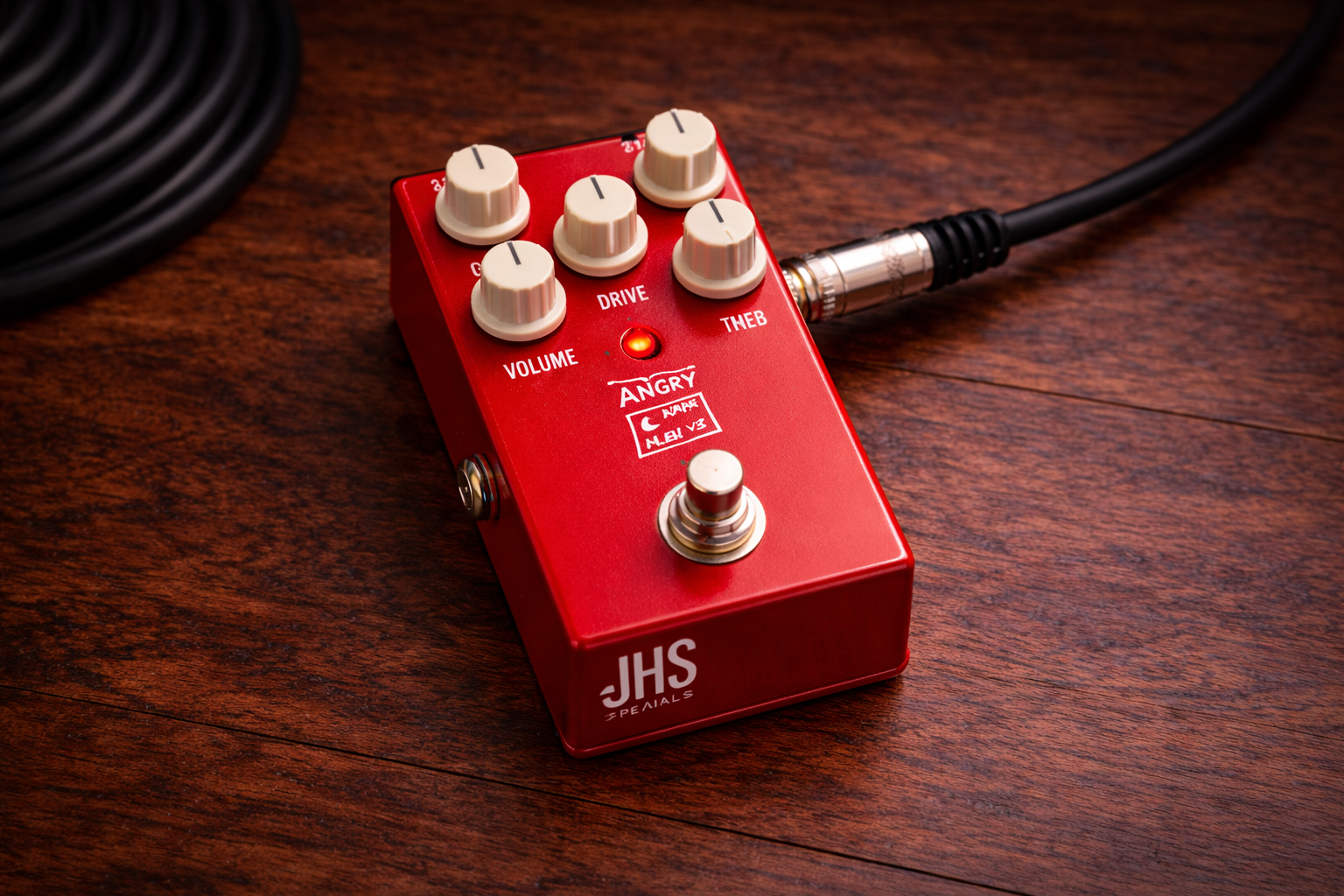
| Controls | Volume, Drive, Bass, Mid, Treble (plus version-dependent features by production run). |
| Power | Standard pedalboard 9V DC (center-negative typical) or battery where supported. |
| Typical role | Main “amp channel” distortion for rock, hard rock, and heavier rhythm/lead work. |
| What it replaces on a small board | A dedicated “dirty channel” for players who want the jhs angry charlie pedal to function like an amp channel. |
Who this pedal is actually for
The primary audience is players who want their distortion to feel like an extra amp channel: structured, controllable, and mix-friendly. If you like dialing mids for presence instead of relying on sharp treble boosts, it can be a very practical “main gain” choice.
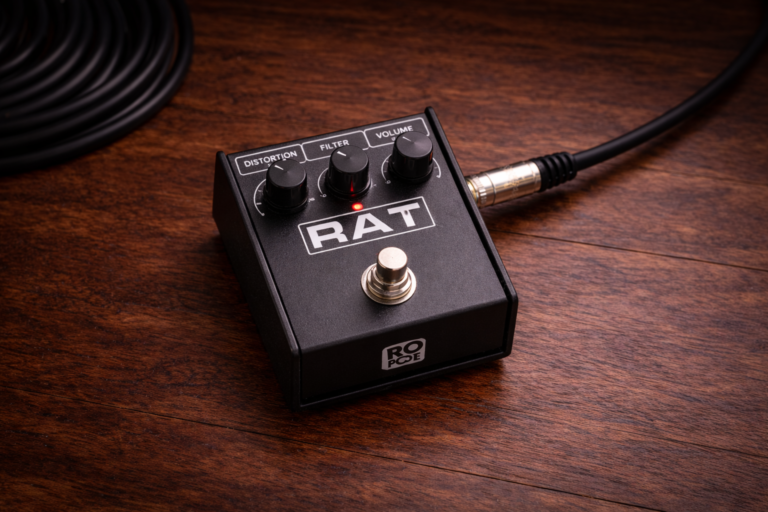
If you’re chasing a raw, grainy distortion texture (the kind that sounds messy in a good way), this might feel too tidy. In that case, reading a classic voice reference like the Pro Co RAT 2 review can help clarify which “family” of distortion you actually prefer.
Real-world use cases
When it makes a lot of sense
- You want one main distortion for rock-to-heavier rhythm that still feels controlled.
- You use clean-to-edge-of-breakup amps and want the pedal to supply the “channel.”
- You care about chord clarity and pick response more than raw grain.
- You play with a band and need presence without harsh top-end.
When it’s probably the wrong match
- You want instant modern metal tightness without dialing.
- Your rig is already very bright and you dislike managing top-end.
- You prefer a raw, chaotic distortion texture rather than refined feel.
- You only need a light push and would be happier with an overdrive.
If you want a more “shapeable distortion” approach with deep EQ flexibility, the MXR Super Badass is a strong contrast in how much the EQ can move the final result.
How it compares to related models
In practice, the easiest way to understand this category is by comparing “channel-like” distortion to more fixed-voice classics and to specialized high-gain shapers. The differences show up most in pick response, mid behavior, and how fast you can dial for a room.
| Reference | What changes in feel | Best for |
|---|---|---|
| Classic “simple distortion” baseline | Often faster day-one; less shaping; voicing varies widely. | Players who want plug-and-play distortion texture. |
| Amp-style channel distortion | More structured response, more “amp” mids, and predictable stacking behavior. | Main rhythm/lead gain with mix presence. |
| Specialized EQ-heavy high gain | More extreme shaping; more sensitive to settings; can get surgical. | Players chasing specific high-gain targets. |
If you want a simple reference for classic distortion behavior, the Boss DS-1 is a useful baseline for what “simpler and more fixed-voice” can feel like.
Tone and feel: JHS Angry Charlie v3 in the real world
This category is about structure: chords stay readable, the midrange feels intentional, and the attack can feel more “channel” than “pedal fizz.” If you like distortion that behaves with discipline when you dig in, that’s the appeal.
Pick response and dynamics (what your hands feel)
The most important “amp-like” trait is how it responds to your picking intensity. Instead of jumping from clean to mush, the gain tends to build in a more controlled way—so rhythm playing stays percussive and single notes keep separation.
- Light picking: clearer attack and more definition than many saturated distortions.
- Hard picking: more grind and urgency without collapsing into a fuzzy blur.
- Guitar volume roll-off: more usable than on many high-gain pedals, but it still depends on how much drive you’re feeding it.
EQ logic in plain English (fast fixes)
The EQ is where most players win or lose. If the tone is sharp, the answer is rarely “more gain.” The more reliable approach is to keep presence controlled and use mids to stay audible.
- Too sharp or fizzy: reduce treble first, then slightly increase mids if you disappear.
- Too thick or congested: reduce bass a touch and lower drive before touching treble.
- Not cutting in a mix: add mids before adding volume or gain.
- Feels small at home volume: reduce drive and add a touch of volume; let the speaker do the heavy lifting when you turn up.
Medium gain rhythm sounds
This is where angry charlie shines: punchy rhythm with enough saturation to feel thick, but without losing chord edges. If your rig is bright, keep treble restrained and use mids for presence first.
- Dialing order that usually works: level → drive → mids → bass → treble last.
- If it feels sharp, reduce treble and slightly raise mids instead of adding gain.
Lead sounds
For leads, it can be very mix-friendly because the mid character is already “in the right place.” You can step forward without needing extreme volume changes, especially if you keep the low end controlled.
Home, rehearsal and small gigs
Like most amp-style distortions, it often sounds more natural once the speaker is working. At home volume, settings that feel exciting can become sharp later; at rehearsal volume, that same top end may smooth out.
Home and headphone practice
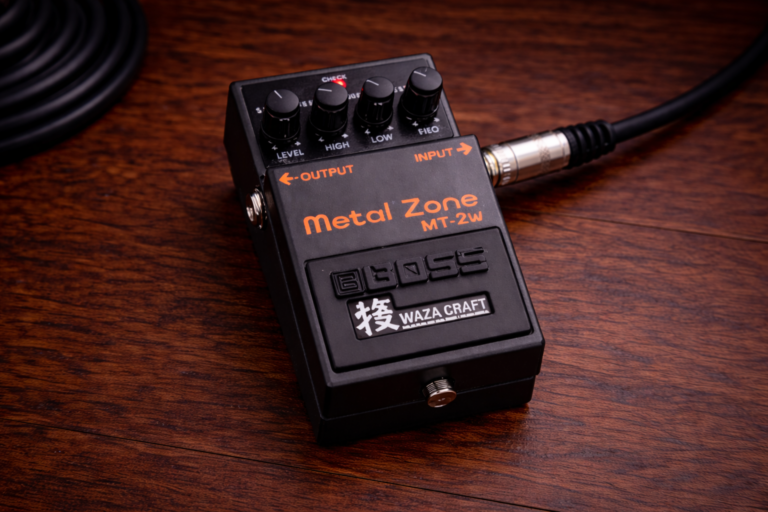
Keep drive lower than you think and build clarity with mids, not treble. If you want a more specialized high-gain EQ tool for extreme tones, the Boss MT-2W is a different category designed for heavier shaping.
Rehearsals
This is where the angry charlie guitar pedal approach makes sense: the structured mids help you stay present without relying on harsh top end. If you start disappearing, add mids before you add gain.
Small gigs
On small stages, it can work as your main channel distortion if your clean baseline is solid. Use mids to cut and keep treble conservative in bright rooms.
Stacking and pedalboard roles
This pedal behaves best when it has a clear job: main channel distortion, or a second stage for heavier parts. If you stack a boost in front, keep the boost low gain and let it tighten/shape feel rather than adding another full distortion layer.
| Scenario | Before (common problem) | After (what to change first) |
|---|---|---|
| Boost in front | More gain, more harshness; rhythm loses definition. | Use a low-gain push for feel/tightness; reduce drive on the main pedal and add mids for cut. |
| Second-stage lead | Lead gets louder but thinner, or gets thick but disappears. | Add mids before volume; keep bass controlled so notes stay readable and don’t blur. |
| Two-gain stack | Noise and fizz increase faster than “usable heaviness.” | Assign roles: one pedal tightens, the other is the main voice; avoid running both at high gain. |
If you want a budget contrast for how different voicings stack, the Donner Morpher can help you understand whether you prefer this structured style or a more modern, aggressive flavor.
In a simple board context, the angry charlie pedal can be the “dirty channel,” while everything else is just support—tighten, boost, or add a different flavor for specific parts.
Buying checklist: this pedal vs alternatives
This is the fastest way to decide whether you’ll enjoy it long term or fight it.
- Do you want a “channel-like” distortion feel, or raw grainy grind?
- Is your amp already bright? If yes, plan to build presence with mids, not treble.
- Will you rehearse/gig soon? If yes, prioritize mix cut and clarity over bedroom sparkle.
- Are you stacking gain stages? If yes, define roles (tighten vs main voice).
| If you want… | Set this first | Avoid doing this |
|---|---|---|
| Clear rhythm that cuts | Mids up slightly, drive moderate | Chasing cut with treble only |
| Thicker leads | Volume for lift, bass controlled | Adding gain until it blurs |
| Less fizz at home | Lower drive, treble conservative | “Excitement” settings at whisper volume |
Also, ask the blunt question: if what you really want is touch-sensitive breakup that cleans up easily, maybe what you want is actually an overdrive. This guide to the best overdrive pedal for guitar points you to pedals designed for that feel.
If you want a smoother, refined distortion voice with strong “finished” feel, the Wampler Sovereign is a strong counterpoint.
When this pedal is overkill or the wrong choice
- If you only need a light push, a dedicated overdrive may be more satisfying.
- If you hate dialing EQ and want instant gratification at whisper volume, it may feel picky.
- If your taste is raw grind, you may prefer a more classic voicing instead of structured amp feel.
- If you expect instant ultra-tight modern metal into any amp, a specialized high-gain shaper will be easier.
Summary: is it still worth it?
The core value is predictability: it stays structured, it responds well to mid-focused dialing, and it can be a long-term “main gain” solution on a simple board. If that’s your goal, the jhs angry charlie is a very logical pick.
If you want a more shapeable distortion approach with deeper EQ control, revisit the MXR Super Badass comparison point and decide whether flexibility matters more than channel feel.
Pedal FAQ
Is this a good first distortion for beginners?
It can be, but it rewards learning basic EQ. If you chase presence with treble at low volume, it can feel sharp. Start with moderate drive, then use mids for clarity.
Does it really feel like an amp channel?
It can, especially on clean-to-edge-of-breakup platforms. The “amp-like” impression comes from structured mids and a response that stays readable under heavier rhythm playing.
How do I avoid harshness on bright rigs?
Dial mids first, keep treble conservative, and avoid cranking drive just to feel excitement at home volume. Small EQ moves usually beat big gain moves.
How does it stack with other gain pedals?
Best when each pedal has a clear job. Use a low-gain push in front for tightening/feel, and keep this as the main voice. Stacking full distortion on full distortion often adds harshness before usefulness.
Is it still worth it compared to newer distortions?
Yes if you want a reliable, channel-like distortion feel with mix-friendly mids. If you prefer raw grind or extreme modern metal targets, a different voicing may be a better match.