Positive Grid Spark 2 Review: Smart Practice Amp or Too Much App?
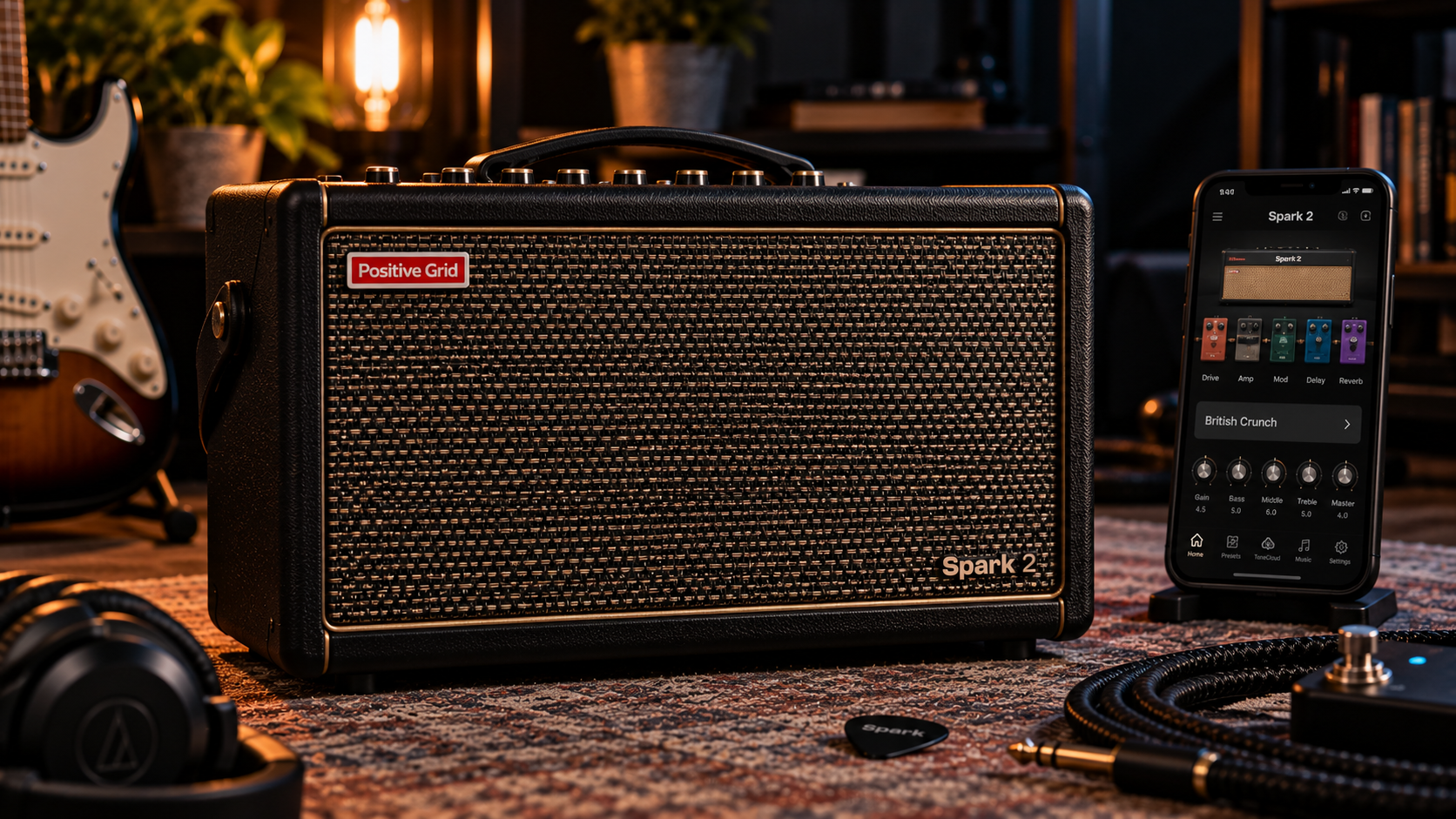
The Positive Grid Spark 2 is what happens when a practice amp stops pretending its only job is amplification. It is a 50-watt stereo modeling amp, Bluetooth speaker, USB recording interface, looper and app-driven practice platform packed into one desktop-sized box.
That feature list is impressive, but it also creates the real question for this Positive Grid Spark 2 review: does all of that technology make it easier to play guitar more often, or does the amp become another ecosystem you have to manage? Spark 2 is at its best when those smart features reduce friction. It is less convincing when the app becomes the hobby instead of the guitar.
Quick Verdict: Is the Positive Grid Spark 2 Worth It?
Yes—if you want a smart practice amp that actively helps you practice rather than just supplying guitar tone. Spark 2 combines 50W stereo output, 33 amp models, 43 effects, a built-in looper, eight hardware presets, USB-C recording and one of the deepest practice-app ecosystems available. Its main trade-off is the same thing that makes it powerful: much of the experience revolves around the Spark app, so players who want a simple amp-first workflow may prefer Yamaha or BOSS.
Positive Grid Spark 2 Pros and Cons
Pros
- 50W stereo Class D power with two angled 4-inch full-range speakers gives the amp more headroom and spread than most tiny desktop rigs.
- 33 amp models and 43 effects cover electric guitar, acoustic and bass.
- Built-in 60-second looper can be controlled directly from the amp.
- Eight hardware presets reduce the need to keep the phone open once your sounds are saved.
- Spark app adds Smart Jam, Auto Chords, ToneCloud and Spark AI tone search.
- USB-C recording, stereo 1/4-inch outputs, headphone out and aux input make it unusually flexible for a desktop amp.
- Optional rechargeable battery can provide up to 12 hours of portable use at moderate volume.
Cons
- A large part of the product’s value is tied to the Spark ecosystem; players who dislike app-centered gear are paying for features they may never use.
- Two 4-inch full-range speakers cannot provide the same physical cabinet feel as a conventional 1×12 combo.
- The optional battery is sold separately.
- Huge tone libraries can encourage preset browsing instead of learning a smaller set of reliable sounds.
- USB audio is 24-bit/44.1 kHz and straightforward rather than a replacement for a full-featured studio interface.
- AI tone search is convenient, but it is not a substitute for understanding gain, EQ and signal chain basics.
Positive Grid Spark 2 Specs: 50W Stereo, 33 Amps, 43 Effects and a Looper
- Power: 50W RMS Class D
- Speakers: 2 × 4-inch full-range speakers with custom angled horns
- Cabinet: bass reflex with dual ports
- Amp models: 33 for electric guitar, acoustic guitar and bass
- Effects: 43 effects; up to three pre-amp effects, three post-amp effects and one amp model per preset
- Onboard presets: 8 fully customizable
- Looper: up to 60 seconds, with count-in and signal-triggered modes
- Connectivity: guitar input, aux in, headphone out, stereo L/Mono and R line outputs, Bluetooth 5.0, USB-C audio
- USB audio: 1-in/2-out, 24-bit/44.1 kHz
- Battery: optional 6000 mAh Spark Battery, up to 12 hours at mid volume
- Dimensions: 375 × 180 × 214 mm
- Weight: 5.5 kg
Positive Grid lists the complete current specifications on the Spark 2 product page. The important thing is not the raw number of features; it is how many of them remain useful after the first week.
Spark 2 Practice Amp Sound: What 50W and Two 4-Inch Speakers Actually Mean
The move to 50 watts gives Spark 2 more headroom than the original Spark, but the speaker system still defines the experience. Two 4-inch full-range drivers are angled for wider stereo imaging, and Positive Grid uses its Sonic IQ processing for bass enhancement, stereo widening, dynamic-range control and automatic EQ behavior.
That architecture is ideal for a smart desktop amp because the same speakers need to reproduce guitar modeling, backing tracks and Bluetooth audio. It also means Spark 2 should not be judged as if it were a 50-watt 1×12 guitar combo. The number “50W” describes power; it does not magically create the cone area and cabinet behavior of a larger speaker.
Why the stereo presentation matters
Delay, reverb and modulation benefit immediately from stereo playback. At desk distance, a wider field can make practice more immersive without needing more volume. Backing tracks also sound much more natural through full-range speakers than through a normal guitar cabinet.
High gain and low volume
Positive Grid’s updated HD modeling engine is designed to improve dynamics, gain structure and cabinet behavior compared with the original Spark. For high-gain players, the practical advantage is not just “more gain.” It is the ability to use modeled cabinets and full-range playback at low level without relying on a tiny physical guitar speaker to create the entire tone.
As always, too much gain and bass can make a compact rig sound impressive alone and terrible with a backing track. Our guitar EQ cheat sheet is more useful than endlessly swapping presets when that happens.
This Positive Grid Spark 2 review sits inside a broader category where workflow matters as much as model count. Our best desktop guitar amps guide compares Spark 2 with Yamaha, NUX, Hotone and other home-focused options.
Spark 2 Amp Models and Effects: 33 Amps, 43 Effects and Eight Presets
Spark 2 includes 33 amp models and 43 effects. Each preset can combine one amp model with up to three pre-amp effects and three post-amp effects. On paper that creates an enormous number of possible rigs.
The useful approach is to ignore most of them at first. Build a clean preset, a crunch preset, a rhythm-gain preset and a lead preset. Save those to the hardware buttons. Once four dependable sounds exist, the larger library becomes a resource instead of a distraction.
That is also why the eight onboard preset slots matter more than the ToneCloud headline. If you can reach a working sound without unlocking your phone, Spark 2 behaves like an amp. If every session begins with searching thousands of community tones, the workflow becomes software-first.
For the clearest contrast between app-heavy practice and a simpler amp-first workflow, see our Yamaha THR10II vs Spark 2 comparison. That contrast is central to this Positive Grid Spark 2 review.
Spark 2 Looper: The Upgrade That Changes Practice More Than AI
The built-in looper is arguably Spark 2’s most important practical upgrade. It records up to 60 seconds and can be operated from dedicated controls on the amp. Positive Grid also provides count-in and signal-triggered recording modes, while the app expands the idea with a Groove Looper and drum material.
A looper changes what you can practice without adding another pedal. Record a simple chord progression, switch to a lead tone and work on phrasing. Build a rhythm part and listen back to whether your timing is actually tight. Practice chord-tone targeting instead of noodling over a YouTube track.
That is the kind of “smart” feature that survives novelty because it directly changes the playing session. It is also something the Yamaha THR10II simply does not provide internally.
Spark App, ToneCloud and Spark AI: Powerful or Too App-Dependent?
The Spark app provides tone editing, ToneCloud access, Smart Jam, Auto Chords and Spark AI. The AI feature can generate tone suggestions from prompts that describe an artist, song or general sound. Used correctly, that can cut through the usual “which amp and pedal combination should I start with?” friction.
There is a healthy way to use it: ask for a rough direction, load a result, then adjust gain and EQ with your ears. There is also an unhealthy workflow where you search for a new preset every time a tone is slightly wrong. The hardware does not force either behavior; the player does.
Smart Jam and Auto Chords are similar. They are useful because they get you playing along with something quickly. They do not replace learning rhythm, harmony or ear training. Spark 2 works best when the smart features create more guitar time, not more screen time.
Positive Grid Spark 2 as a Home Practice Amp
There is a reason the Spark line became popular with home players. The product removes the small annoyances that often stop a short practice session from happening: finding a backing track, connecting a Bluetooth speaker, setting up a looper, building an effects chain or recording a quick idea.
For a player with thirty minutes before bed, that integration matters. Plug in, load a saved tone, stream a song, slow down a section or record a loop. A traditional amp may feel more immediate sonically, but it cannot match that workflow without extra devices.
If you already practice primarily through a laptop and interface, however, the advantage shrinks. Software can provide far deeper amp modeling and practice tools. In that case read our practice amp vs amp sim vs multi-FX comparison before buying another device that duplicates your computer rig.
If you are deciding whether Spark 2 should stay a desk amp or whether you need a more traditional combo, our Spark 2 vs Boss Katana 50 Gen 3 comparison covers that split directly. It also helps place the recording features in this Positive Grid Spark 2 review in a more realistic context.
Spark 2 USB-C Recording, Stereo Outputs and Optional Battery
Spark 2 adds a pair of 1/4-inch stereo line outputs alongside the headphone jack and USB-C audio interface. That is a meaningful improvement because the amp is no longer trapped inside its own small speakers. You can feed monitors, a mixer or another amplification system without relying on a headphone output.
The USB interface operates at 24-bit/44.1 kHz with one input and two outputs. It is perfectly adequate for recording the modeled guitar signal and capturing ideas. A dedicated interface still wins when you need multiple inputs, microphone preamps, flexible monitoring or studio routing. If silent practice matters more than the speaker, our guitar headphone amp guide compares the other compact ways to build that rig.
The optional Spark Battery is also more useful than it first sounds. With up to 12 hours of claimed runtime at moderate volume, Spark 2 can move from desk to living room, balcony or backstage warm-up rig without relocating a power supply. The catch is simple: the battery is an extra purchase.
The Feature List Cannot Change Physics—or Taste
Spark 2 is extremely capable, but it remains a compact full-range stereo amp. A player who loves the direct punch of a guitar-specific 12-inch speaker may still prefer a Katana. A guitarist who wants the simplest possible home amp may prefer the Yamaha THR approach. Someone already invested in an audio interface and premium plugins may not need a smart amp at all.
The other limit is psychological rather than technical. More options are not always more useful. Thirty-three amps, forty-three effects and an enormous cloud library can make tone choice feel infinite. The best Spark 2 setup is probably much smaller: a handful of good presets and a practice routine that uses the looper, backing tracks and recording tools deliberately. For a much smaller app-based alternative, see our NUX Mighty Lite BT MKII review.
Who Should Buy the Positive Grid Spark 2?
- Home players who want one box for guitar tone, backing tracks, looping and quick recording.
- Players who enjoy app-based editing and like discovering new sounds.
- Beginners who value guided practice features and easy access to usable tones.
- Songwriters who want a compact idea machine without opening a full DAW every time.
- Guitarists who want stereo output and optional battery portability from a desktop amp.
It is less attractive if you dislike phone-dependent ecosystems, already own a strong interface/plugin rig, or care more about conventional cabinet feel than integrated practice features.
This Positive Grid Spark 2 review also overlaps strongly with NUX’s more technical approach. The NUX Mighty Space vs Spark 2 comparison is useful if wireless hardware, IR loading and re-amping matter more than ToneCloud and guided practice.
Alternatives: Choose the Workflow Before the Brand
Yamaha THR10II
Choose the THR10II if you want a more restrained desktop experience with excellent physical controls, five user memories and less emphasis on smart practice features.
Boss Katana 50 Gen 3
Choose the Katana if the feel of a conventional 1×12 combo and the ability to move from bedroom volume toward rehearsal use matter more than desktop size.
NUX Mighty Space
Choose the Mighty Space if included guitar wireless, rechargeable battery operation, third-party IR loading and flexible USB routing are more valuable than Spark’s learning ecosystem.
The conclusion of this Positive Grid Spark 2 review is simple: the amp makes the most sense when you will actually use the practice ecosystem rather than treating the app as optional decoration.
Positive Grid Spark 2 Review Verdict: A Smart Practice Amp with Real Depth
The Positive Grid Spark 2 is one of the most complete home-practice systems in a single box. The 50-watt stereo platform, updated modeling engine, eight hardware presets, built-in looper, stereo outputs, USB-C recording and optional battery create a genuinely useful piece of gear rather than a novelty app accessory.
The risk is obvious: the ecosystem is so large that it can turn practice into browsing. The cure is equally obvious. Build a small set of dependable sounds, save them to the amp and use the smart tools only when they solve a specific problem.
For players who want the amp to actively support practice, looping, backing tracks and quick recording, Spark 2 makes a stronger case than a traditional small combo. For players who simply want to turn a knob and hear a great guitar sound, some of that intelligence will feel like overhead.
For readers skimming this Positive Grid Spark 2 review, the key question is whether the looper, app and practice ecosystem will become part of your routine rather than just look impressive on day one.
Positive Grid Spark 2 FAQ
How loud is the Positive Grid Spark 2?
Spark 2 uses a 50W RMS Class D power amp with two 4-inch full-range speakers. It has substantial volume for home practice and casual playing, but its compact full-range speaker system behaves differently from a conventional 50W 1×12 guitar combo.
Does Spark 2 have a looper?
Yes. The onboard looper records up to 60 seconds and includes dedicated physical controls. The Spark app also expands looping with groove-oriented functions and drum material.
How many amp models and effects are in Spark 2?
Positive Grid lists 33 amp models and 43 effects. A preset can use one amp model plus up to three pre-amp and three post-amp effects.
Can Spark 2 run on battery power?
Yes, with the optional Spark Battery. Positive Grid rates it for up to 12 hours of use at mid volume. The battery is sold separately.
Can Spark 2 record over USB?
Yes. Its USB-C interface supports 1-in/2-out recording at 24-bit/44.1 kHz on compatible Mac and Windows systems.
Is the Positive Grid Spark 2 worth it for home practice?
Yes, if you will use the looper, backing-track tools, Spark app and saved presets. Players who only want a few core tones may find a simpler desktop or conventional combo amp better value.