Fuzz Face Pedal Guide: Germanium vs Silicon, Tone, and Who It’s For
The Fuzz Face is one of those pedals that looks simple right up until you try to make it behave inside a modern rig. Two knobs, a classic circuit, endless history — and somehow it can still sound glorious in one setup and strangely dull, harsh, or unresponsive in another.
The reason is that this circuit is not just “another fuzz pedal.” It reacts strongly to your guitar’s pickups, volume control, what sits before it in the signal chain, and whether the circuit leans germanium or silicon. That sensitivity is the whole appeal if you like controlling gain from the guitar. It is also why it can be the wrong choice for someone who wants a set-and-forget wall of fuzz.
This guide is for deciding whether the Fuzz Face family actually fits the way you play. If you want the wider category first, start with our best fuzz pedal guide. For the circuit basics, see how a fuzz pedal works.
- Excellent cleanup from the guitar volume control.
- Very responsive to pick attack and pickup output.
- Can move from almost-clean edge to full fuzz without touching the pedal.
- Simple controls make it easy to learn what the circuit is actually doing.
- Classic versions can react badly to buffers before the pedal.
- It can sound thin or overly bright into the wrong clean amp.
- High-output pickups can push it into a more compressed, less dynamic feel.
- It is not the easiest “huge wall of fuzz” option for heavy rhythm.
We approach fuzz circuits like engineers rather than catalogue writers: transistor type, input behavior, buffer sensitivity, guitar-volume interaction, and what changes when the rest of the rig changes. Current model details are cross-checked against Dunlop’s published documentation, while reputable demos and familiar reference circuits help separate repeatable behavior from one rig’s quirks. Brief shop or demo-room impressions can be useful when we have access to a unit, but we treat them as a sanity check—not as a substitute for long-term ownership.
What makes a Fuzz Face different from a normal fuzz pedal?
Most modern gain pedals are designed to behave predictably no matter what comes before them. The classic circuit is almost the opposite: it interacts heavily with the guitar signal itself. That is why the best sounds often happen with the pedal near the front of the chain and the guitar plugged into it directly.
The practical result is a fuzz that feels unusually alive under the fingers. With the guitar volume at 10, you get the full saturated voice. Roll the guitar back and the circuit can clean up into a bright, glassy crunch that does not feel like simply turning the pedal down. That transition is one of the main reasons players keep coming back to the design.
If you just want a stable, repeatable heavy tone and never touch your guitar volume, this interaction may feel like extra work rather than a benefit. That is where a modern fuzz such as the Boss FZ-1W or a Big Muff-style design can be easier to live with.
Germanium vs silicon Fuzz Face: the difference that actually matters
Germanium version
Germanium versions are usually the softer and rounder side of the family. They tend to feel less aggressive at full fuzz and can produce a very smooth transition as you roll the guitar volume back.
- Feel: softer attack, slightly looser response.
- Cleanup: usually the star of the show.
- Top end: smoother and less biting.
- Best fit: blues-rock, vintage rock, players who ride guitar volume constantly.
Silicon version
Silicon versions generally hit harder, sound brighter, and stay more consistent. Dunlop’s current FFM1, for example, is based on a 1970 unit and uses matched BC108 silicon transistors.
- Feel: firmer, faster, more aggressive.
- Cleanup: still useful, but often brighter.
- Top end: more bite and edge.
- Best fit: louder rock rigs, players who want more cut and attack.
Neither type is automatically “better.” The useful question is whether you want the fuzz to melt into the guitar and amp, or whether you want more attack and separation. Germanium tends to favor the first. Silicon usually makes the second easier.
Current Fuzz Face models worth knowing
| Model | Character | Best for |
|---|---|---|
| Dunlop FFM1 Silicon Fuzz Face Mini | Bright, aggressive, BC108 silicon voice | Players who want more bite, cut and consistency |
| Dunlop FFM2 Germanium Fuzz Face Mini | Warmer, softer, pre-silicon-style voice | Volume-knob cleanup and vintage feel |
| Jimi Hendrix Fuzz Face Mini FFM3 | Thick, smooth Hendrix-style silicon fuzz | Classic rock leads and a fuller silicon sound |
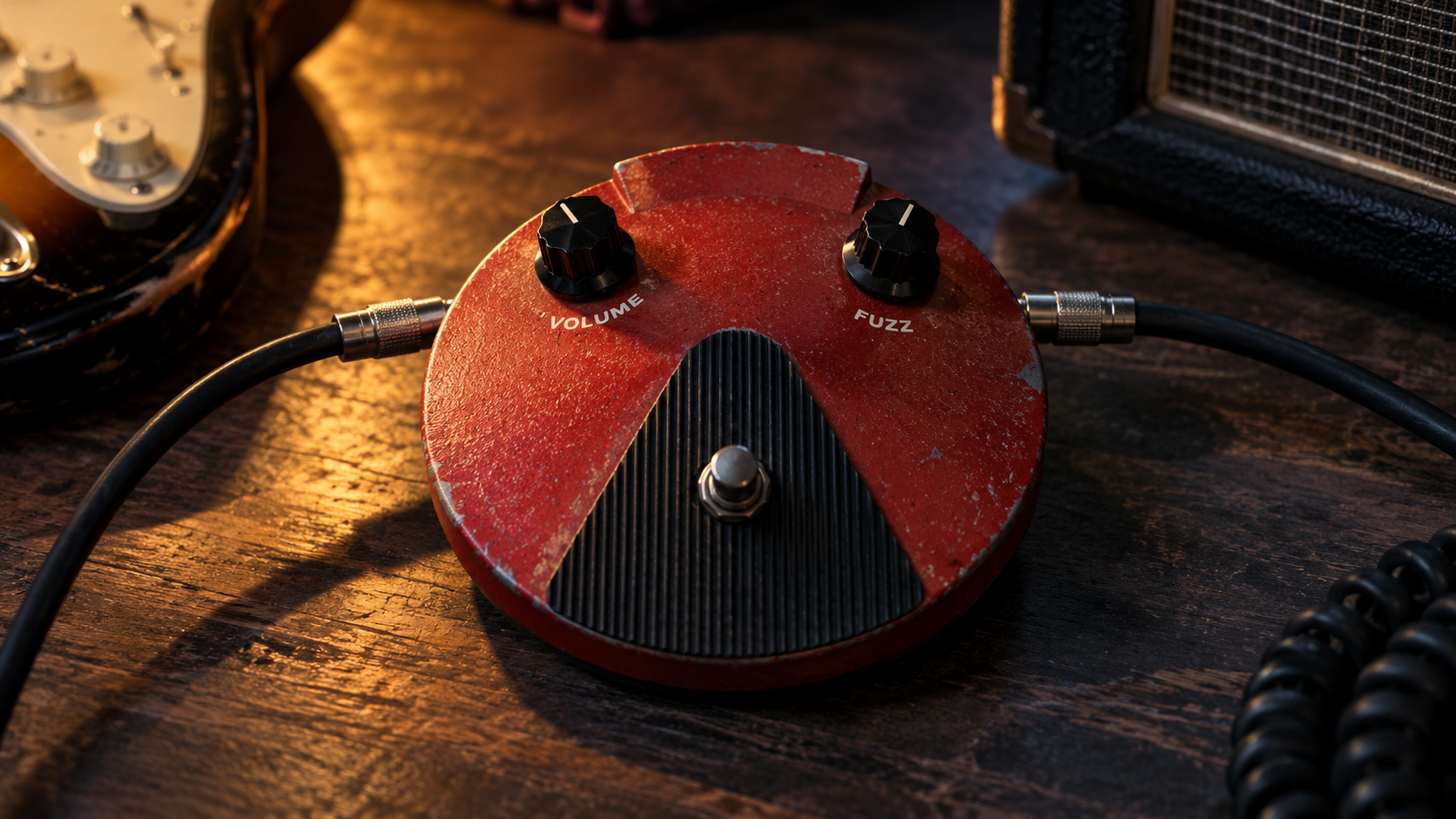
The Mini versions are usually the practical buy today because they keep the classic two-knob behavior while adding a status LED, standard power input and a smaller enclosure. If the giant round enclosure is part of the appeal for you, that is a different decision — but it does not make the circuit work better on a modern pedalboard.
Why the guitar volume knob matters so much
This circuit is one of the clearest examples of why the guitar’s volume control is more than an on-board loudness knob. At full guitar volume, the input stage is being driven hard. Roll it back and the whole response changes: gain falls, the attack becomes clearer, and the sound can become surprisingly close to an edge-of-breakup clean tone.
That means you can build a three-sound setup without touching the pedal:
| Guitar volume | Typical result | Use |
|---|---|---|
| 4–6 | Glassy clean-to-crunch | Chords and lighter rhythm |
| 7–8 | Hairy overdrive / light fuzz | Main rhythm |
| 9–10 | Full fuzz and sustain | Leads and heavy parts |
If you normally leave your guitar volume at 10 all night, you can still use this circuit. You are just leaving one of its best tricks on the table.
Buffers, wahs and signal-chain placement
This is where many first-time owners get confused. Traditional versions like seeing the guitar directly. A buffered tuner, wireless unit, or buffered wah before the fuzz can change the input relationship and make the pedal sound brighter, stiffer, or less responsive to the guitar volume knob.
That does not mean every buffer always destroys every Fuzz Face. It means the classic interaction depends on the input relationship enough that order matters more here than with most modern pedals. If your rig requires a buffer or wireless system first, a modern fuzz designed to tolerate that setup may be the smarter choice.
Single coils, humbuckers and amp choice
Single coils usually make the classic Fuzz Face behavior easiest to hear: clear cleanup, sharper dynamic contrast, and less low-end congestion. Humbuckers can sound huge, but they push the circuit harder and may need a little more restraint from the guitar volume knob.
- Strat-style single coils: classic pairing; very obvious cleanup and pick response.
- P-90s: thicker midrange without fully losing the dynamic feel.
- Humbuckers: bigger and more compressed; great for sustain, easier to make woolly.
On the amp side, slightly warm clean or edge-of-breakup platforms tend to flatter this style of fuzz. A very bright, scooped clean sound can expose every rough edge. If your home tone already feels sharp or thin, fix that first with the bedroom tone guide rather than expecting the fuzz to repair it.
Fuzz Face settings that make sense as starting points
Classic cleanup setup
- Fuzz: 8–10
- Volume: set slightly above bypass level
- Guitar volume: use 5–10 as your main gain control
This is the traditional way to use the circuit: leave the pedal hot and control the amount of dirt from the guitar.
Tighter home-volume setup
- Fuzz: 6–8
- Volume: unity or a small boost
- Guitar volume: 7–9
If your speaker or headphones make full fuzz sound too spitty at low level, backing the pedal off slightly can preserve definition without killing the character.
Fuzz Face vs Big Muff: which one is easier to live with?
These two classic fuzz families solve very different problems. The Fuzz Face is interactive and dynamic. The Big Muff is thicker, more compressed and more sustain-focused.
| If you care most about… | Better starting point |
|---|---|
| Guitar-volume cleanup | Fuzz Face |
| Touch sensitivity | Fuzz Face |
| Long, compressed sustain | Big Muff |
| Huge rhythm wall | Big Muff |
| Simple modern pedalboard integration | Usually Big Muff |
For a deeper look at the other side of this choice, see our best fuzz pedal picks and the broader overdrive vs distortion vs fuzz comparison.
Who should buy a Fuzz Face?
Buy one if…
- You like controlling gain from the guitar.
- You care about feel and dynamics more than huge compression.
- You play vintage rock, blues-rock or expressive lead parts.
- You are willing to think about signal-chain order.
Skip it if…
- You want one fixed heavy fuzz sound every time.
- You run wireless/buffers first and do not want to reorganize anything.
- You mainly want scooped, sustaining Muff-style rhythm.
- You never use your guitar volume knob and do not care to start.
Fuzz Face FAQ
Is germanium or silicon better for a Fuzz Face?
Germanium is usually warmer, softer and especially good at smooth cleanup. Silicon is typically brighter, more aggressive and more consistent. Choose based on feel rather than assuming one is the “premium” version.
Should a Fuzz Face go first in the signal chain?
For traditional versions, yes — that is the best place to start. Classic Fuzz Face circuits often react strongly to buffers before them, so guitar → fuzz is the safest baseline.
Does a Fuzz Face work with humbuckers?
Yes, but humbuckers hit the circuit harder. Expect a thicker, more compressed sound and use the guitar volume control if the low end becomes woolly.
Why does my Fuzz Face sound bad with a tuner before it?
If the tuner is buffered, it can change the way a traditional Fuzz Face sees the guitar signal. Move the fuzz before the tuner and compare before changing anything else.
Is a Fuzz Face good for beginners?
It can be, especially if you want to learn how guitar controls affect gain. It is less beginner-friendly if you just want a plug-in, fixed fuzz tone with no concern for signal-chain order.