Boss Katana 50 Gen 3 Review: Too Much Amp for the Bedroom?
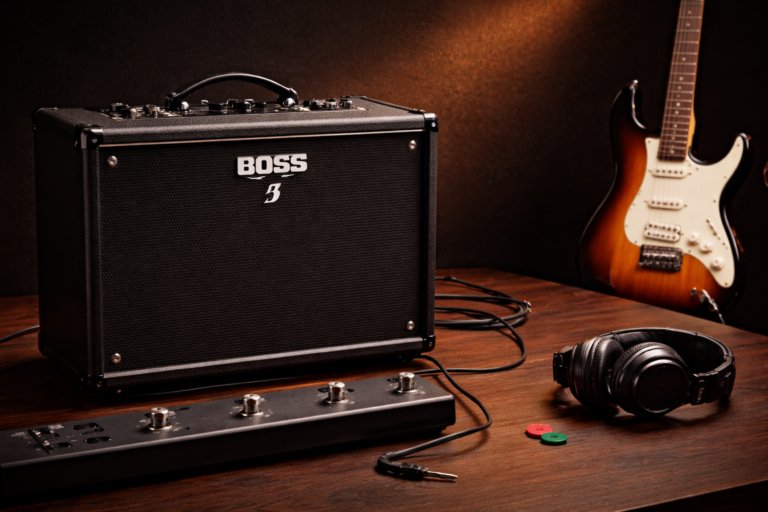
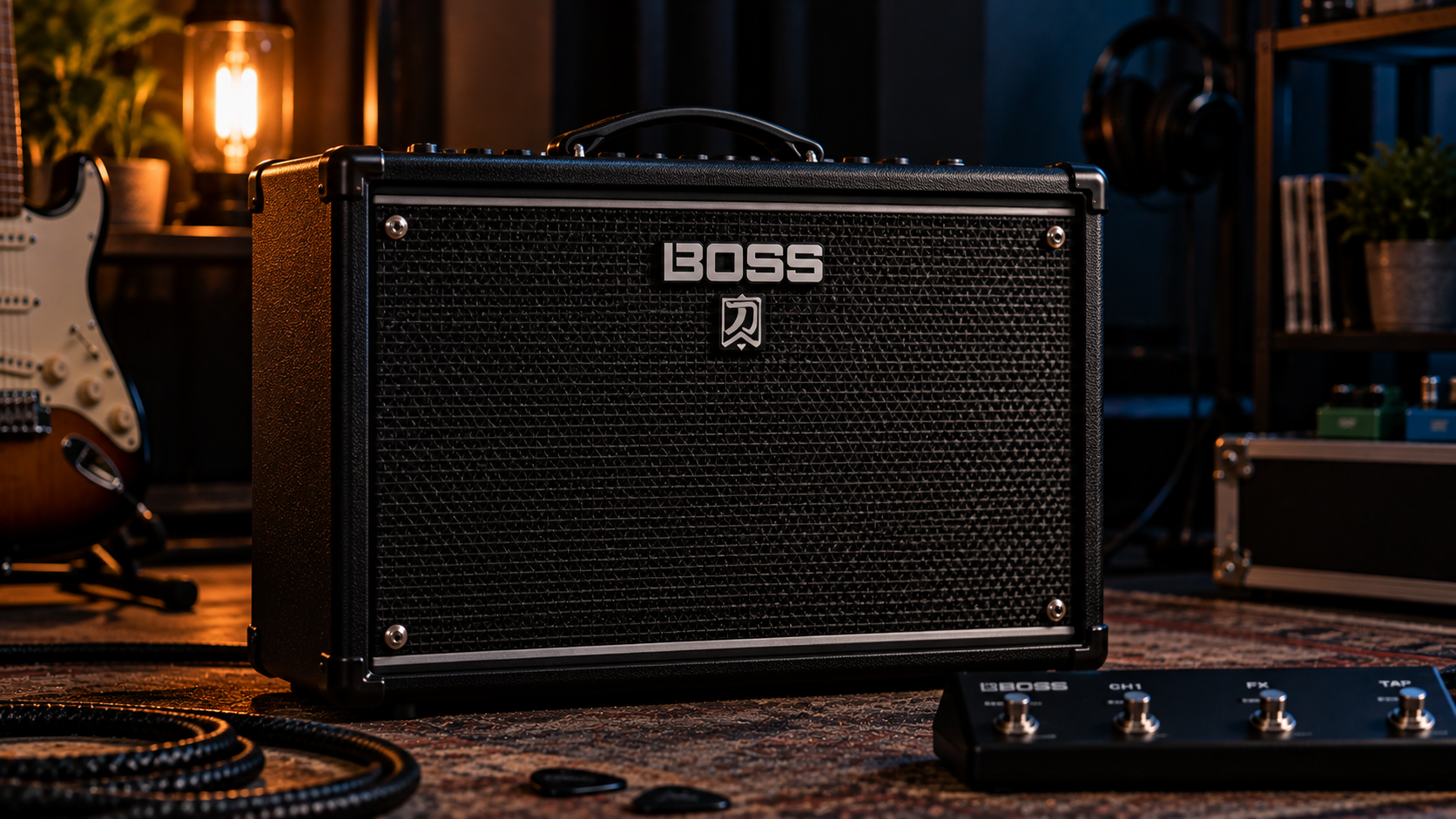
The Boss Katana 50 Gen 3 sits in a strange but useful position. It is a real 50-watt 1×12 combo that can move enough air to feel like a conventional guitar amp, yet it also has a 0.5-watt power setting, USB-C recording, deep software editing and enough built-in effects to replace a small pedalboard.
That makes the obvious question for this Boss Katana 50 Gen 3 review surprisingly specific: is a 50-watt 1×12 combo actually a smart bedroom amp, or are you buying more cabinet than you need? The answer depends on whether you want your home amp to stay at home—or grow with you into rehearsals, pedals and louder playing.
Quick Verdict: Is the Boss Katana 50 Gen 3 Good for Home Use?
Yes—if you want a bedroom amp that can become a rehearsal amp instead of staying a desk-only device. The 0.5W Power Control makes the 50W 1×12 combo practical at home, while the 12-inch speaker, six amp characters, BOSS effects and Power Amp In give it room to grow. The biggest catches are physical size, optional Bluetooth, four tone memories, and the base Katana 50 Gen 3 having no effects loop or dedicated line out.
Boss Katana 50 Gen 3 Pros and Cons
Pros
- 50-watt Class AB design with a custom 12-inch speaker gives a more traditional guitar-combo feel than desktop full-range amps.
- Power Control includes Standby, 0.5W, Half and Max settings, so the amp can operate sensibly at home.
- Six amp characters—Acoustic, Clean, Pushed, Crunch, Lead and Brown—with a variation for each provide twelve core voices.
- Five simultaneous effects sections cover Booster, Mod, FX, Delay and Reverb.
- BOSS Tone Studio unlocks more than 60 effect types, deeper EQ, effect ordering and cabinet-resonance options.
- Power Amp In makes the Katana useful as amplification for an external modeler or preamp.
- USB-C recording and IR-based headphone output make silent and direct use much better than a traditional analog combo.
- At 11.6 kg, it is still portable enough to move between home and rehearsal without becoming a full-size burden.
Cons
- Physically much larger than a THR10II, Spark 2 or other desktop amp.
- Bluetooth is not built in; wireless audio and mobile editing require the optional BT-DUAL adapter.
- The base Katana 50 Gen 3 does not offer the broader control and connectivity of higher Katana models.
- Four Tone Setting memories are useful but limited if you want many song-specific presets available from the amp.
- No built-in looper or dedicated smart-practice ecosystem.
- A 12-inch speaker can still sound and feel different at whisper volume than it does when allowed to move more air, even with power scaling.
Boss Katana 50 Gen 3 Specs: 50W, 1×12 Speaker and 0.5W Power Control
- Rated output: 50W
- Speaker: 1 × 12-inch custom BOSS speaker
- Power Control: Standby, 0.5W, Half and Max
- Amp characters: Acoustic, Clean, Pushed, Crunch, Lead and Brown, with a selectable variation for each
- Effects sections: Booster, Mod, FX, Delay and Reverb
- Tone memories: 4 Tone Setting memories plus Panel mode
- Connectivity: guitar input, Power Amp In, stereo phones, aux in, footswitch/control jack, expression-pedal jack, USB-C and BT-DUAL adapter slot
- Dimensions: approximately 470 × 398 × 238 mm
- Weight: approximately 11.6 kg
BOSS lists the current Gen 3 hardware and connection details on the Katana 50 Gen 3 product page. The specifications explain why this amp should not be compared to a desktop smart amp on feature count alone. It is built around a conventional guitar speaker and power section first, with digital flexibility layered on top.
This Boss Katana 50 Gen 3 review treats the 12-inch speaker as the core of the product rather than another line on the spec sheet. If you want to see how that differs from small full-range home rigs, our best desktop guitar amps guide maps out the other side of the category.
The 12-Inch Speaker Is the Reason to Buy It—and the Reason It Takes Up Space
The biggest difference between the Katana 50 Gen 3 and most modern desktop practice amps is not the modeling engine. It is the 12-inch guitar speaker.
A larger guitar-specific speaker changes the physical experience. Chords arrive from one cabinet rather than a small stereo field. Palm-muted notes have more cone area behind them. Pedals interact with an amp that behaves more like the traditional rig many guitarists eventually use at rehearsal or onstage.
That does not automatically mean “better.” A Yamaha THR or Spark 2 can sound more polished at desk distance because full-range speakers and cabinet modeling are designed for close, low-volume listening. The Katana gives you more of the familiar amp-in-the-room experience, but it asks for floor space in return.
Why this matters for beginners
A player who starts on the Katana can learn one amp and keep using it as playing situations get louder. The same basic tones used in a bedroom can move to rehearsal without buying a completely different amplification system. That continuity is one of the strongest arguments for the 50 Gen 3.
Boss Katana 50 Gen 3 for Bedroom Use: Why the 0.5W Setting Matters
Fifty watts sounds excessive for an apartment until you look at BOSS Power Control. The Katana 50 Gen 3 offers Standby, 0.5W, Half and Max settings. The idea is not simply to put a digital volume limiter after the sound. BOSS uses the power-control system to preserve the response of the Tube Logic platform while reducing output level.
For home players, 0.5W is the key setting. It lets you use more useful positions on the channel and master controls without immediately reaching antisocial volume. That is especially helpful with crunch and lead sounds, where an amp set painfully low can feel choked even when the model itself is good.
There is still physics involved. At very low room volume, a 12-inch speaker is not interacting with the room the same way it does when louder. Power scaling makes the amp far more usable at home; it does not turn a large guitar speaker into headphones.
If you struggle to make any amp sound convincing quietly, the broader principles in our low-volume guitar tone guide matter more than chasing a different preset.
Katana 50 Gen 3 Amp Types: Clean, Pushed, Crunch, Lead and Brown
Katana Gen 3 has six core amp characters: Acoustic, Clean, Pushed, Crunch, Lead and Brown. Each has a selectable variation, giving twelve core tonal directions before effects and deeper Tone Studio editing enter the picture.
The new Pushed character is the most interesting addition because it targets the space between a pristine clean and obvious crunch. That edge-of-breakup range is where picking dynamics and guitar-volume changes matter most, and it is also a range that home players often use because it stays expressive without requiring extreme gain.
Clean and Pushed
These are the voices that make the Katana useful beyond “budget metal amp” stereotypes. Clean provides a pedal-friendly foundation, while Pushed gives you a more reactive, harmonically saturated response without jumping straight into heavy distortion.
Crunch, Lead and Brown
Crunch covers the classic rock middle ground. Lead pushes into more saturated modern territory, and Brown remains the high-gain voice for players who want tighter, heavier sounds. Because the amp has a real 12-inch speaker, these higher-gain sounds have a different room feel than the same type of modeling heard through small full-range desktop drivers.
BOSS Tone Studio and Katana 50 Gen 3 Built-In Effects
The Katana 50 Gen 3 has five effect categories available at once: Booster, Mod, FX, Delay and Reverb. Each section has three panel variations, so a useful basic rig can be built without connecting a computer.
BOSS Tone Studio expands that dramatically. BOSS says the software can customize the onboard effects from more than 60 types, change effect order, edit deeper parameters, shape the overall sound with multiple EQs and Contour settings, and choose among Vintage, Modern and Deep cabinet-resonance behavior.
This two-layer workflow is one of Katana’s strengths. You can treat it like a simple combo during practice, then open Tone Studio when you actually need to solve something specific. That is healthier than forcing every small adjustment through software.
Four memories are enough—until they are not
The base Katana 50 Gen 3 stores four complete Tone Settings. For many players that is plenty: clean, crunch, rhythm gain and lead. If you want a different programmed rig for every song in a long set, the base 50 becomes less convenient and the larger Katana models deserve attention.
Power Amp In is also why this Boss Katana 50 Gen 3 review matters beyond beginner use. Our guitar amp modeler guide explains how an external modeler can eventually turn the Katana into a simple powered guitar-speaker platform.
Power Amp In Gives the Katana a Second Life as a Modeler Platform
One of the most useful connections on the Katana 50 Gen 3 is Power Amp In. It bypasses the Katana preamp so an external preamp, multi-effects unit or modeler can use the Katana’s power section and speaker.
That matters for long-term value. You might buy the Katana as your all-in-one amp today, then move into a dedicated modeler later. The combo does not automatically become redundant; it can become the amplification side of the new rig.
There is a caveat. A Katana speaker is still a guitar speaker, not a neutral FRFR monitor. If your external modeler relies heavily on detailed cabinet IRs, you need to think carefully about where cabinet simulation belongs in the chain. Our FRFR guitar cabinet guide explains why that difference matters.
Katana 50 Gen 3 USB-C Recording and Headphone Practice
The stereo phones output and USB-C connection are important because they prevent the 1×12 cabinet from being the only way to use the amp. BOSS applies IR-based cabinet sound to the direct outputs, with Air Feel options and customizable settings available in Tone Studio.
For late-night practice, that means the Katana can become a silent rig without moving to a separate plugin setup. For recording, USB-C sends the modeled sound directly to compatible computer or mobile software.
The convenience is real, but a dedicated interface still wins for broader studio work. If you need microphones, multiple instruments, flexible monitor mixes or third-party amp plugins, an interface remains a better hub. The Katana’s USB feature is strongest when the amp tone itself is what you want to record.
Does the Katana 50 Gen 3 Have an Effects Loop or Line Out?
No—the base Katana 50 Gen 3 does not have an effects loop or a dedicated line/recording output. BOSS has multiple Gen 3 models for a reason. The base Katana 50 aims to keep the core 1×12 experience affordable and portable, which means it does not carry every connectivity and foot-control feature from the larger models.
Bluetooth is a good example. The amp has a slot for the optional BT-DUAL adapter, but Bluetooth is not built in. If wireless audio playback and phone-based editing are central to your daily workflow, factor that extra accessory into the real cost.
The same logic applies to preset control. Four memories and standard footswitch/expression support work well for practice and simple live use. Players building a more complex stage rig should compare the 50 EX or larger models before assuming the cheapest Katana is automatically the best value.
Who Should Buy the Boss Katana 50 Gen 3?
- Home players who still want the physical response of a 12-inch guitar speaker.
- Beginners who want one amp that can grow from bedroom practice into rehearsals.
- Rock and metal players who care about palm-muted feel and traditional combo response.
- Pedal users who want a flexible clean/pushed platform with built-in effects available when needed.
- Modeler users who may want a conventional power-amp-and-speaker option later.
It is less ideal for tiny desks, ultra-portable battery rigs, players who want built-in looping, or anyone whose entire setup is already centered around headphones and software.
A fair Boss Katana 50 Gen 3 review should compare it with both smart amps and other combos. Read the Positive Grid Spark 2 review for the desktop-practice alternative, or jump straight to our Spark 2 vs Boss Katana 50 Gen 3 comparison for the direct buying decision.
Alternatives Depend on Whether You Want an Amp or a Practice System
Yamaha THR10II
The THR10II is much smaller and more naturally suited to desk-level playing. Choose it if stereo low-volume sound and compactness matter more than rehearsal capability.
Positive Grid Spark 2
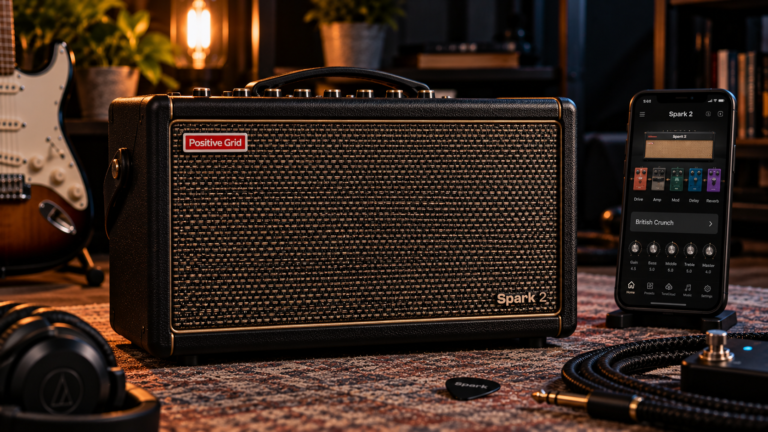
Spark 2 adds a looper, app-driven practice tools, AI tone search, stereo line outputs and optional battery operation. It is a stronger practice ecosystem but a less traditional guitar-combo experience. If compact stereo practice is the priority, the Blackstar ID:Core 10 V4 review covers another smaller modeling-combo approach.
Fender Mustang LT25
The Fender Mustang LT25 stays smaller and cheaper while still offering modeling and USB recording. Its 8-inch speaker, however, does not give the same room feel as the Katana’s 12-inch design.
The main conclusion of this Boss Katana 50 Gen 3 review is that the amp earns its floor space when you want one rig to cover quiet practice now and louder use later.
Boss Katana 50 Gen 3 Review Verdict: Bedroom Amp That Can Grow with You
The Boss Katana 50 Gen 3 makes sense at home because the 0.5W Power Control solves the obvious volume problem while preserving the reason to own a conventional 1×12 combo in the first place. You get physical speaker response, a straightforward front panel and a rig that can become genuinely louder when your playing situation changes.
Its biggest advantage over desktop smart amps is also its biggest inconvenience: it is a real combo. It takes floor space. It weighs 11.6 kg. It will never disappear onto a bookshelf. But if you want one amplifier that can cover bedroom practice today and a rehearsal room later, those compromises are reasonable.
For a player who will always practice at a desk, the THR10II or Spark 2 may be a cleaner solution. For a player who wants home volume without giving up the traditional amp experience, the Katana 50 Gen 3 remains one of the most coherent designs in the category.
That growth path is the recurring theme of this Boss Katana 50 Gen 3 review: it is larger than a desktop amp, but much harder to outgrow if rehearsals, pedals or external modelers enter the picture.
For readers skimming this Boss Katana 50 Gen 3 review, the core advantage is still the combination of 0.5W home use and a full 12-inch combo format that can grow beyond the bedroom.
Boss Katana 50 Gen 3 FAQ
Is the Boss Katana 50 Gen 3 good for bedroom use?
Yes. Its Power Control includes a 0.5W setting specifically suited to low-volume playing. The physical 12-inch speaker still gives it a different feel and footprint from a desktop amp.
How many amp types does the Katana 50 Gen 3 have?
It has six amp characters—Acoustic, Clean, Pushed, Crunch, Lead and Brown—with a selectable variation for each, giving twelve core tonal voices.
Does the Katana 50 Gen 3 have Bluetooth?
Bluetooth is available through the optional BOSS BT-DUAL Audio MIDI adapter. It is not built into the base amp.
Can the Katana 50 Gen 3 record over USB?
Yes. It uses USB-C for direct recording and playback with compatible computer and mobile software, with IR-based cabinet sound on the direct signal.
Can I use a modeler with the Katana 50 Gen 3?
Yes. The Power Amp In jack bypasses the Katana preamp so an external modeler or preamp can feed the power section and speaker directly.
Does the Boss Katana 50 Gen 3 have an effects loop?
No. The base Katana 50 Gen 3 does not have a send/return effects loop. If you rely on amp distortion and want delay or reverb after the preamp, compare the larger Katana models before buying.
Does the Katana 50 Gen 3 have a line out?
No dedicated line out is provided on the base Katana 50 Gen 3. Direct output is handled through the stereo phones jack or USB-C, while live PA use normally requires miking the speaker or moving to a Katana model with dedicated line output.