Yamaha THR10II Review: Still the Desktop Amp Benchmark?
The Yamaha THR10II is one of the amps that helped define the modern desktop-guitar-amp category. Instead of shrinking a stage combo and calling it a practice amp, Yamaha designed the THR platform around a different problem: how do you make an electric guitar feel satisfying at home, at low volume, through a compact stereo box that can also handle headphones, backing tracks and quick recording?
That question still matters. The market is now crowded with smart amps, app-heavy practice systems and portable modelers, so the THR10II no longer wins by being unusual. In this Yamaha THR10II review, the useful question is whether its focused workflow, stereo presentation and low-volume design still justify choosing it over newer, more feature-heavy alternatives.
Quick Verdict: Is the Yamaha THR10II Worth It?
Yes—if your priority is a compact desktop guitar amp that sounds complete at low volume without making the phone app part of every session. The THR10II is no longer the most feature-heavy practice amp, but its 20W stereo design, 15 guitar amp models, Bluetooth playback, five hardware memories and USB recording still form one of the cleanest home-practice workflows in the category. Choose something else if you need a looper, battery power in the standard model or rehearsal-level projection.
Yamaha THR10II Pros and Cons
Pros
- Designed specifically for convincing low-volume home playing rather than simply being a small loud amp.
- 20-watt stereo output through two full-range speakers creates a wider presentation than a conventional tiny mono combo.
- Fifteen guitar amp models are available when the app is included in the workflow, plus bass, acoustic and flat voicings.
- Bluetooth playback, USB audio and headphone output make it easy to use as a complete desk rig.
- Physical controls cover the important adjustments without forcing the app to stay open.
- Five user memories make repeatable everyday tones easy to recall.
- Compact, light and visually discreet enough to live permanently on a desk or shelf.
Cons
- The standard THR10II does not include the rechargeable battery or built-in guitar wireless receiver found in the Wireless version.
- No onboard looper, drum machine or AI-style practice ecosystem.
- No dedicated line outputs on the THR10II; those are reserved for the larger THR30II Wireless.
- Deep editing still depends on THR Remote.
- Players who want a 12-inch speaker pushing air in the room may find the hi-fi desktop presentation less physical than a traditional combo.
- Newer smart amps offer more obvious feature value if app-based practice tools matter more than simplicity.
Yamaha THR10II Specs: 20W Stereo, 15 Guitar Models, USB and Bluetooth
- Rated output: 20W stereo, 10W per side
- Speakers: 2 × 3.1-inch full-range speakers
- Guitar amp models: 5 accessible from the panel, with 10 additional models available through THR Remote for 15 total
- Other voices: bass, acoustic and flat voicings, with additional variants available in the app
- Effects: chorus, flanger, phaser, tremolo, echo, echo/reverb, spring and hall reverb; compressor and noise gate are available through the editor
- Connectivity: 1/4-inch guitar input, 1/8-inch aux input, 1/8-inch headphone output, USB Audio Class 2.0, Bluetooth audio/MIDI
- Memories: 5 user preset buttons
- Dimensions: approximately 368 × 183 × 140 mm
- Weight: approximately 3.0 kg
Yamaha’s current THR-II specifications make the product hierarchy clear: the standard THR10II is the plug-in desktop model, while the THR10II Wireless adds a rechargeable battery and compatible guitar-wireless receiver. That distinction matters when comparing prices.
The “Third Amp” Idea Is Still the THR10II’s Best Argument
Yamaha originally positioned THR as a “third amp”: not the large rig for stage volume, and not simply a smaller rehearsal combo. The concept was to build around the environment where many guitarists actually play most often—at home, close to the speakers, often at conversation level.
That changes the priorities. A conventional combo can sound impressive because a larger speaker moves air and the cabinet interacts with the room. At low volume, however, that same architecture can feel flat, directional or simply oversized for the job. THR approaches the problem more like a stereo desktop monitoring system with guitar-specific modeling built in.
This is why the THR10II still has an identity even though competitors now offer more features. It is less interested in becoming a mini PA, stage amp, learning platform and social-media machine all at once. Its main job is to make plugging a guitar in at home feel easy and finished. The same home-use philosophy shows up in our older Blackstar HT-1R vs Yamaha THR5 comparison, which is useful context for how this category evolved.
Yamaha THR10II as a Low-Volume Practice Amp
The THR10II’s headline specification is technically 20 watts, but wattage is not the useful way to understand this amp. The important part is the combination of two small full-range speakers, Yamaha’s Extended Stereo processing and modeling designed around close-range listening.
That architecture tends to produce a more “finished” sound at desk distance than a tiny guitar speaker trying to impersonate a larger combo. Stereo delays and reverbs have space to spread, clean tones do not depend on moving a large cone, and backing tracks can play through the same box without sounding like they are being forced through a guitar cabinet.
The trade-off is equally important. If your definition of good amp feel is the physical push of a 12-inch speaker, the THR10II is solving a different problem. It is closer to hearing a polished guitar sound in a compact stereo field than standing in front of a conventional cabinet.
Clean and edge-of-breakup tones
This is where the THR concept makes the most sense. At home volume, clean and lightly driven tones benefit from the wide stereo image and controlled low end. You can keep the sound open without turning the room into part of the amplifier.
For players using single coils, semi-hollows or lower-output humbuckers, that makes the THR10II especially attractive as a “pick up the guitar for twenty minutes” amp. There is less pressure to build a full rig before the sound becomes enjoyable.
High gain
The THR10II includes higher-gain voices and can absolutely cover rock and metal practice. But the same caveat applies: this is not a 1×12 cabinet. Tightness comes from modeling and controlled playback rather than from a large speaker moving air. For home practice that can be an advantage; for players chasing chest-level punch, it can feel less physical.
If your distorted tone sounds harsh or small through any compact amp or headphone rig, our guide to why your electric guitar sounds bad at home is a better first step than immediately replacing the amp.
In this Yamaha THR10II review, the low-volume workflow matters more than raw wattage. For a wider view of the category, our best desktop guitar amps guide shows where the THR10II sits against newer smart and wireless rivals.
Yamaha THR10II Amp Models and Effects: 15 Guitar Voices Without Menu Overload
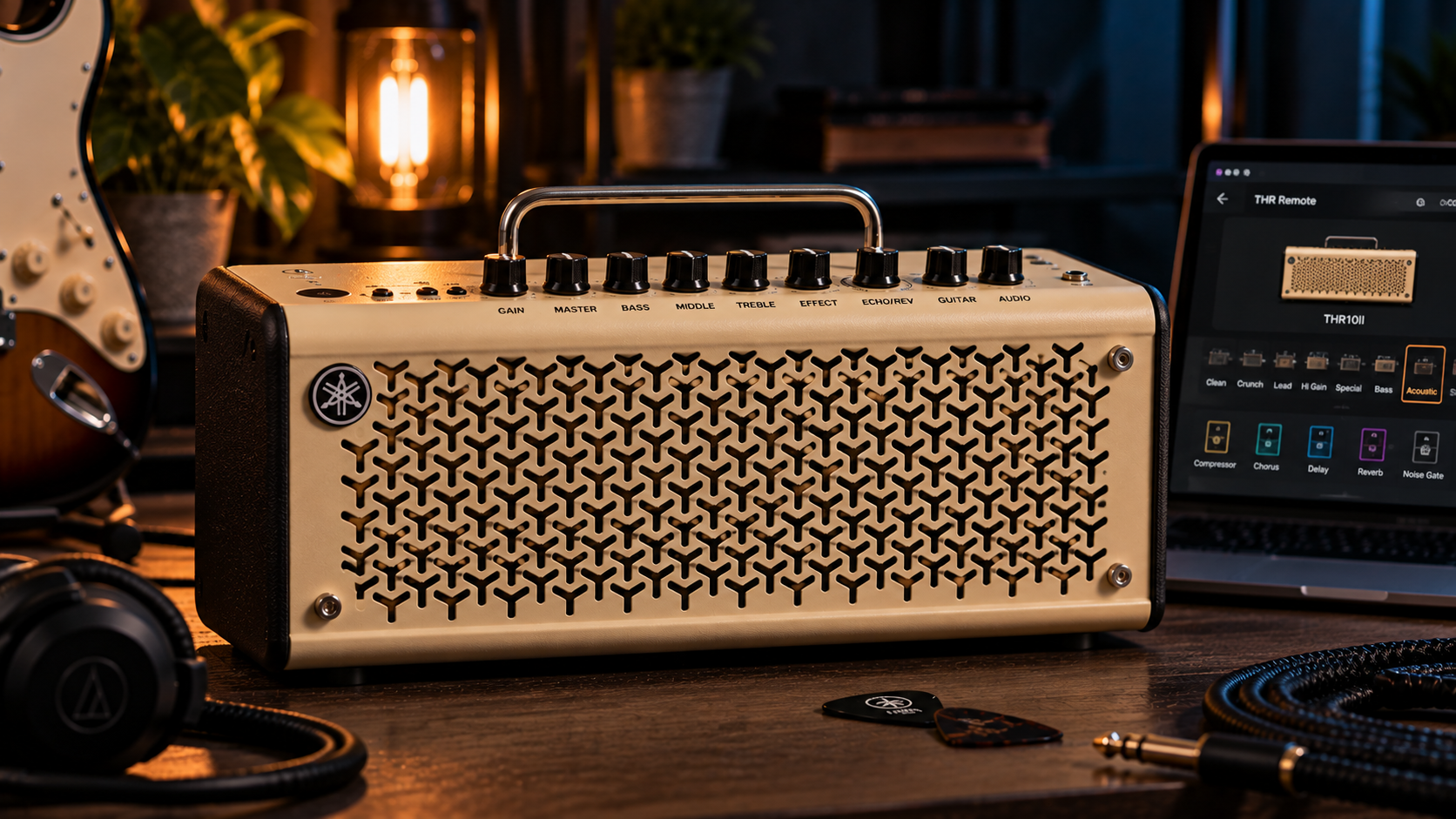
One of the smarter THR10II decisions is that the front panel stays simple even though the underlying model library is larger. The amp gives you familiar controls—amp type, gain, master, bass, middle, treble, effects, echo/reverb, guitar output and audio output—plus five user memories.
Through THR Remote, the five core guitar amp categories expand into Classic, Boutique and Modern variants for fifteen guitar amp models in total. The app also exposes additional bass, acoustic and flat options, plus deeper effect parameters, compressor and noise gate.
That split is useful because it keeps two different workflows available. You can spend an evening building presets in the app, then ignore the app for the next month and use the physical controls and memory buttons. That is a very different philosophy from smart amps that expect the phone to be part of every session.
For buyers choosing directly between Yamaha and Positive Grid, our Yamaha THR10II vs Spark 2 comparison is the cleaner decision page. This Yamaha THR10II review focuses on why Yamaha’s simpler workflow still has value on its own.
THR Remote, Bluetooth and the THR10II Daily Workflow
THR Remote is available for desktop and mobile devices and acts as the editor/librarian for the amp. It unlocks the full set of amp variants, deeper effect control and parameters that are not practical to expose on a compact front panel.
The important distinction is that the THR10II remains useful without the editor connected. Gain, EQ, master, modulation, delay/reverb and preset recall are all directly available. For daily practice, that lowers friction.
Bluetooth also has a straightforward role: play backing tracks, songs or lessons through the same stereo speakers while the guitar signal remains independently controllable. The separate guitar-output and audio-output controls are more valuable in practice than a long list of smart features because they let you balance guitar and backing track quickly without touching your phone volume every thirty seconds.
Yamaha THR10II USB Recording and Headphone Practice
The THR10II supports USB Audio Class 2.0 for direct recording and playback. That means the amp can function as the center of a simple writing setup: guitar into THR, USB to computer, DAW open, no microphone and no separate interface required for basic tracking.
For serious recording, a dedicated audio interface and software rig still offers more routing flexibility, lower-level control and easier access to third-party plugins. But that misses the point of the THR workflow. The value is that the same box used for casual practice can capture an idea without rebuilding the rig. If you are deciding between those two approaches, our practice amp vs amp sim vs multi-FX guide lays out the workflow trade-offs.
The headphone output follows the same logic. You keep the same modeled signal when speakers are not an option, which makes the THR10II useful for apartments and late-night practice. If silent playing is your main use case, compare this approach with the setups in our guitar headphone amp guide before assuming a desktop amp is automatically the best solution.
Yamaha THR10II Limitations: Where This Desktop Amp Now Feels Conservative
The desktop-amp market has changed since THR established the category. A modern competitor may include an onboard looper, drum tracks, cloud tone libraries, AI tone search, battery operation and deeper wireless control in the same price conversation.
The standard THR10II has none of those headline features. It also lacks the battery and built-in guitar-wireless receiver of the THR10II Wireless, and it does not provide the dedicated line outputs found on the THR30II Wireless.
That makes the purchasing decision clearer rather than worse. If you want a practice platform that constantly offers new things to do, the THR10II can look conservative. If you want an amp that stays physically simple after the novelty period wears off, that same restraint is part of the appeal.
Who Should Buy the Yamaha THR10II?
The THR10II makes the most sense for players who spend most of their time at home and value low-friction tone over maximum feature count.
- Apartment and bedroom players who rarely need stage-level volume.
- Players who want stereo effects and backing tracks from one compact box.
- Guitarists who like apps for setup but do not want an app to be mandatory every time they play.
- Songwriters who want quick USB recording without building a permanent computer rig.
- Players who want one device for electric guitar, bass, acoustic-electric and general audio playback.
It makes less sense if you want a built-in looper, battery power in the standard model, a large guitar speaker, extensive foot control or a clear path from bedroom amp to loud rehearsal rig.
A useful Yamaha THR10II review also has to frame the competition properly. The Spark 2 review covers the feature-heavy alternative, while the NUX Mighty Space review shows the more technical wireless/modeler route.
The Alternatives Are Newer, but Not Automatically Better
Positive Grid Spark 2
The Spark 2 is the obvious feature-heavy rival. It adds a built-in looper, a much larger app ecosystem, AI-assisted tone search, optional battery power and more amp/effect models. If practice tools and experimentation matter most, Spark 2 gives you more to explore.
NUX Mighty Space
The Mighty Space pushes harder into wireless and modeler territory with an included wireless transmitter, rechargeable battery, third-party IR loading, movable effect blocks and flexible USB routing. It is a better fit for players who enjoy building signal chains.
Boss Katana 50 Gen 3
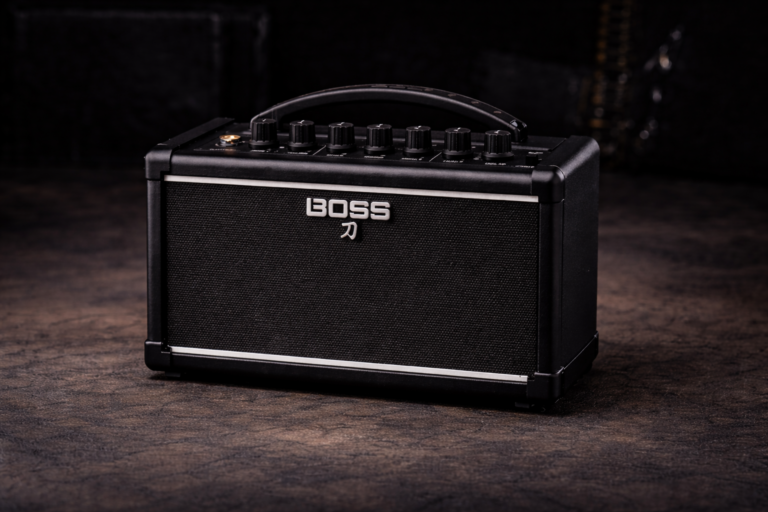
The Katana is physically a different kind of amp: a 50-watt 1×12 combo with power scaling. It takes more floor space but offers a more traditional guitar-speaker experience and a more obvious path to rehearsals.
The point of this Yamaha THR10II review is not that Yamaha wins every feature comparison; it is that the THR10II still solves low-volume home playing with unusually little friction.
Yamaha THR10II Review Verdict: Still a Strong Desktop Practice Amp
The Yamaha THR10II no longer dominates the desktop-amp conversation by having the most features. It does not. Newer rivals offer more models, more practice tools, loopers, AI functions, battery options and deeper ecosystems.
What keeps the THR10II relevant is that Yamaha’s original idea still makes sense: design the amp around how a guitarist actually plays at home. The stereo presentation, direct controls, user memories, Bluetooth playback and simple USB recording form a coherent workflow rather than a pile of features.
If you want the most technology per dollar, there are more aggressive options. If you want a desktop amp that can sit within arm’s reach, sound complete at sensible volume and stay out of the way once your presets are built, the THR10II still has a strong reason to exist.
That is the practical context behind this Yamaha THR10II review: simplicity, low-volume sound and fast access matter more here than maximum feature count.
For readers skimming this Yamaha THR10II review, the simplest summary is that Yamaha still prioritizes low-volume usability and hardware simplicity over feature count.
Yamaha THR10II FAQ
How many amp models does the Yamaha THR10II have?
The THR10II provides five guitar amp types directly from the amp, with additional Classic, Boutique and Modern variants available through THR Remote for fifteen guitar amp models in total. The platform also includes bass, acoustic and flat voicings.
Does the Yamaha THR10II have a battery?
The standard THR10II does not have a built-in rechargeable battery. The THR10II Wireless adds rechargeable battery operation and a compatible built-in guitar wireless receiver.
Can the THR10II record over USB?
Yes. It supports USB Audio Class 2.0 for direct recording and playback with a computer.
Does the THR10II work without the app?
Yes. Core amp controls, effects, output levels and five user memories are available from the hardware. THR Remote expands the model selection and deeper parameters.
Is the Yamaha THR10II loud enough for band practice?
It is primarily a home and desktop amp. Its 20-watt stereo full-range system can get loud in a room, but players rehearsing with an acoustic drummer will generally be better served by a larger conventional combo such as a Katana 50 Gen 3.
Is the Yamaha THR10II still worth buying in 2026?
Yes, especially for home players who value low-volume sound, compact size, physical controls, Bluetooth playback and simple USB recording over built-in looping or a larger smart-practice ecosystem.