TC Electronic Flashback 2 Review: Versatile Delay or Too Much Choice?
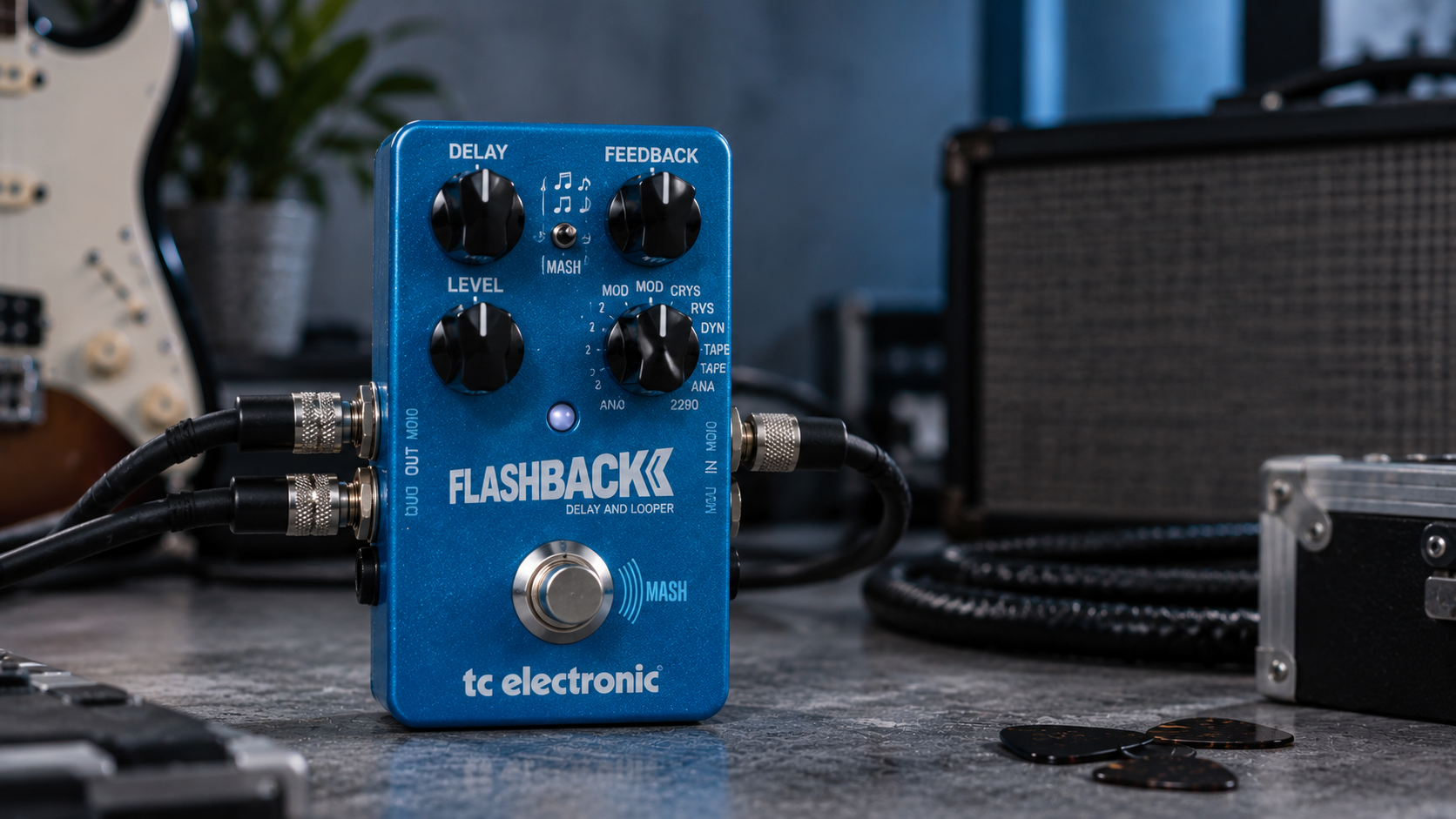
The TC Electronic Flashback 2 has two distinct sides: a straightforward multi-mode delay on the pedal and a deeper TonePrint platform in the editor. Its onboard controls cover familiar digital, analog-style, tape and rhythmic sounds; TonePrint and the pressure-sensitive MASH switch extend what can be shaped.
The extra flexibility matters most when there is a specific sound to build. Standard modes can be used without the editor, while TonePrint can customize filtering, modulation, subdivisions and MASH behavior. Software becomes part of the workflow if those deeper features are the reason for buying it.
It offers more personalization than many compact delays, but is less self-contained than a Boss DD-8 and less focused than a Carbon Copy. It best suits players willing to build a few deliberate sounds and keep using them.
TC Electronic Flashback 2 review: who should buy it?
Buy it if…
- You want several delay families in one normal-sized enclosure.
- TonePrint editing and artist presets sound useful rather than annoying.
- The MASH footswitch can replace a separate expression pedal for occasional control.
- Stereo routing matters for an amp, modeler or recording setup.
Skip it if…
- You want a completely self-contained pedal with no app or editor layer.
- You need multiple stored presets selectable during a performance.
- You prefer one analog character and a very wide knob sweet spot.
- Pressure-sensitive foot control is unlikely to be used.
Pros and cons
| What works | What you give up |
|---|---|
|
|
Onboard modes, MASH and TonePrint limits
| Area | What it means in a real rig |
|---|---|
| Delay range | Multiple onboard algorithms plus editable TonePrint slots, including long digital delay capabilities. |
| Controls | Delay, Feedback, Level, mode selection and rhythmic subdivision controls. |
| MASH | Pressure-sensitive footswitch can manipulate assigned parameters while held. |
| TonePrint | Custom or artist-created sounds can be loaded and edited through TC Electronic’s ecosystem. |
| Routing | Stereo input and output, useful with stereo rigs and interfaces. |
| Bypass | Configurable behavior depending on setup, including options relevant to trails and dry-path handling. |
The pedal is easiest when you ignore half of it
Choose a normal digital, tape or analog-style mode, set time, feedback and level, and the Flashback 2 behaves like any well-designed compact delay. The dry note stays easy to place and the main controls cover the adjustments most players actually make.
This simple layer is important because it prevents TonePrint from becoming mandatory. The pedal can work on day one before you know which parameters you would want to edit.
TonePrint is powerful only when the goal is specific
TonePrint becomes valuable when you can describe the problem: repeats are too bright, modulation is too deep, the subdivision is wrong, or MASH should increase feedback rather than level. Editing with a purpose can turn one slot into exactly the delay your rig lacks.
Browsing presets without a clear goal is the opposite experience. It creates endless variations that sound interesting alone but do not necessarily solve a musical need. The premium feature is control, not the number of downloadable sounds.
MASH is useful, but not automatically expressive
Pressing harder on the footswitch can raise feedback, change mix or produce more dramatic movement, depending on the assignment. For swelling into an ambient tail or pushing one phrase into oscillation, it is genuinely useful.
It is less controlled than a treadle expression pedal and requires consistent foot pressure. If you rarely manipulate effects during a phrase, MASH should not be the reason you buy the pedal.
Choosing a Flashback 2 voice for the guitar and amp
The Flashback 2’s flexibility matters because different rigs ask for opposite kinds of repeats. A bright Strat-style guitar into a clean combo can support dark tape or analog-style filtering without losing rhythmic definition. The same setting behind a neck humbucker and dark speaker may vanish as soon as the band enters. In that case, a cleaner digital or 2290-style voice with fewer repeats usually works better than raising the wet level until the entire signal becomes louder.
High-output pickups and modern distortion create another problem: the source sound already contains compression and sustained harmonics. Long, bright repeats stack that information and turn palm-muted parts into a continuous layer. Use a high-cut or filtered TonePrint, reduce Feedback and keep the first repeat audible but not equal to the dry note. For cleaner funk or dotted-eighth parts, preserve more top end and use the subdivision controls so the delay contributes rhythm rather than general ambience.
With a pedal-based gain section, the Flashback 2 normally sits after distortion and modulation. If the amplifier preamp provides the gain, the effects loop gives the digital repeats more separation. Stereo rigs require extra judgment: a wide or ping-pong effect can sound enormous alone but pull attention away from the central guitar part. Start with the mono sound working first, then add width. TonePrint should adapt the delay to the rig—pickup output, speaker darkness, gain level and playing density—not merely make the effect more dramatic.
A sane way to use TonePrint without living in the editor
Start by reserving the three TonePrint positions for jobs, not favorite artist names. One can be a filtered lead delay, one a precise rhythmic sound, and one a larger modulated texture. Give each slot a short purpose you can remember when looking down at the pedal. If two slots solve the same problem with slightly different modulation, one of them is probably wasted.
Build the base sound at rehearsal volume before editing subtle details through headphones. Feedback and filtering that seem tasteful alone may disappear with drums, while a bright rhythmic repeat that feels aggressive at home can become exactly right in a band. Use MASH for one obvious movement—such as increasing feedback for the end of a phrase—rather than mapping several parameters until foot pressure produces unpredictable changes.
The Flashback 2 usually belongs after drive and modulation. Stereo outputs become useful near the end of a pedalboard, feeding two amps or a stereo interface. Its digital engine also deserves a properly rated isolated power output; a noisy shared supply can undermine the clean repeat quality that is one of the pedal’s main advantages.
TC Electronic Flashback 2 settings that make sense
These are starting points, not magic coordinates. Set the amp clean or only slightly breaking up, match the bypassed volume first, and adjust the mix in the room where you actually play.
| Use | Starting point | What to listen for |
|---|---|---|
| General rhythm | Clean digital or 2290-style mode; moderate time; 2–3 repeats; low level | The dry rhythm must remain dominant and the repeats should stop before the next dense phrase. |
| Tape-style lead | Tape mode; 350–500 ms; 3–4 repeats; modest level | Listen for softened repeats without losing pitch definition. |
| MASH swell | Ambient or modulated TonePrint; conservative base feedback; MASH assigned to feedback/level | The effect should grow under pressure and return safely when released. |
When the editor helps and when it slows you down
At home
At home, the Flashback 2 invites experimentation. Save useful discoveries rather than testing modes indefinitely. Low playback volume often makes ambience feel smaller, which can tempt you to set too much feedback.
At rehearsal
Use fewer, clearer sounds. Stereo and MASH can be effective, but a band mix exposes overlong repeats quickly. A dedicated external tap workflow may also be easier than changing settings between songs.
Recording
Stereo operation and custom filtering are strong recording tools. Commit only when the customized delay is part of the arrangement; otherwise record enough dry signal to revise the effect later.
Flashback 2 against simpler delay workflows
| Alternative | Choose it instead when… |
|---|---|
| Boss DD-8 | You want comparable breadth in a more self-contained, knob-first pedal without an editor ecosystem. |
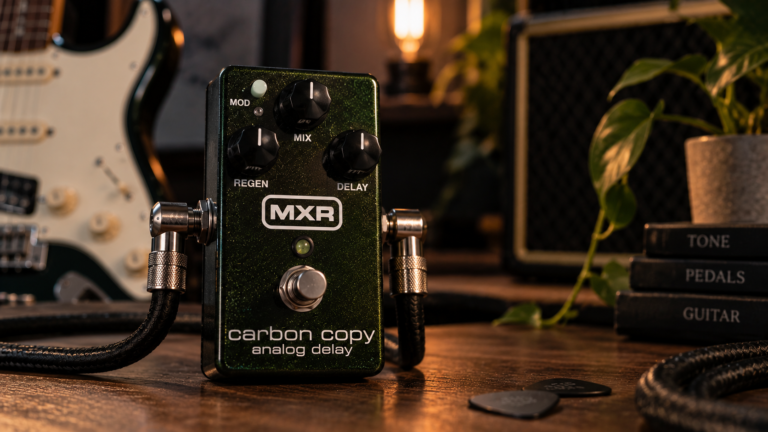
| MXR Carbon Copy | You want one warm analog voice and no interest in software, stereo or advanced control. |
| Flashback 2 Mini | Board space matters more than immediate access to multiple onboard modes and stereo routing. |
| A preset workstation | You need several exact sounds available by foot rather than three TonePrint slots selected by hand. |
Is the TC Electronic Flashback 2 worth it?
The Flashback 2’s value does not come simply from having more possibilities. TonePrint, stereo routing and MASH matter when one of them solves a specific control or sound problem in a compact board.
It fits players who want to edit a few sounds and keep them useful over time. For three-knob simplicity without a surrounding software ecosystem, a more self-contained delay is the clearer choice.
For the wider context, start with what a delay pedal actually does, compare the full shortlist in the best delay pedals for guitar, and use the delay and reverb pedal guide when placing it in a complete signal chain.
TC Electronic Flashback 2 FAQ
Does the Flashback 2 require the TonePrint app?
No. The onboard modes and normal controls work without it. TonePrint is needed only for loading or deeply editing custom sounds.
Can the Flashback 2 save presets?
It provides TonePrint slots, but it is not a conventional multi-preset performance pedal with several foot-recallable scenes.
What does the MASH footswitch do?
It senses pressure and can control assigned effect parameters while you press harder, functioning like a limited expression control.
Is the Flashback 2 stereo?
Yes. The full-size Flashback 2 supports stereo input and output.